Decoding the Alchemical Heart of Turin Where Heaven and Hell Meet in Northern Italy
Talking about Turin is always fascinating because the city changes so much from one area to another that it can feel like you’ve stepped into a different place every time you move a few streets. One street feels completely built for royal processions and a slow afternoon espresso, while the next carries heavy stories about secret societies, hidden tunnels, and midnight rituals.
Few places in Italy manage such a bizarre split personality. It is deeply Catholic, quietly aristocratic, and oddly tied to centuries of occult folklore all at the exact same time.
The Royal City That Looks Mysterious
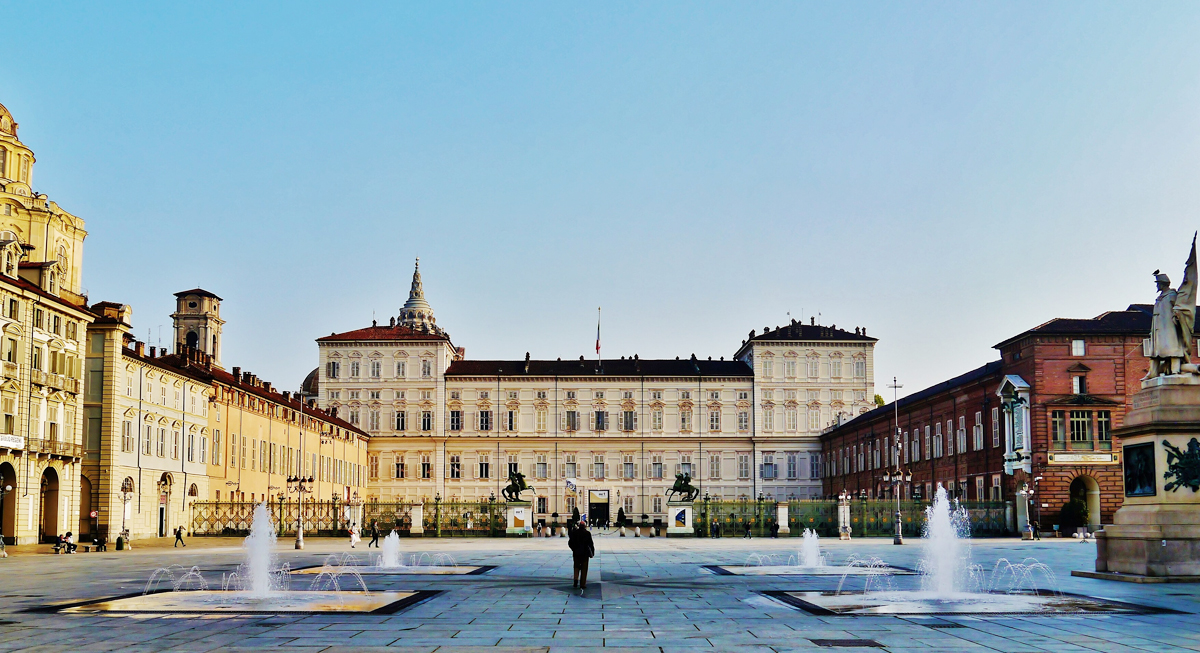
Image via Wikimedia Commons/Zairon
Turin’s connection to alchemy came from the way the city is planned, with its strict grid, grand Baroque buildings, and long covered walkways. It gives the place a very structured, almost closed-in feel that naturally pushes people toward more mysterious interpretations.
During the Renaissance, the House of Savoy rebuilt much of the city to project absolute authority. Ironically, creating such a perfectly ordered limestone grid made the whole place look like the ideal backdrop for a conspiracy theory.
Legends eventually settled around Piazza Castello and Palazzo Madama, where alchemists were rumored to conduct private experiments. Local gossip later claimed alchemists searched for the Philosopher’s Stone with ties to elite circles connected to the royal court.
While actual historians have found almost no evidence to support those claims, the stories have survived simply because Turin feels like a place where everything important happens behind closed doors.
By the twentieth century, this fascination spread, and mystics began claiming that Turin sat at the exact intersection of both a “white magic” triangle with Lyon and Prague, and a “black magic” triangle with London and San Francisco. It is pure folklore, but it stuck.
Piazza Statuto And The Darker Legends
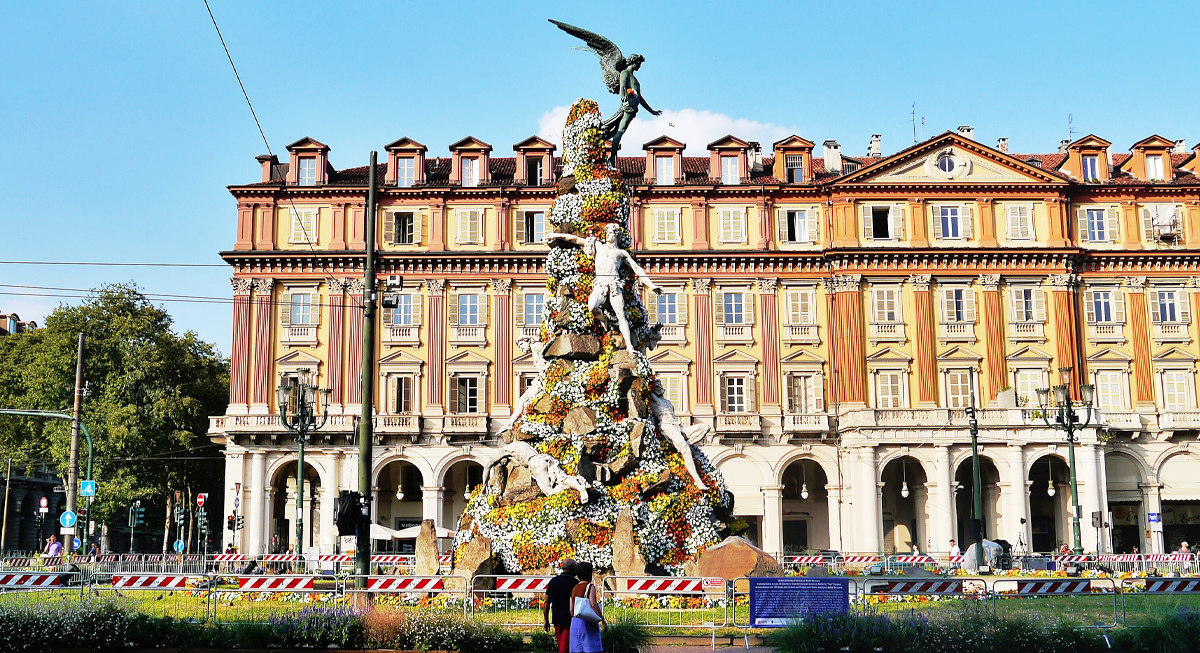
Image via Wikimedia Commons/Zairon
If you want to find the source of the city’s darker rumors, you usually end up standing in Piazza Statuto. This grand square is located on the western edge of the old city, near an area that the Romans used for executions and burials. Over generations, local ghost stories transformed this historical fact into a claim that the square is the symbolic gateway to hell.
Right in the center is the Fréjus Monument, a massive pile of rocks built to honor the workers who died digging the Alpine railway tunnel between Italy and France. At the top, a winged figure stands over the fallen workers, wearing a small star on its forehead.
Officially, it is an allegory for brute force being conquered by human intelligence and science. Unofficially, local tour guides love to point out that the figure looks a lot like Lucifer facing east away from the light. Turin does not really fight these interpretations; it just lets them sit there quietly next to the commuter traffic and historic cafés.
The Sacred Side Of Turin
The city’s mystical reputation isn’t just about darkness, though. It grew just as much from its massive religious importance, anchored by the Shroud of Turin. This ancient linen cloth, which many believe to be the burial shroud of Jesus, was brought here by the House of Savoy in 1578.
Kept inside the Cathedral of Saint John the Baptist, the Shroud turned Turin into a major pilgrimage site, drawing a constant stream of scientists, skeptics, and the deeply faithful.
That religious weight doubled when the city opened the Egyptian Museum in 1824. Housing one of the largest collections of Egyptian antiquities outside Cairo, the museum instantly fueled the imagination of nineteenth-century esoteric societies, who viewed ancient Egypt as the birthplace of magic.
Today, Turin remains a remarkably grounded, industrial city that just happens to live comfortably with one foot in the sacred and the other in the strange.