You Can Now Leave Liquids Up to Two Liters in Your Bags at Heathrow
Airport security rules that shaped travel routines for nearly two decades are starting to change. At London Heathrow Airport, passengers can now carry liquids in containers up to two liters in their carry-on bags when departing. Electronics like laptops and tablets can also remain inside luggage during screening.
This change follows the full installation of next-generation computed tomography security scanners across all Heathrow terminals. Airport leadership says the rollout makes Heathrow the largest airport globally to fully deploy this technology across every terminal checkpoint.
The update removes one of the most universally disliked parts of flying and follows years of delays, policy reversals, and inconsistent rules across the UK and Europe.
What Changed at Heathrow
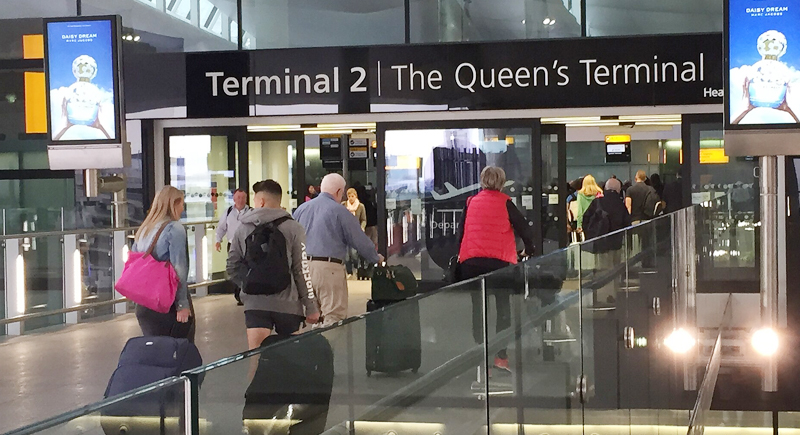
Image via Wikimedia Commons/Smuconlaw
Heathrow has completed a £1 billion security upgrade across all terminals, installing next-generation CT scanners at every passenger checkpoint. With the rollout finished, the airport has officially removed the long-standing 100 ml liquid container restriction for departing flights.
Travelers can now carry liquids, gels, and aerosols in containers of up to two liters directly inside their hand luggage. Electronics such as laptops and tablets no longer need to be removed for screening. The familiar routine of unpacking liquids into plastic bags is no longer part of the security process at Heathrow.
The airport says it is now the largest airport in the world to fully implement this technology across all terminals.
Why the 100 ml Rule Existed in the First Place
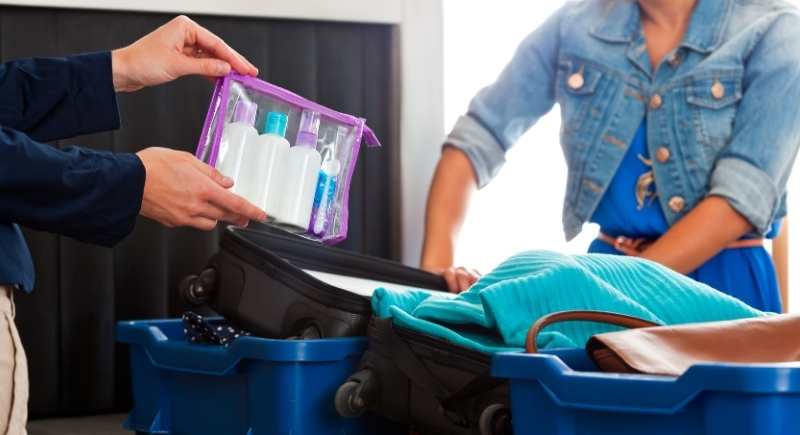
Image via Getty Images/izusek
The original liquid restriction dates back to 2006, following a foiled plot involving liquid explosives on transatlantic flights.
At the time, airport scanners relied on basic two-dimensional X-ray imaging. Liquids hidden inside bags were difficult to distinguish from potential threats, especially when surrounded by electronics and dense materials.
Limiting liquid container size became a temporary safety measure. Smaller volumes lowered risk and made screening manageable with the technology available at the time. The rule remained in place far longer than originally expected because scanning technology took years to catch up.
How the New Scanners Work
The scanners now operating at Heathrow use computed tomography (CT), a medical imaging technology. Instead of producing a flat image, the scanner rotates around each bag and captures hundreds of X-ray images from multiple angles. These images are reconstructed into a high-resolution three-dimensional model of the contents.
Security officers can digitally move through layers of a bag, rotate the image, and examine its density and material composition without passengers having to unpack anything. Automated detection software flags items that need closer inspection, which reduces the need for manual bag searches.
This level of imaging accuracy allows larger liquid containers to pass through security without increasing risk.
Heathrow Is Not Alone, but It Is Ahead
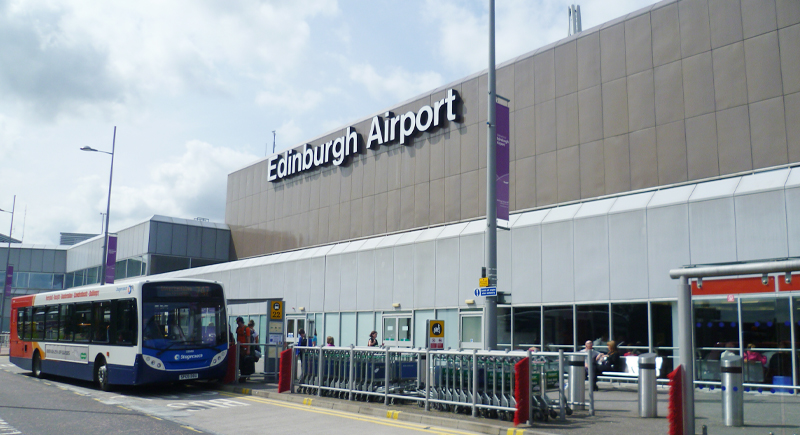
Image via Wikimedia Commons/Kim Traynor
Several other UK airports, including Gatwick, Edinburgh, Birmingham, Bristol, and Belfast, already allow liquids up to two liters thanks to similar scanner upgrades. Heathrow’s change brings consistency across one of the world’s busiest aviation hubs, but the rule has not disappeared everywhere.
Travelers still need to follow liquid restrictions at their departure airport on the return journey, which may still enforce the 100 ml limit.
Globally, adoption remains uneven. Many airports are still installing CT scanners or waiting for regulatory approval to change passenger rules. In the United States, CT scanners are becoming more common, but limits for liquids have not yet changed.
A Long and Complicated Road to Get Here
The change did not come out of nowhere. In 2019, the UK government promised to remove the 100 ml rule by the end of 2022. The pandemic delayed progress. A new target for June 2024 followed, but major airports struggled to meet the deadline.
In mid-2024, airports that had already raised liquid limits were ordered to revert to the 100 ml rule, creating confusion for travelers and operators. The EU also returned to the old limit around the same time.
Heathrow’s completed rollout finally creates stability. For passengers, the impact is immediate. Packing is easier, and security preparation takes less time. There is also less waste from single-use plastic bags, with Heathrow estimating millions fewer will be used each year.
The change also signals a broader shift in airport security design, moving away from rules shaped by outdated technology toward screening systems built on smarter imaging. Travelers should still check airport-specific rules before flying. At Heathrow, however, one of air travel’s most frustrating routines is now gone.