The World’s Most Expensive Architectural Projects
Building at this level is never straightforward. The costs climb quickly, the engineering is complex, and the choices involved reflect real priorities about how a place wants to grow. These projects show what can happen when money, design, and long-term planning come together to create something that changes how people live or move through a city.
Neom – Saudi Arabia
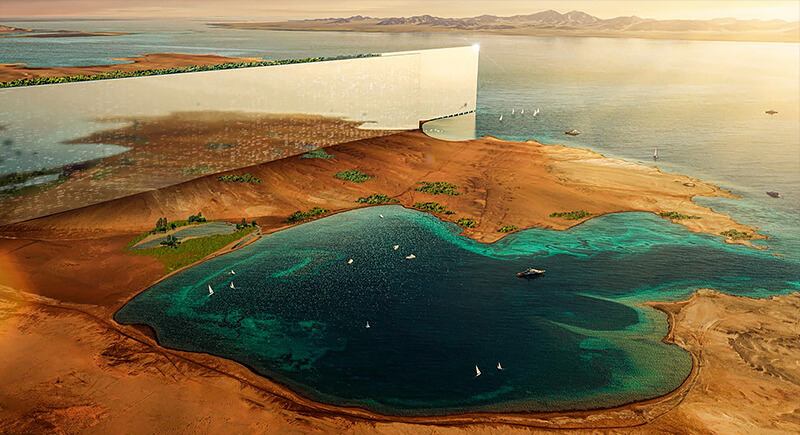
Credit: neom
At $500 billion, Neom is the most costly development ever attempted. Designed as a futuristic city with AI-managed systems and zero cars, its most ambitious piece is “The Line,” a 105-mile mirrored megastructure planned to house nine million residents. Construction has begun, although timelines remain uncertain.
Masjid Al-Haram Expansion – Mecca, Saudi Arabia
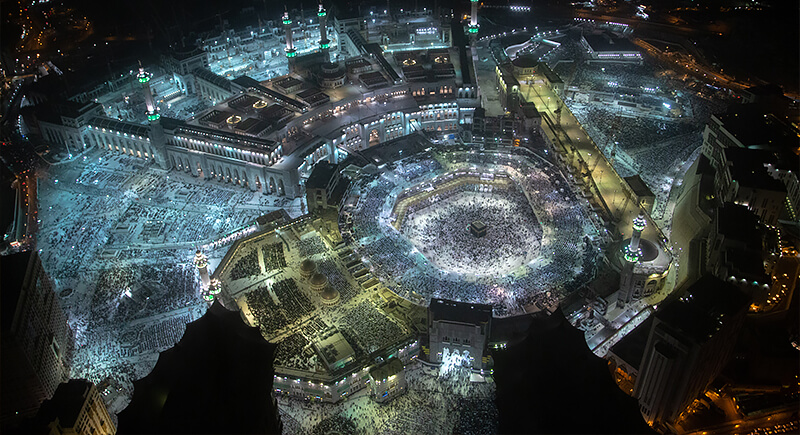
Credit: Wikipedia
The expansion of one of Islam’s most sacred sites aims to accommodate over two million worshippers, with spending projected at $120 billion by 2030. The project includes underground tunnels, new minarets, and climate-controlled walkways. It’s built around the Kaaba and carries deep religious significance, which helps explain the level of detail and scale.
Madinat Al Hareer – Kuwait
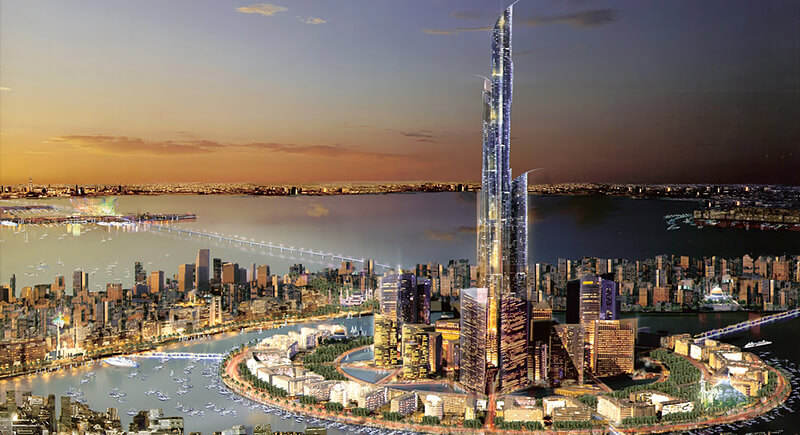
Credit: tamdeen
Madinat Al Hareer, also called “Silk City,” is a $132 billion vision that began as a concept in 2006. The plan is to build a massive mixed-use city with four zones: financial, ecological, cultural, and entertainment. Each has its own skyline and functions like a mini-city. The project includes the planned Mubarak al-Kabir Tower.
Forest City – Malaysia
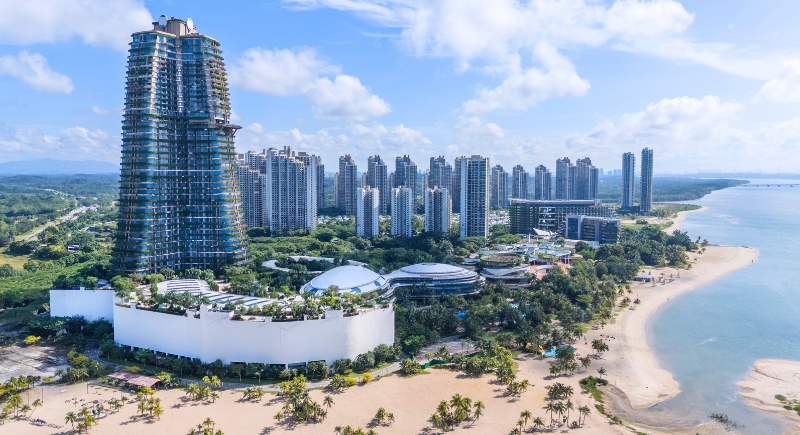
Credit: iStockphoto
Forest City, built on reclaimed land near Singapore, was pitched as a green smart city that could support 700,000 people. The $100 billion price tag went toward futuristic transport systems, vertical gardens, and massive underground infrastructure to keep surface-level streets car-free.
King Abdullah Economic City – Saudi Arabia
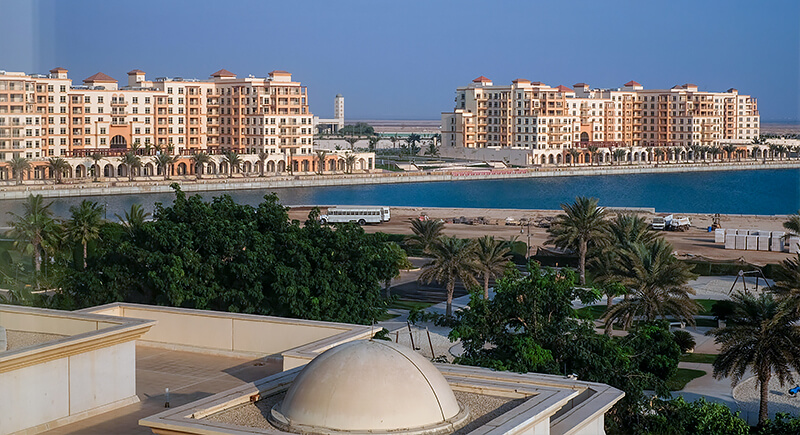
Credit: Wikipedia
King Abdullah Economic City was envisioned with a $100 billion investment to boost Saudi Arabia’s role in global trade. The project continues to grow in phases, with developers focusing on business expansion, transport links, and long-term population growth rather than one signature skyscraper.
Egypt’s New Capital
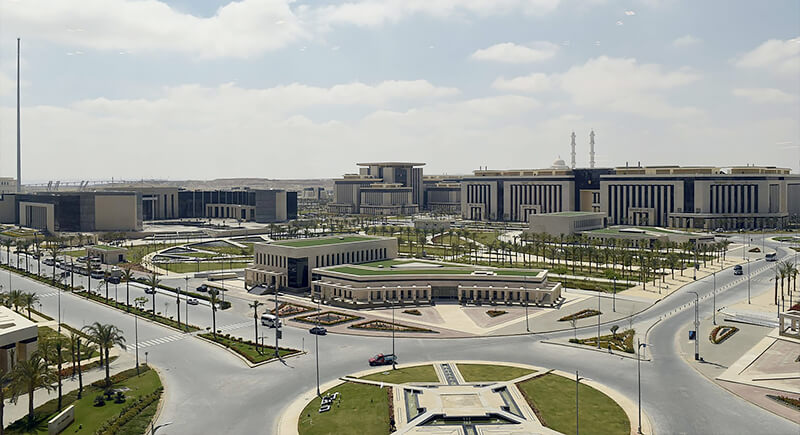
Credit: Wikimedia Commons
To relieve pressure from Cairo, Egypt is building a brand-new capital in the desert. This $58 billion project spans over 270 square miles and includes government offices, a giant mosque, skyscrapers, a presidential palace, and housing for millions. Solar panels cover much of the infrastructure, and planners promise walkability within neighborhoods.
The New Murabba – Riyadh, Saudi Arabia

Credit: constructionweekonline
The centerpiece of this $50 billion development is Mukaab, a cube-shaped skyscraper as tall and wide as the Empire State Building. Inside, there is a tower within a tower, wrapped in digital displays and immersive environments. The larger city plan focuses on tech-integrated buildings and over 100,000 housing units.
Lusail City – Qatar
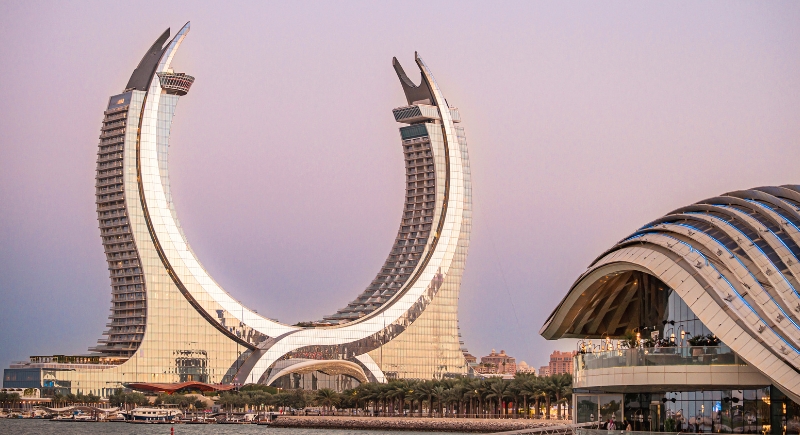
Credit: iStockphoto
Qatar didn’t stop at stadiums for the World Cup. It also built an entire $45 billion city. Lusail has districts for business, entertainment, and housing, and it’s designed to support nearly half a million people. The centerpiece is Lusail Stadium, which hosted the World Cup final.
Hudson Yards – New York, USA
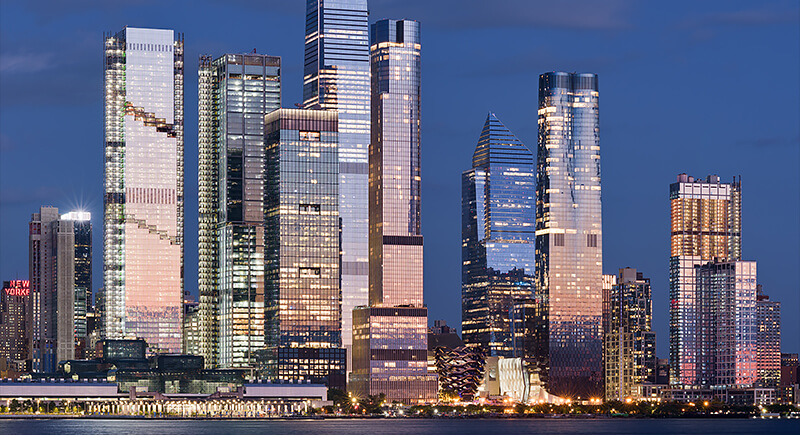
Credit: Wikipedia
Hudson Yards transformed Manhattan’s West Side at a cost of $25 billion. It’s the largest private development in U.S. history, with offices, condos, a luxury mall, and The Vessel—a climbable public sculpture. There’s also a performing arts center and sleek green spaces.
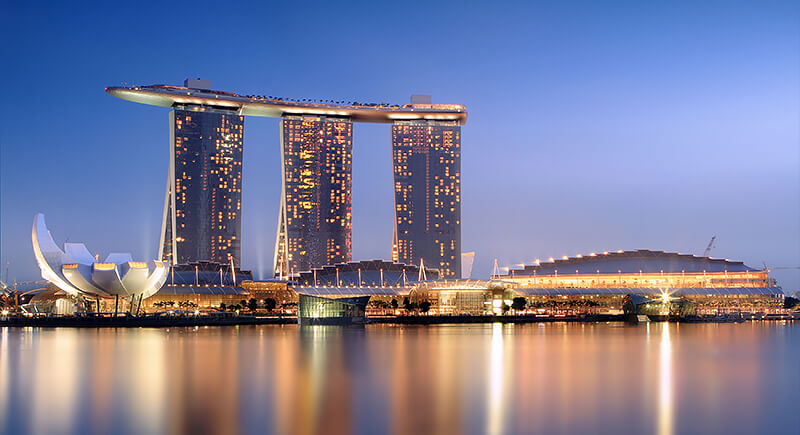
Marina Bay Sands – Singapore
Credit: Wikipedia
That iconic building with a ship-shaped rooftop? It’s Marina Bay Sands, a $6.8 billion resort. Besides the infinity pool and 2,500 hotel rooms, it features a casino, theaters, and even a floating Louis Vuitton store. It reshaped the city skyline and helped turn Singapore into a major destination for global tourism.