10 Most Beautiful Metro Stations in the World You Can Visit for $2
You do not need a museum ticket or a luxury budget to see great design. In many cities, the most impressive architecture sits below street level, built for people heading to work. For the price of a single metro ride, you can step into stations lined with mosaics, soaring arches, and carefully planned lighting that feels intentional. These are everyday spaces that happen to be beautiful, and visiting them costs little more than getting on the train.
Toledo Station, Naples
Credit: Wikimedia Commons
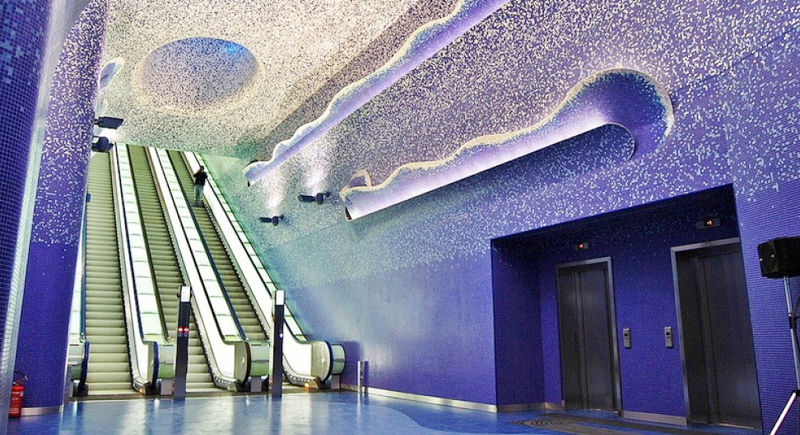
Toledo Station lies about 50 meters underground, and the difference is noticeable as soon as you enter. The walls and corridors glow in layered shades of blue, created by artist Robert Wilson to mirror the look and movement of water. The effect is calm but powerful, especially in the deepest passage where people naturally slow their pace. CNN named it Europe’s most beautiful metro station in 2012, and it still stands out among Naples’ Metro Art Stations. A single ride costs around €1.30, or about $1.50.
Plac Wilsona, Warsaw
Credit: Wikimedia Commons
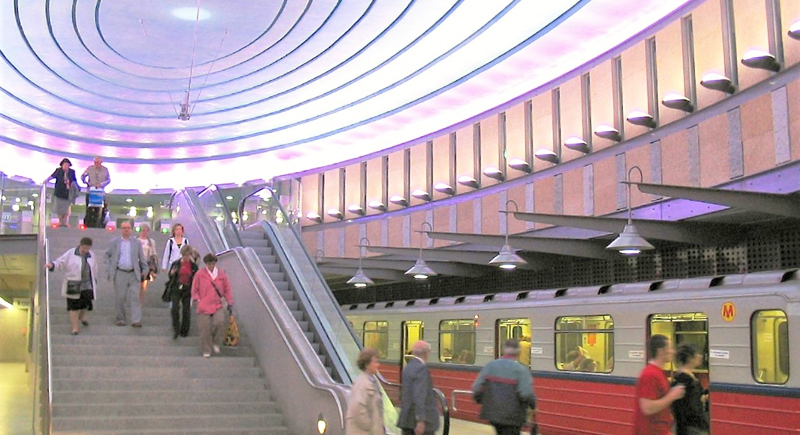
This station, named after American President Woodrow Wilson, proves that capitalist Poland could match Soviet-era architectural ambition. Luckily for tourists, tickets cost as little as 4.40 złoty (roughly $1.22). The space looks like it was designed by someone inspired by sci-fi films. Silver panels and futuristic curves give the station an otherworldly quality that makes it look like a UFO landed beneath the city.
Admiralteyskaya Station, St. Petersburg
Credit: Wikimedia Commons
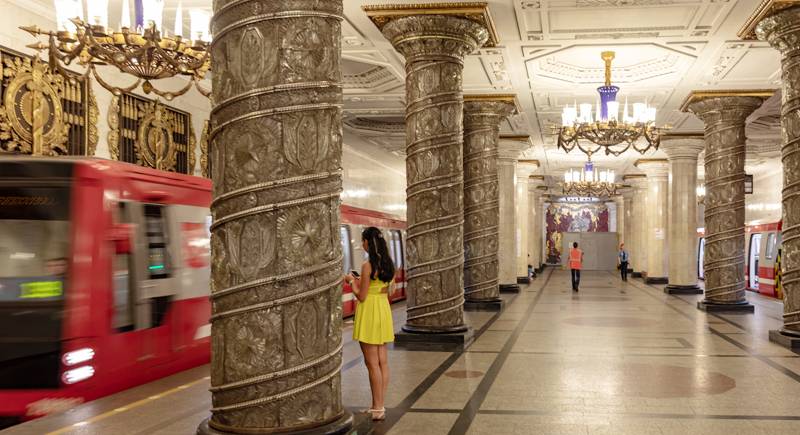
Opening this station took decades of setbacks, but the 2011 debut delivered something worth the wait. Admiralteyskaya lies 86 meters below ground and pairs modern curves with traditional Russian marble and dramatic arched platforms. The journey down the escalator alone takes nearly five minutes. Using the Podorozhnik transport card brings the fare to 60 rubles ($0.76), and the station’s proximity to the Hermitage Museum makes it a logical starting point for tourists.
Olaias Station, Lisbon
Credit: Wikimedia Commons
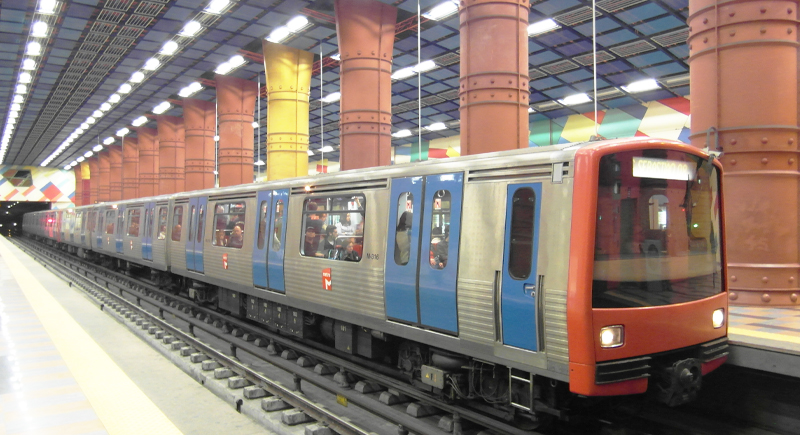
Lisbon built this station for the 1998 World Expo, and the ambition shows. Architect Tomás Taveira collaborated with artists such as Pedro Cabrita Reis and Graça Pereira Coutinho to create a space bursting with color and pattern that reflects Portugal’s optimism about the future. At €1.72 ($2) per ride with the Zapping card, you’re paying less than you would for some snacks to access one of Europe’s most artistic transit networks.
Komsomolskaya Station, Moscow
Credit: Wikimedia Commons
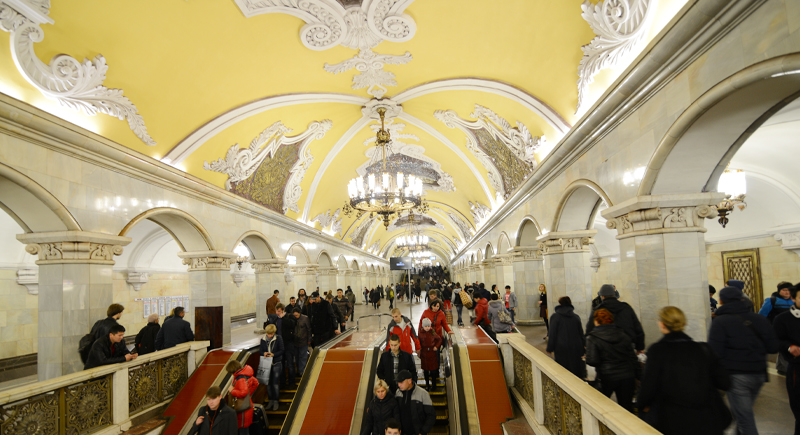
Komsomolskaya makes a strong impression the moment you step inside. Chandeliers hang from high ceilings, arches stretch across the platforms, and large mosaics fill the space with scenes from Soviet history. Yellow marble columns and detailed ornamentation turn what is one of Moscow’s busiest stations into something closer to a grand public hall. Despite the scale and decoration, it still functions as a major transit hub. A ride using a Troika card costs about 42 rubles, roughly $0.50.
Nowy Świat-Uniwersytet, Warsaw
Credit: Wikimedia Commons
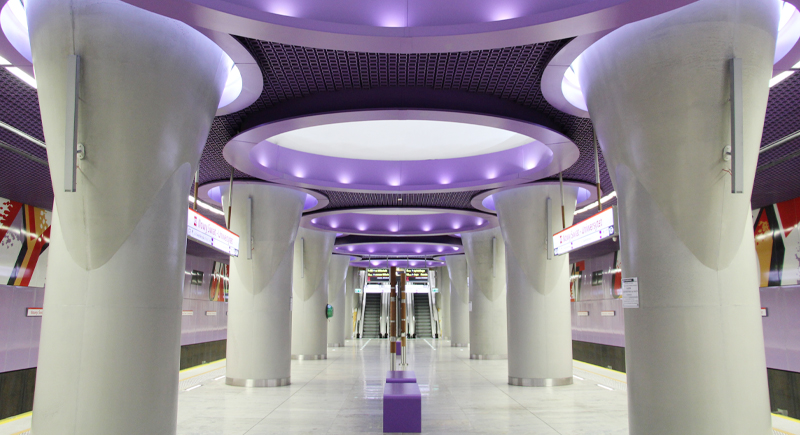
Purple ambient lighting transforms this station into something that looks like a spaceship rather than a station beneath Poland’s capital. Architect Andrzej M. Chołdzyński designed the space with minimalist functionality in mind, then added Wojciech Fangor’s mosaics to ensure travelers got more than just efficient transport. At 4.40 złoty (roughly $1.22) for 75 minutes of unlimited transfers, Warsaw offers aesthetically pleasing transportation without the premium price tag.
Staroměstská Station, Prague, Czechia
Credit: Wikimedia Commons
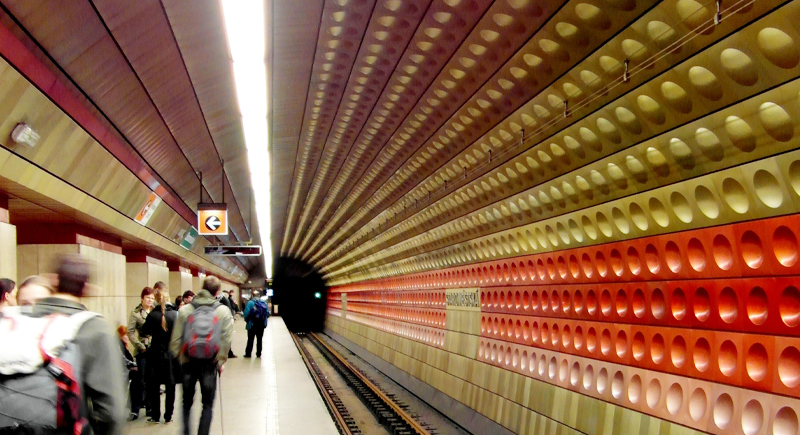
If you’ve got about 39 CZK ($1.87), Prague’s metro will wow you with one of Europe’s coolest design signatures. This metro station features dimpled tunnel walls that look straight out of a movie. Staroměstská is a standout on Line A, partly because it’s so close to tourist-heavy Old Town. Not to diminish the grandeur in person, but the glossy surfaces catch light in a way that makes everything look sharper in photos.
Universidad de Chile Station, Santiago, Chile
Credit: Wikimedia Commons
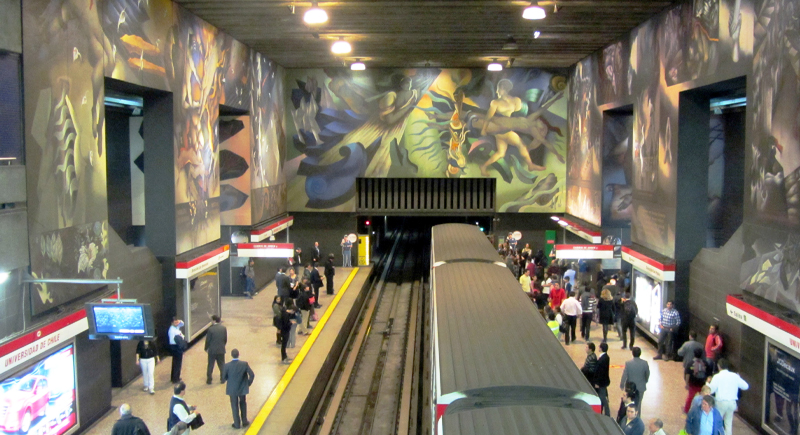
Santiago Metro fares often come in at $2 or less, and Universidad de Chile makes that feel ridiculous in the best way possible. Mario Toral’s mural, “Memoria Visual de una Nación,” spanning approximately 1,200 square meters, covers the walls. Look closely, and you’ll spot references to the Spanish conquest, political upheaval, and modern life, all painted at a scale that feels cinematic. People stop mid-stride to stare, and why not?
Politehnica Station, Bucharest, Romania
Credit: Wikimedia Commons
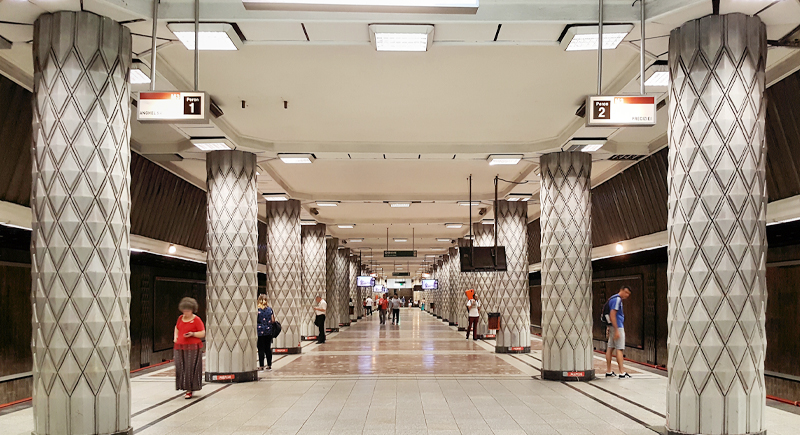
Bucharest makes this one contest unfair, with a metro ride costing around 3 lei, roughly $0.69. Politehnica looks clean, crisp, and structured, with white columns and polished stone that reflect the station’s lighting. The area feels spacious and modern, a breath of fresh air from the claustrophobic subway stereotype. At night, the glow gets better, and the area becomes a good spot for photos.
Formosa Boulevard Station, Kaohsiung
Credit: Wikimedia Commons
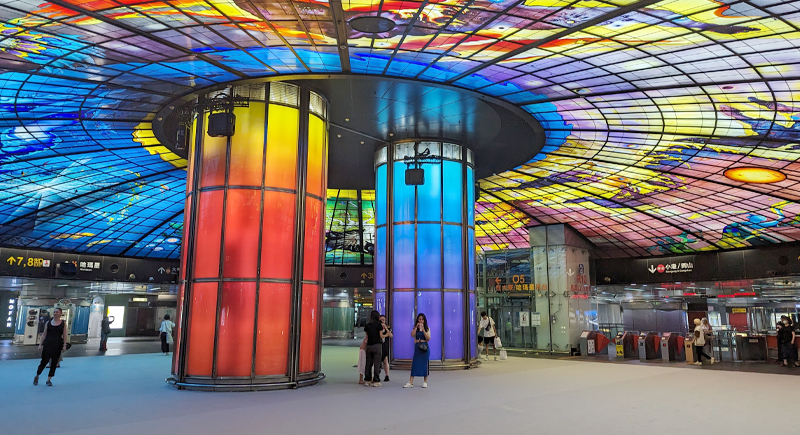
The Dome of Light installation at this Taiwanese station holds the record for the world’s largest glass artwork. Italian artist Narcissus Quagliata spent years creating the kaleidoscope effect that greets commuters with thousands of panels covering themes of water, earth, light, and fire. Japanese architect Shin Takamatsu designed the overall structure, which represents two hands in prayer. The fares vary by distance but start at around 20 NT$ (approximately $0.63).