10 Most Colorful Cities in the World
Some cities make an impression before you learn anything about them. The streets, buildings, and entire neighborhoods rely on color as part of everyday design. Painted walls and facades serve practical and cultural purposes, shaped by weather, materials, and long-standing local habits rather than tourism. These cities stand out because color is part of how they operate.
Chefchaouen, Morocco
Credit: Getty Images
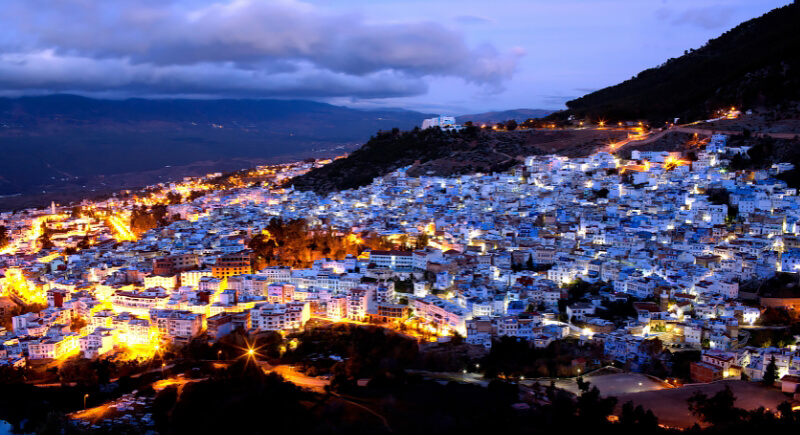
This city in Morocco’s Rif Mountains stands out in nearly every photo for one reason: it’s almost entirely blue. The tradition may trace back to Jewish refugees who settled here in the 15th century. They painted the walls in blue to symbolize peace and heaven. Today, that decision makes Chefchaouen one of the most visually distinctive towns in the world.
Burano, Italy
Credit: Getty Images
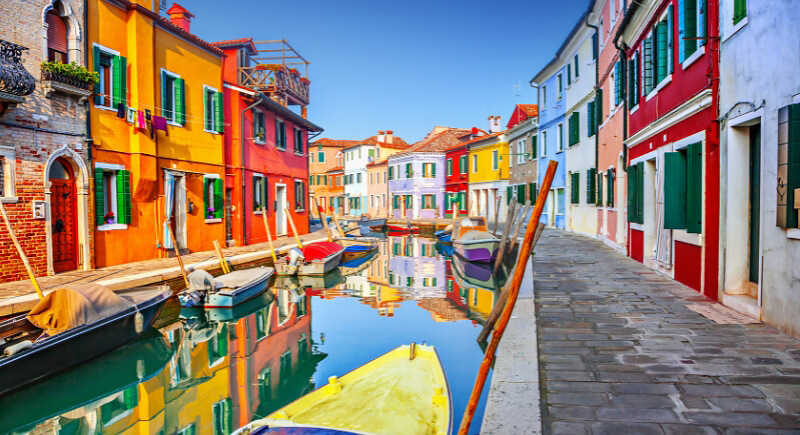
A short boat ride from Venice, Burano doesn’t look real at first glance. Every home beams with bold, unmissable color—reds, blues, yellows—often with laundry hanging outside to add to the display. According to local stories, fishermen painted their houses this way so they could spot them through thick fog.
Willemstad, Curaçao
Credit: Wikimedia Commons
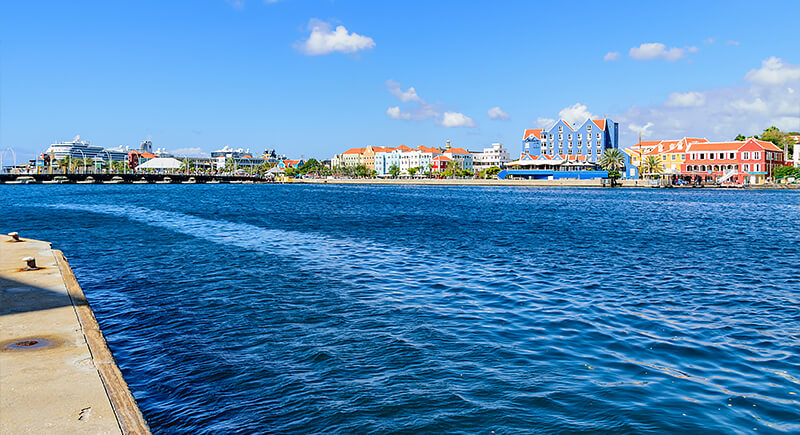
Centuries ago, the Dutch governor of this Caribbean port claimed the sun’s reflection off white walls gave him migraines. So, he banned white buildings. What followed was a city painted in pastels: lilac, mint, coral, lemon. The colorful buildings line the waterfront in the capital of Curaçao, creating a scene that feels pulled from a children’s storybook.
Valparaíso, Chile
Credit: pexels
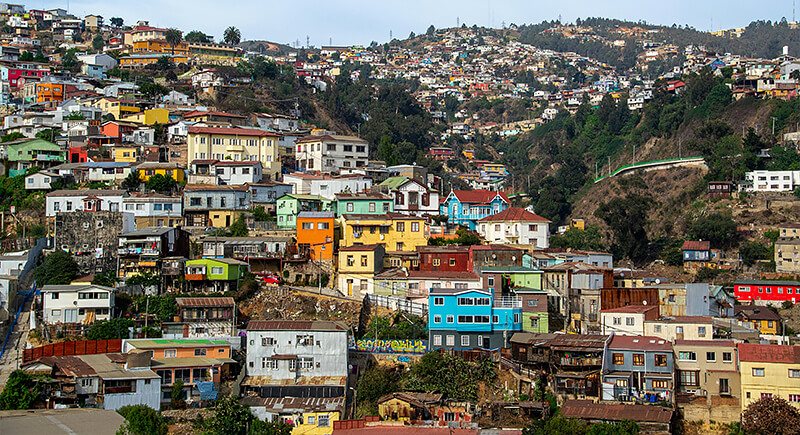
The hills of this coastal city are covered in murals, tags, and splashes of color. Its funiculars carry visitors past homes painted with ocean blues, oranges, and purples. Artists from around the world contribute to the city’s evolving canvas, turning it into one of Latin America’s most creative urban spaces.
Jaipur, India
Credit: Getty Images
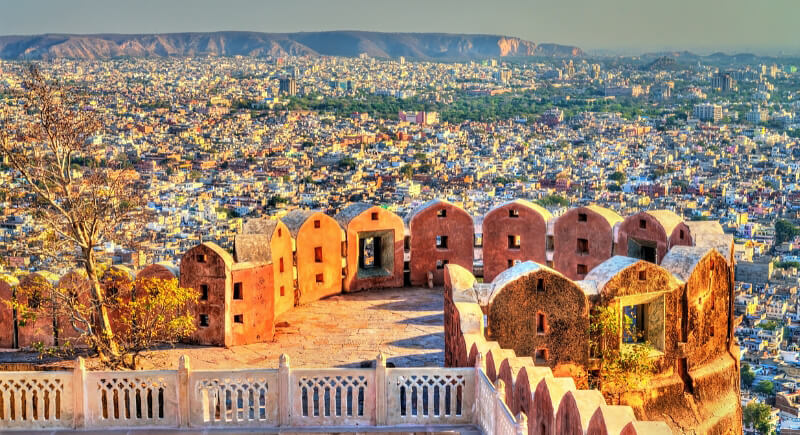
Jaipur lives up to its nickname as the “Pink City” in a very literal way. In 1876, Maharaja Sawai Ram Singh ordered the city painted terracotta pink to impress a visiting British royal, and that color stuck around. Today, much of the old city remains this exact shade, including the famous Hawa Mahal.
St. John’s, Canada
Credit: Getty Images
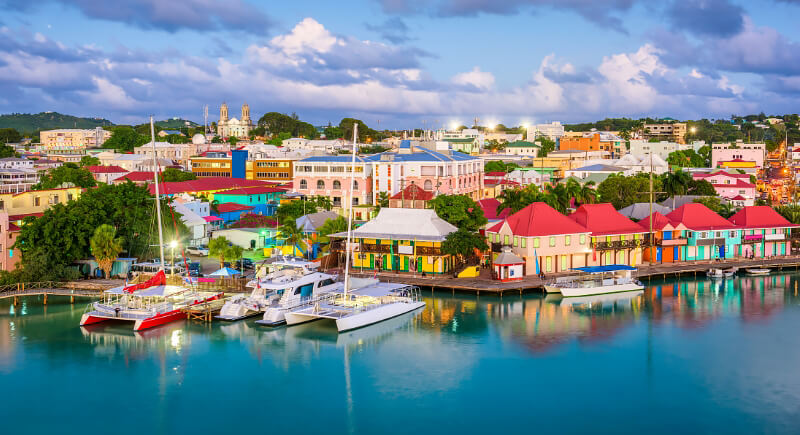
On Newfoundland’s eastern edge sits a port town that doesn’t shy away from color. St. John’s Jellybean Row is made up of row houses painted in bright, contrasting shades. According to local lore, the colors helped fishermen find their way back home through foggy harbors.
Bo-Kaap, South Africa
Credit: Getty Images
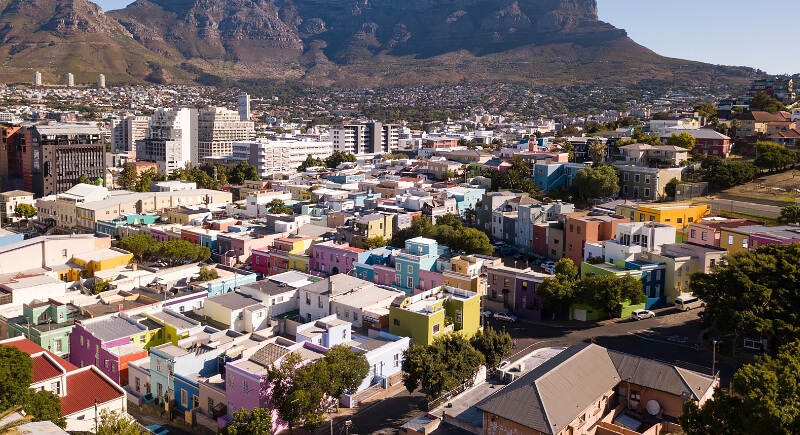
Under Dutch colonial rule, Bo-Kaap’s houses were kept white while enslaved residents lived there. After apartheid, homeowners were finally able to claim the space as their own. Many chose bright paint as a visible marker of ownership and freedom. Today, the neighborhood’s color reflects that shift, with each façade carrying traces of history, faith, and community pride.
La Boca, Buenos Aires
Credit: Wikimedia Commons
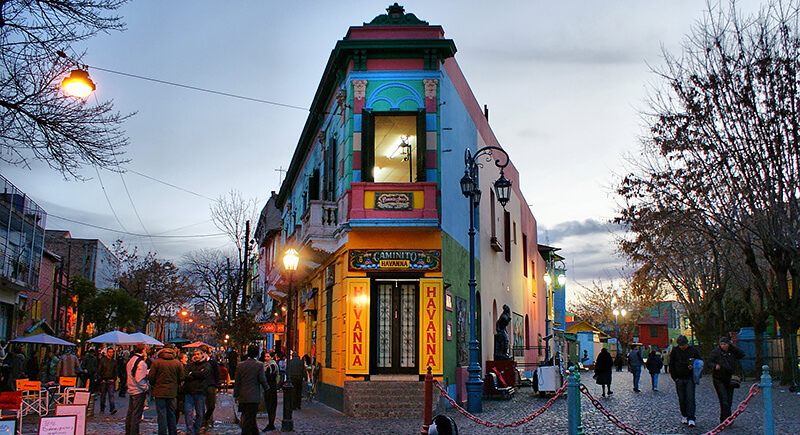
This neighborhood might be best known as the birthplace of tango, but its visuals leave just as lasting a memory. La Boca’s buildings wear leftover ship paint, applied by dockworkers who used what they had. The result is a wildly colorful district full of reds, greens, yellows, and blues.
Jodhpur, India
Credit: Getty Images
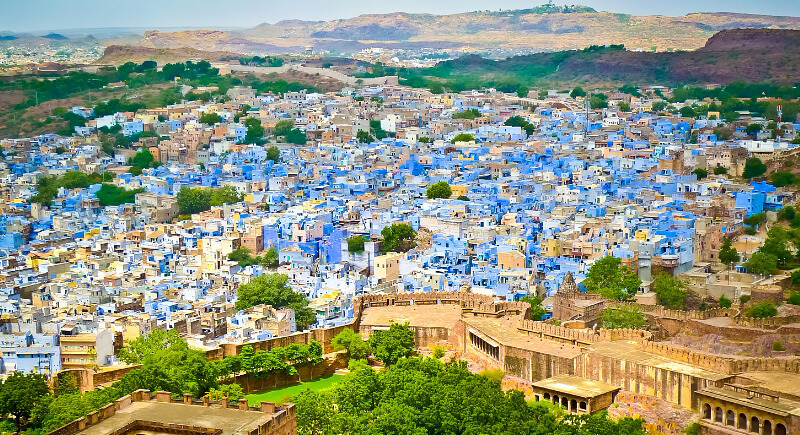
On the edge of the Thar Desert, this Indian city seems dipped in blue. No one agrees on why exactly—some say it’s linked to the Brahmin caste, others argue it helps keep homes cooler in the heat. The old city near Mehrangarh Fort is packed with blue-painted houses that spill across the hillside, earning it the nickname “The Blue City.”
Sighisoara, Romania
Credit: Getty Images
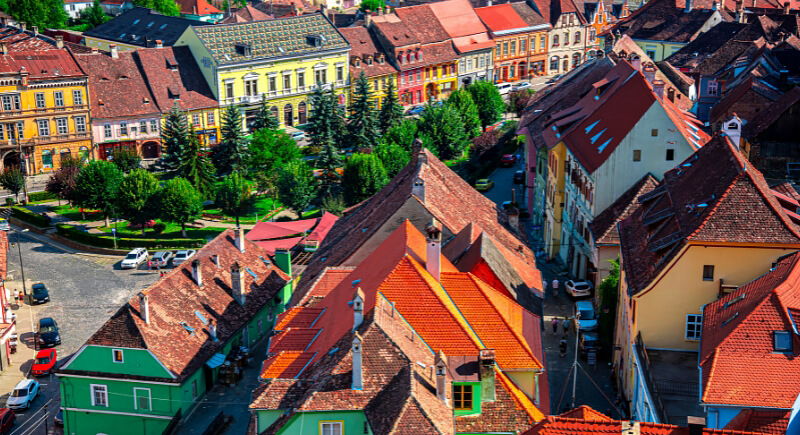
Sighisoara looks almost theatrical with its cobbled lanes and punchy paint choices. Pastel oranges, greens, and yellows light up its historic buildings. As the birthplace of Vlad the Impaler, it draws in Dracula fans, but it’s the cheerful palette and intact medieval core that leave a stronger impression.