Why You Should Never Sleep During Takeoff or Landing (It’s Not About Safety)
During a flight, those first few minutes after takeoff and the final stretch before landing place a subtle strain on the body that often goes unnoticed. It only becomes obvious when the body struggles to adjust. Staying awake during these moments matters. But it has less to do with rules and more with how the body handles sudden pressure changes.
Takeoff and landing bring quick shifts in cabin pressure. As the plane climbs or descends, the air inside changes, and your ears have to keep up. A small passage in the ear, the eustachian tube, handles this adjustment. It opens when you swallow, yawn, or chew, helping your ears match the pressure around you.
This process often works, but when it doesn’t, the result is ear barotrauma, often called airplane ear. It can cause sharp pain, pressure, muffled hearing, or a blocked sensation that may persist longer than expected. The feeling is similar to diving deep underwater, where pressure builds quickly, and your ears struggle to respond. This is where staying awake becomes important. ASQ1`
Sleep Interrupts The One Thing That Protects You
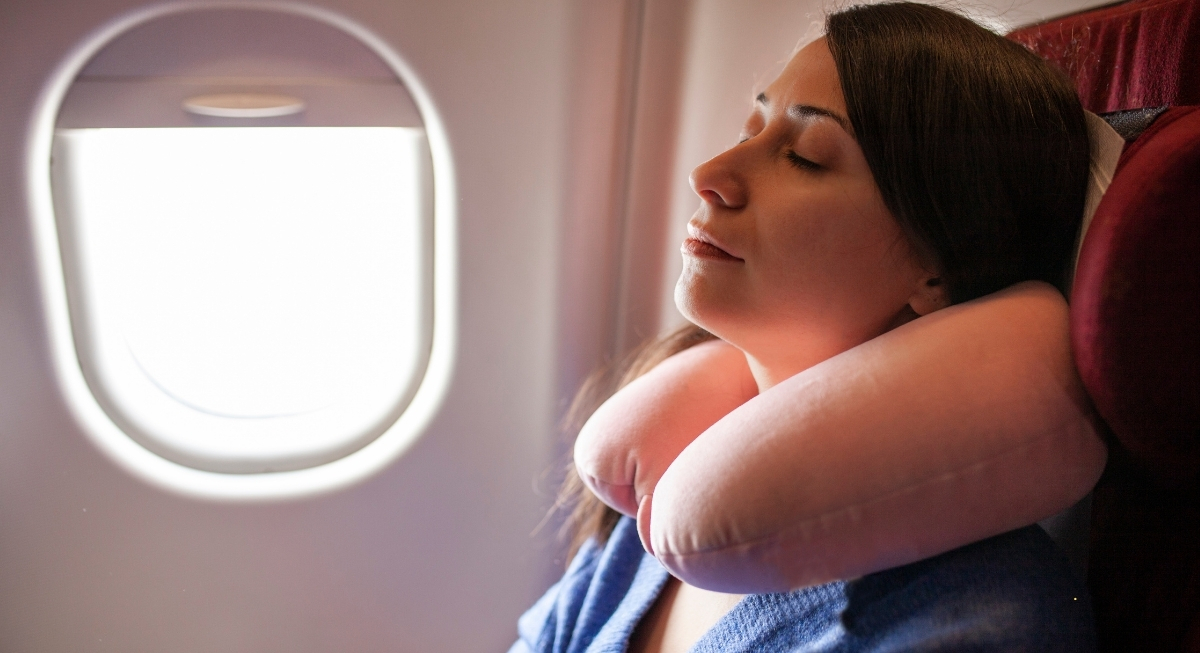
Image via Getty Images/evrim ertik
Dan Bubb, a professor at the University of Nevada, Las Vegas, a former airline pilot, and an aviation expert, points to a simple but overlooked detail: while asleep, the body swallows less frequently. Swallowing is one of the main ways the eustachian tubes open and regulate pressure. When that action slows down, pressure builds instead of releasing. The eardrum starts to stretch, and discomfort follows.
Being awake keeps those natural adjustments active. A few swallows, a quick yawn, even chewing gum can keep things balanced without much effort. Sleeping removes that control, and the result can range from mild discomfort to noticeable pain that sticks around after landing. For some passengers, especially those dealing with congestion, allergies, or infections, the effects can be stronger. Children and infants often struggle more as well because their eustachian tubes are smaller and less efficient at equalizing pressure.
Simple Ways to Stay Ahead of It
Managing this comes down to staying engaged for a short window of time. Swallowing, yawning, or chewing gum during takeoff and landing helps keep pressure in check. Some travelers also use filtered earplugs, such as EarPlanes, which slow the rate of pressure change and reduce strain on the ears.
None of these requires much effort, but they only work if you’re awake. That’s why aviation guidance often suggests timing your rest differently. A short nap during boarding, a taxi ride, or while cruising works far better than sleeping through the exact moments when your body needs to respond.
There is also a safety angle. Takeoff and landing are widely recognized as the most critical phases of flight, with data from Boeing and Airbus showing a higher likelihood of incidents during these periods. Being alert helps passengers react quickly if needed.