Why the “Middle Seat” Is the Newest Battleground for Passenger Rights
Air travel has always involved compromise, but the middle seat now comes with more tension than before. It is no longer just the least preferred option. Limited space, unclear expectations between passengers, and airline seat policies have made it a common source of small conflicts, with no clear standard for how it should work.
A Seat Nobody Wants—Now With a Price Tag
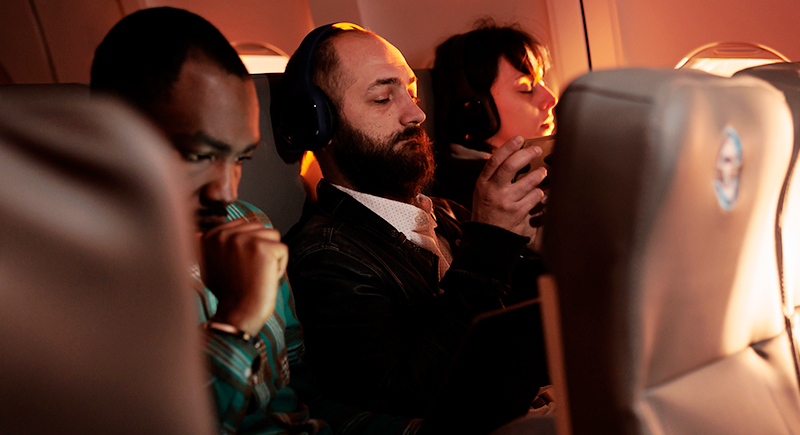
Image via Freepik/DC Studio
For years, avoiding the middle seat came down to timing. Book early, check in fast, and a window or aisle was usually within reach. That informal system has shifted. Airlines now routinely charge passengers to select specific seats, which means comfort is no longer tied to planning alone. It has become something you can pay for.
At the same time, planes are fuller than ever. High load factors leave fewer empty seats, which makes the middle seat harder to avoid and more useful as a revenue tool. Instead of treating all economy seats as roughly equal, carriers increasingly separate them into tiers. In this setup, the middle seat functions as the baseline option, while aisle and window seats are framed as upgrades.
This shift also changes how people experience the same row. One passenger may have paid extra to sit comfortably, while the person in the middle had fewer choices. That creates a small but noticeable difference in comfort. The seats look the same, but the experience is not.
The Most Contested Real Estate at 30,000 Feet

Image via Freepik/gpointstudio
Limited space is only part of the issue. Sitting between two people creates a situation where both feel entitled to parts of the same area. Armrests, legroom, tray tables, and even how far a shoulder extends become points of negotiation.
No official rulebook exists. Airlines do not define how shared space should be divided, and flight attendants usually step in only when disagreements escalate. In that gap, passengers rely on their own assumptions.
Some believe the middle seat earns both armrests. Others treat space as first-come, first-served. Neither standard is widely accepted, which means every row requires some level of negotiation.
The tension shifts in a different direction when the middle seat is empty. An empty middle seat seems like a shared win, but it introduces a new layer of uncertainty. Even small actions can change how that space is perceived. Lowering the middle tray table, placing personal items on the seat, or using more of the space can signal that one passenger has claimed it.
Without clear boundaries, passengers are left to interpret each other’s intent in real time and decide whether to accept or push back, often without saying anything.
A Social Experiment in Close Quarters
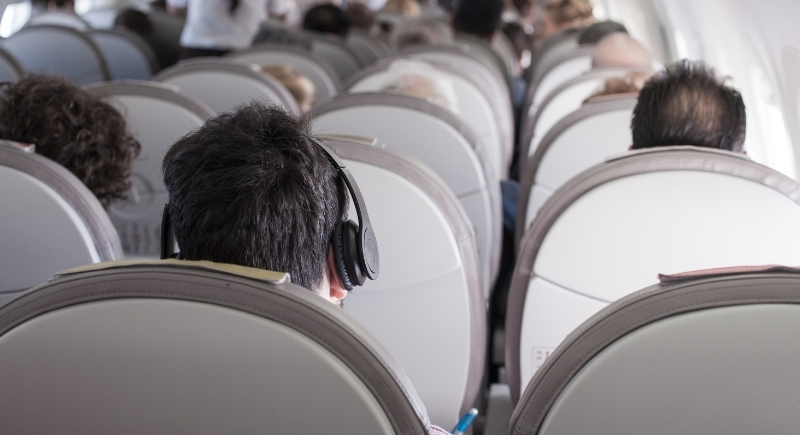
Image via Canva/bepslabor
Unlike the window or aisle, the middle seat forces interaction. There is no wall to lean on and no easy way to disengage. Every movement is noticed, and every adjustment affects someone else.
In this setting, behavior becomes a test of social instincts. Some passengers minimize contact by staying still and avoiding eye contact. Others use conversation to ease the tension. A few take on the role of mediator, treating the space as something to be actively shared.
Differences in approach can either smooth the experience or make it more uncomfortable. Without shared expectations, each passenger brings their own sense of fairness into a situation that allows little flexibility.
Why This Became a “Rights” Issue
Growing frustration around the middle seat ties into a broader shift in flying. As airlines continue to separate different aspects of the experience, more elements of comfort are removed from the base ticket and sold individually. Seat selection is one of the clearest examples.
A structure like this creates the sense that space itself has been commodified. Passengers who pay for better seats expect a different experience, while those who do not must navigate tighter conditions with fewer guarantees.
At the same time, a lack of clear in-cabin standards leaves passengers to define fairness on their own. What used to be a shared inconvenience now feels like a personal negotiation, and sometimes an indirect standoff.