10 Terrifying Reasons We Should Leave the Ocean Alone
Over 70% of Earth’s surface is covered by oceans, but most of it remains unexplored. In contrast, we have detailed surface maps of Mars created by orbiting satellites. The vast world beneath the waves is still largely unknown, and that uncertainty carries real risks. These reasons explain why the ocean deserves attention and caution.
Unmapped Depths
Credit: Getty Images
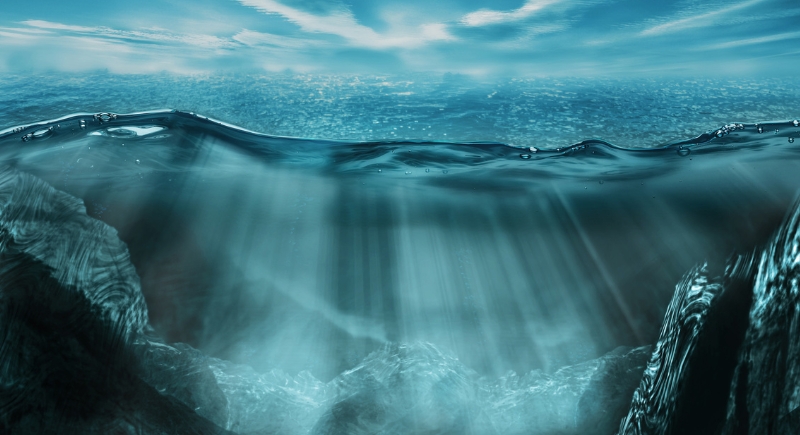
A lot of what appears on global seafloor maps comes from satellite altimetry, which tracks small gravitational changes rather than direct sonar imaging. This means entire underwater mountain ranges are still approximations. In fact, more than 80% of the seafloor remains unmapped in high resolution. The Seabed 2030 Project plans to map it by 2030. But until that goal is met, we have no idea what’s out there in that perpetual darkness, and that’s terrifying.
Deadly Bacteria
Credit: True Creatives
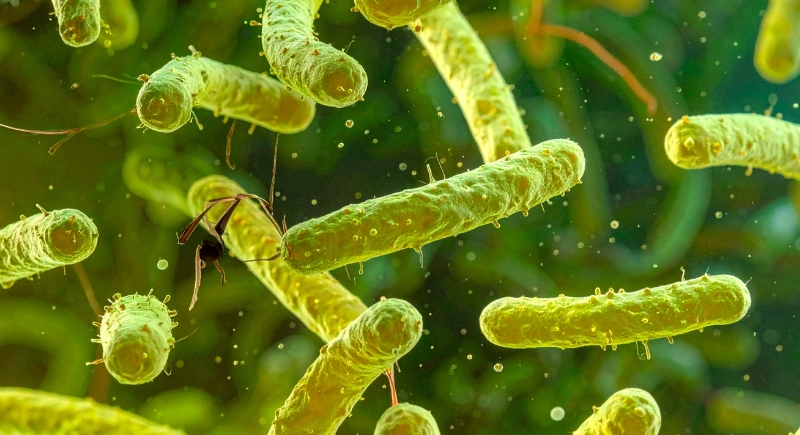
Some dangers are microscopic. Vibrio vulnificus thrives in warm coastal waters and can cause necrotizing fasciitis, a rapidly progressing soft-tissue infection. Infections occur more often in regions such as the Gulf of Mexico. People with open wounds are at higher risk when entering contaminated water. Severe cases sometimes require surgical removal of damaged tissue.
Challenger Deep
Credit: Wikimedia Commons
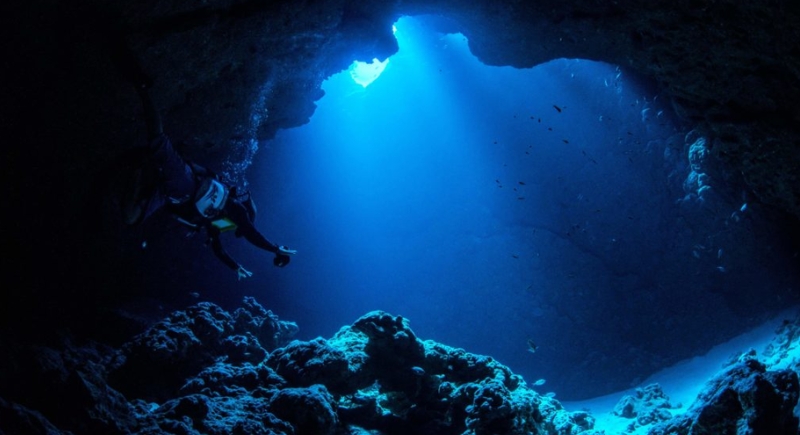
At the bottom of the Mariana Trench is Challenger Deep, plunging about 36,000 feet below sea level. For reference, Mount Everest is 29,032 feet tall. If Everest were placed inside that trench, its peak would still only be a little more than 7,000 feet underwater. Down there, water pressure exceeds 16,000 pounds per square inch. That equals more than 1,000 times the atmospheric pressure felt at sea level. It is the kind of force that can crush equipment not specifically engineered to survive it.
Vampire Squid
Credit: Wikimedia Commons
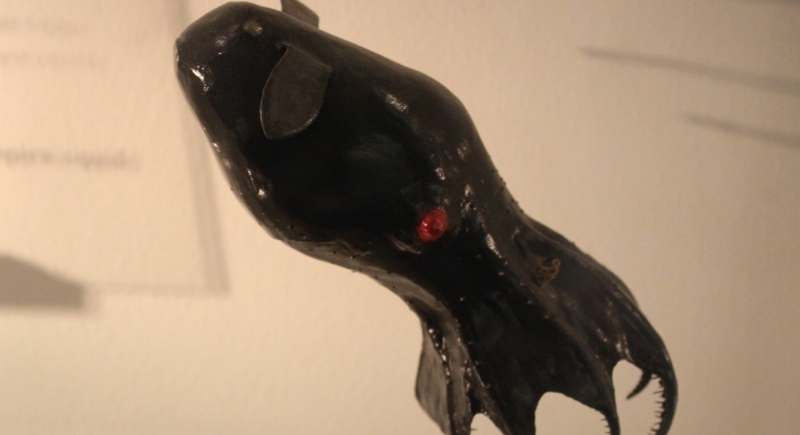
The vampire squid lives between 2,000 and 3,000 feet below the surface, in areas with very little oxygen where many predators struggle to survive. When threatened, it turns its body inside out to expose rows of spiny projections. It also ejects sticky, bioluminescent mucus. The glowing material hangs in the water and creates a brief burst of light that distracts potential predators.
Goblin Shark
Credit: Wikimedia Commons
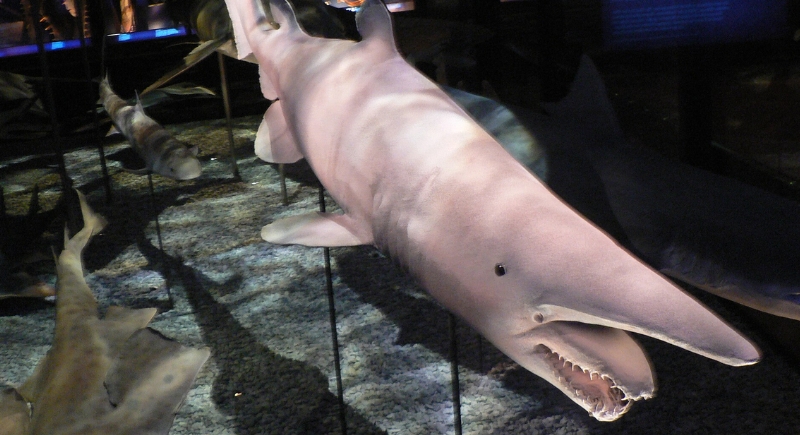
This shark looks like it swam out of a horror movie, but it has existed for about 125 million years. The goblin shark can shoot its jaws forward using elastic ligaments, snapping at prey in a fraction of a second. It typically lives deeper than 330 feet and often occupies much greater depths. Its extended snout and protruding jaw make it one of the most distinctive sharks alive today. It is ancient, unusual, and still out there.
Ocean Eddies
Credit: Wikimedia Commons
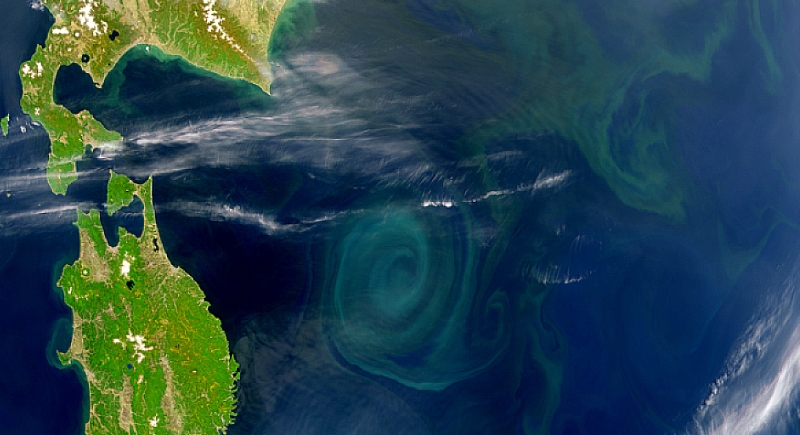
Not all ocean movement is gentle. Ocean eddies are rotating bodies of water formed by currents, wind, and Earth’s rotation. Some of them grow up to 150 kilometers in diameter. These spinning systems trap heat, nutrients, and marine organisms within their circulation. Major currents, such as the Gulf Stream, regularly produce strong eddies. They are sometimes compared to black holes, although they do not contain gravitational singularities.
Giant Isopod
Credit: Wikimedia Commons
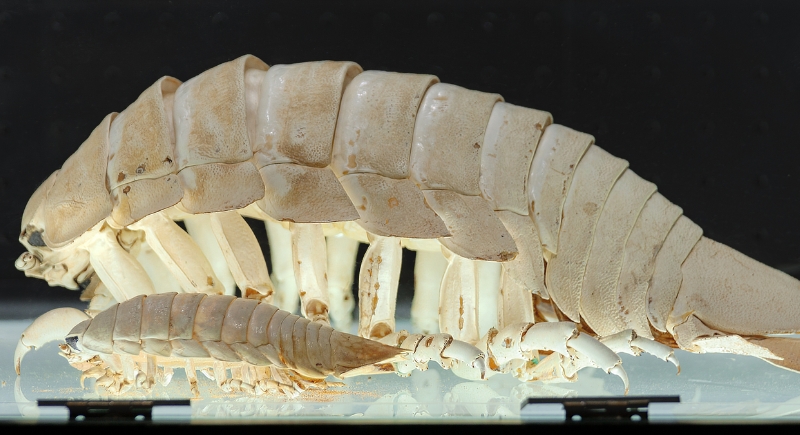
More than 1,700 feet below the surface, the giant isopod crawls along the seafloor looking like a pill bug stretched past 16 inches long. Its armored shell handles crushing pressure with ease. It feeds on dead whales and fish that sink from above. In laboratory conditions, it has survived for years without food. Starvation barely slows it down.
Anglerfish
Credit: Wikimedia Commons
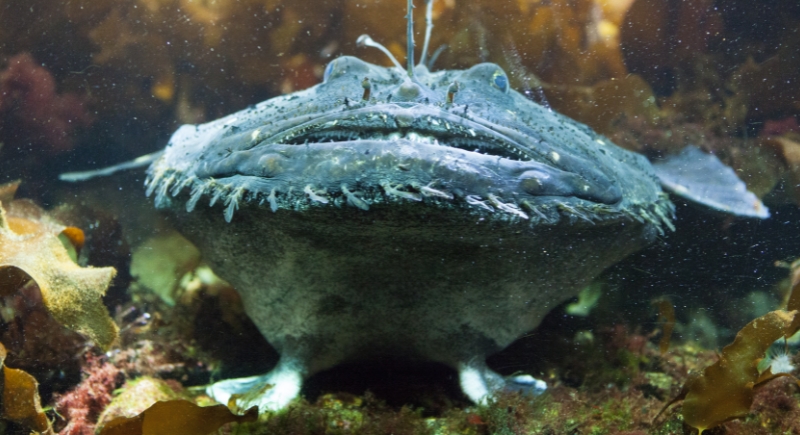
About 3,280 feet below the surface, the bathypelagic zone begins, and that is where the anglerfish makes its living. At the tip of their modified dorsal fin, there is a glowing lure powered by bioluminescent bacteria, and that tiny light becomes irresistible in total darkness. Prey move toward the light and disappear in a single snap. In certain species, tiny males permanently fuse with females and share their bloodstream. Even courtship feels unsettling down there.
Immortal Jellyfish
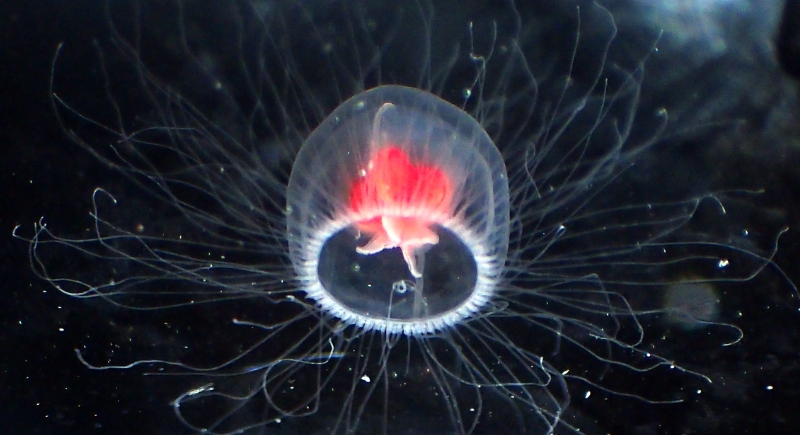
Credit: Wikimedia Commons
One small species challenges the normal rules of aging. Turritopsis dohrnii can revert from its adult medusa stage back to its juvenile polyp stage through a process called transdifferentiation. Scientists documented this ability in the 1980s. Under ideal conditions, it can repeat this cycle multiple times. It can still die from predation, disease, or environmental damage. Even so, the ocean contains a creature that can effectively reset its own life cycle.
Red Octopus Species
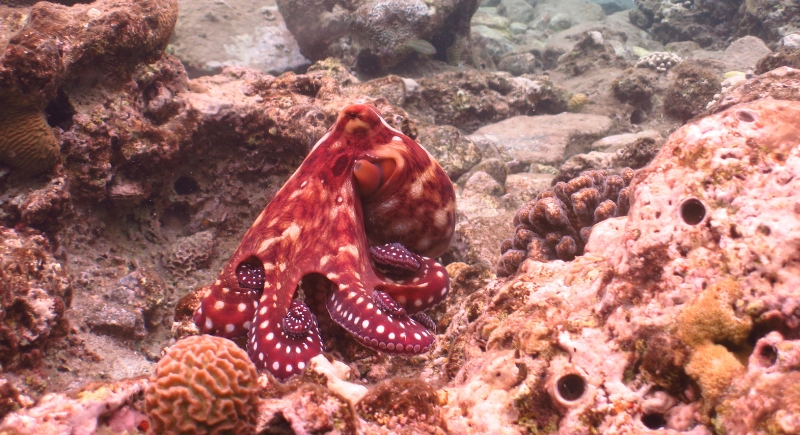
Credit: Getty Images
Deep-sea red octopus species survive intense pressure with soft, gelatinous bodies built for the cold. Many lack the large fins seen in shallower relatives. In near-freezing water, some brood their eggs for more than four years. Low temperatures slow development dramatically.