
Three remote landscapes where a 1,000-foot shift changes what you see, when you see it, and how to travel without blowing the encounter.
The 1,000-foot pivot on Alaska's Denali Highway
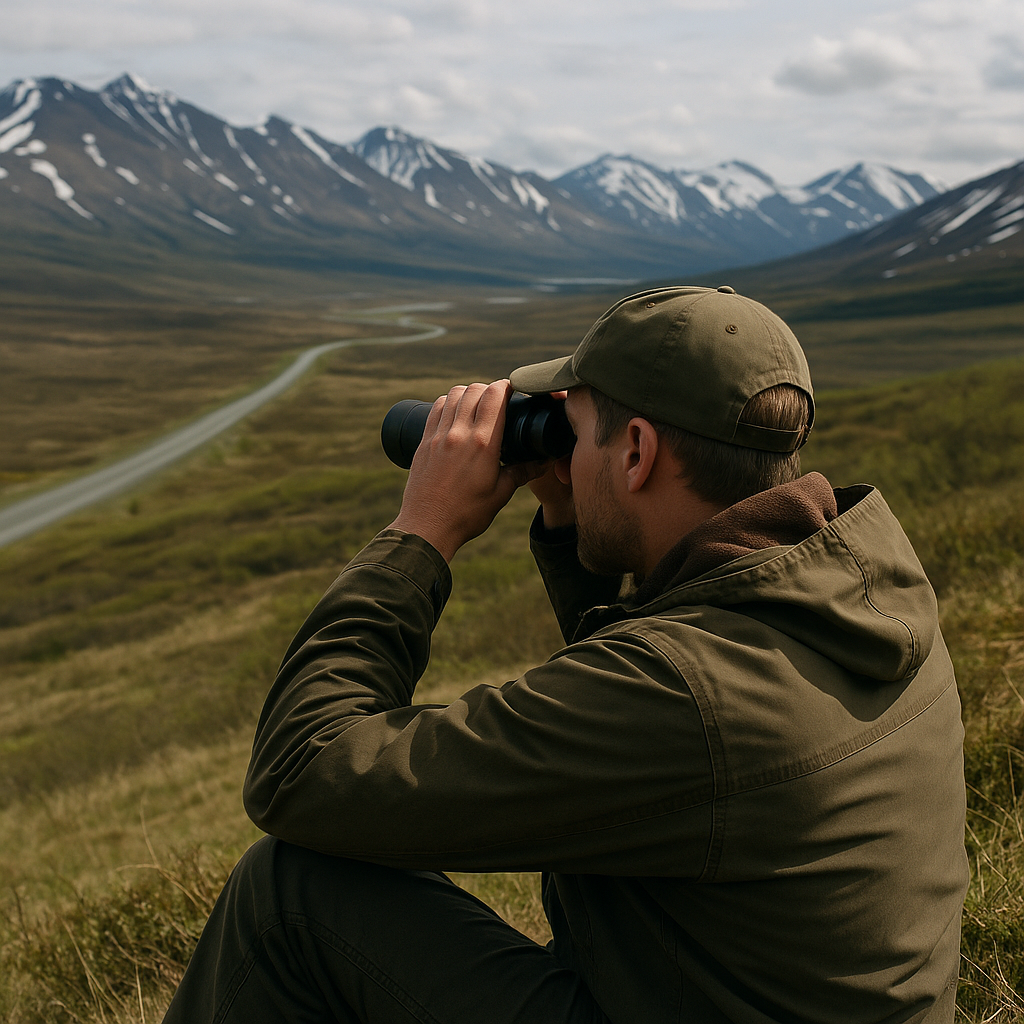
The Denali Highway looks like a straight shot across the middle of Alaska on a map. On the ground, it behaves like a weather machine. The most useful thing I learned up there is that you can be in the right region and still be effectively in the wrong season if you're sitting at the wrong elevation band. Caribou will be strung out on the open tundra one day, then tucked higher on wind-scoured ridges the next, and the reason is often simple: where the snow crust holds, where the new green is earliest, and where the bugs are tolerable. I used to waste hours glassing the obvious valley bottoms because that is where the views feel cinematic. Then a local I met at a pullout gave me the unromantic hint: watch where the willows are waking up first, not where the scenery is widest.
Up here, the pivot can be about 1,000 feet. If you roll into a stretch and the low flats are still locked in gray, last-week ice, don't assume you missed the whole movement. Climb your vantage. Even a small rise that changes your line of sight can flip the whole day. I bring 10x42 binoculars and a compact spotting scope for the shoulder season because animals can be there, but they're not close, and you do not want to be driving pullout to pullout like you're late for a meeting. I also keep a paper topo map in the glove box because cell service is a suggestion. The tell I trust most is wind. When the wind picks up on the open valley floor and you can see grasses shivering, I look to the lee side of higher ground. That is where the animals will pause to feed without getting sandblasted by mosquitoes. You can feel it in your own face in ten seconds. If the air is calm enough that your ears stop buzzing, odds are good you just walked into their comfort zone too, so settle in, stay back, and let them keep their space.
Serengeti to Ngorongoro: when the climb rewrites the calendar
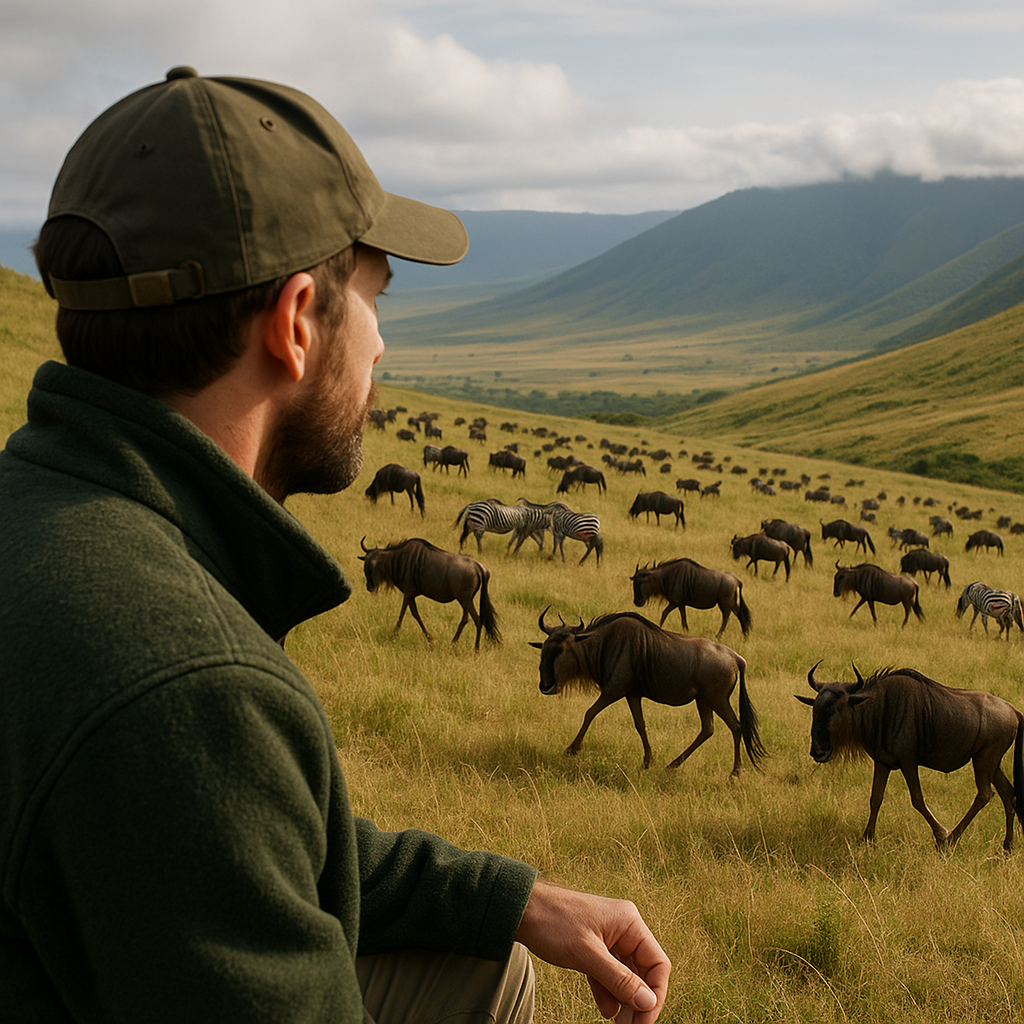
If you've ever driven up out of the Serengeti and onto the Ngorongoro highlands, you know the feeling: the air changes first, then the light, and then you realize your fleece wasn't a paranoid packing choice after all. That climb is also a shortcut into how elevation can shove animals around without any grand, cinematic drama. On the plains, timing is tied to rain, grass height, and where the herds can keep moving. Up on the rim and down into the crater, the same week can look like a different month because temperature and moisture sit differently. I have watched visitors get frustrated because they expected one continuous parade of movement and got a scattered, stop-and-start day instead. The animals were there. They were just using the terrain in a way that didn't match our mental schedule.
Here's the practical way I plan a day across that elevation change. I treat the climb as an intentional reset, not a commute. Early morning down low can be brutally bright and dusty; higher up, you can get a cooler window where predators stay active longer and grazers don't have to choose between feeding and overheating. When I was last there, we started low, saw very little movement in the first hour, and my first instinct was to push harder and cover ground. Our guide did the opposite. He angled us toward a higher track where a breeze ran across the slope, and suddenly everything looked awake. You could see it in the posture of the wildebeest and zebra. Heads down, then heads up, then a steady drift instead of a panicked jog. That kind of calm motion is gold for travelers because it means you can watch without the scene turning into a chase.
Pack for the elevation shift like you mean it: a light shell for dust, a warmer layer for the rim, and a lens cloth because volcanic grit finds glass. If you're self-driving in other parts of Africa, keep your tire pressure and fuel in mind. Long climbs plus rough road equals more heat in tires than people expect. And the biggest etiquette piece: if you arrive at a viewpoint and there are already vehicles stopped, resist the urge to wedge in front for a cleaner photo. The animals are reading the same line of vehicles as a moving fence. When the herd decides to cross, it will choose the gap that stays quiet the longest. If you want the crossing, your best move is often to sit still and keep your engine noise down. It's boring for about eight minutes, and then it's not.
Patagonia's guanaco ladders and the puma line
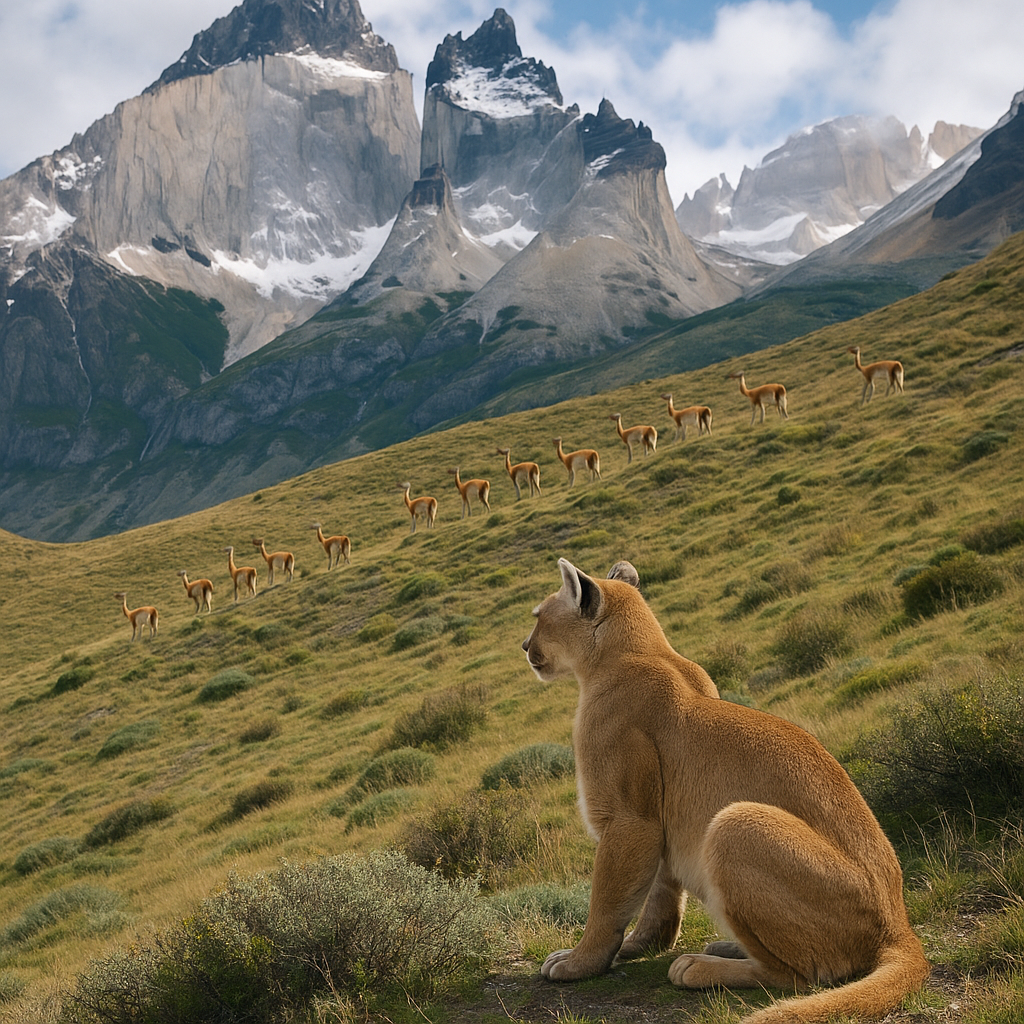
In Patagonia, I learned to look for what I call a guanaco ladder: little vertical steps in where the animals choose to feed and bed down, moving up and down the terrain like they're dialing a thermostat. One afternoon in Torres del Paine, the lower flats were full of tourists and full of wind. The guanacos were technically present, but they were jumpy, bunched tight, and always facing the gusts. A few hundred feet higher, on a gentler slope with a bit of scrub, they spread out and started acting like themselves. That shift isn't random. Elevation changes the wind exposure, the warmth on a north-facing slope, and how far they can see. And once guanacos start using that higher band consistently, pumas start tracing the same contour, because that's where the dinner table is set.
For travelers, the magic isn't just spotting a puma. It's recognizing that the predators and prey are often moving along invisible contour lines, not wandering across the whole park. If you spend the entire day on the easiest roadside viewpoints, you're locked into one elevation band, and you're watching whichever animals tolerate that band at that moment. The moment I started hiking short, steep connectors between overlooks, the whole place opened up. You do not need to be a big-mile person. I'm talking about 20 to 40 minutes up to a perch with a wide view and enough room to sit without being in anyone's way. I bring a closed-cell foam sit pad because the ground is cold even when the sun is sharp, and it keeps me from fidgeting. Fidgeting is loud in a quiet landscape.
One detail I only noticed after a few days: when the wind is ripping, guanacos will bed with their backs to it, and their heads will swivel like radar. If the wind eases at higher elevation first, you'll see them relax there before they do down low. That is your cue that the day is about to change. You can watch the shift roll downhill like someone turning a dimmer switch. I also pay attention to where the snow is lingering in shaded gullies. Those cold pockets can hold animals off a slope longer than you'd expect because the plants are behind schedule. So if you're arriving early in the season and the classic valley routes feel oddly quiet, don't write it off as bad luck. Get above it, glass slowly, and look for the band where the vegetation has finally decided to show up. The animals already found it. You're the one catching up.