
Three ways I use station meals, quick lunch stops, and onboard snacks to get a feel for a place while traveling by rail.
Ekiben is a regional field guide in a cardboard box
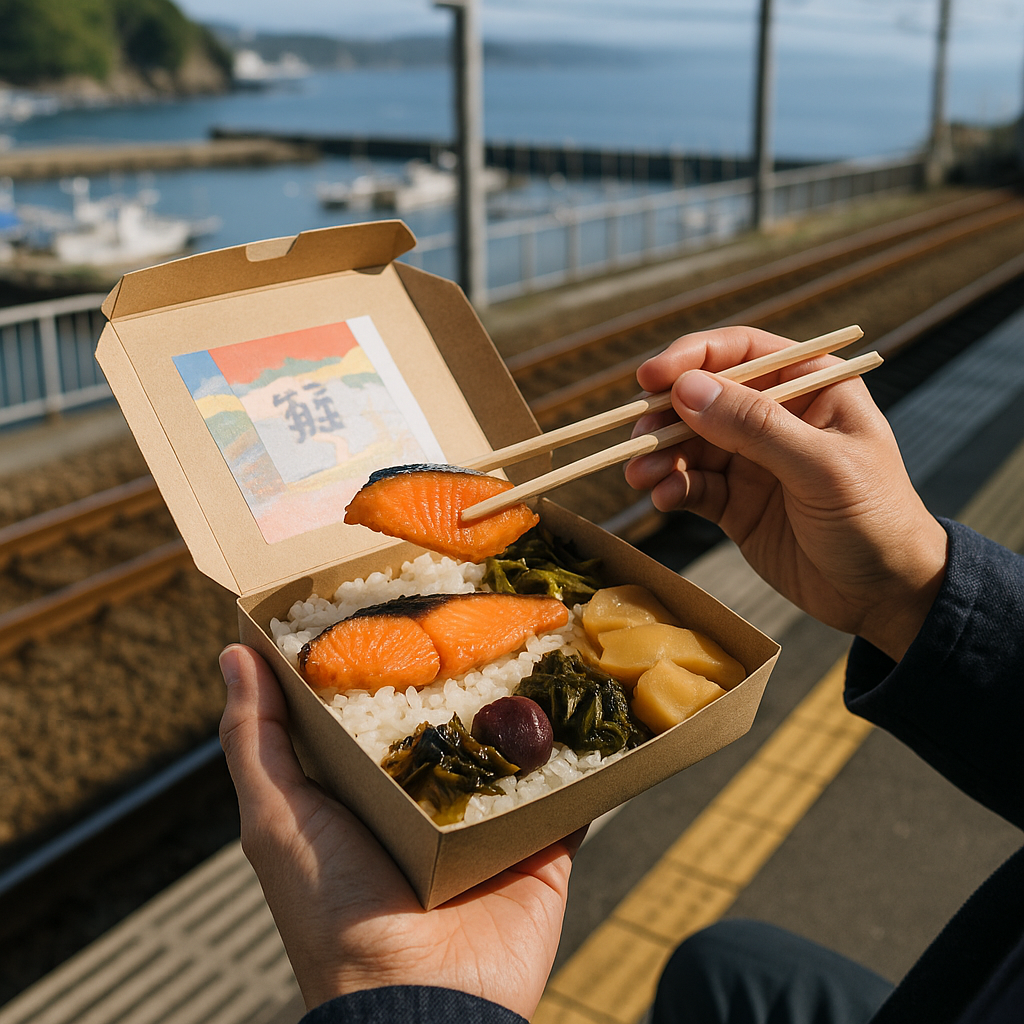
I used to buy ekiben mostly because eating a boxed meal on a Japanese train sounded fun. Then I started looking for boxes tied to the station or region, especially ones built around a local ingredient or specialty. Now I read the label before I choose one. I notice which ingredients the box highlights and whether any are identified as regional specialties. A fish bento feels more connected to the trip when the route runs along the coast and fishing towns appear outside the window.
There's a practical side too. Ekiben makes particular sense on long-distance trains, where boxed meals are easy to carry and eat at your seat. I appreciate the boxes that include a wet wipe or toothpick because they make eating at my seat a little easier. If I'm standing at the platform kiosk with five minutes, I grab something that has a clear protein, one simmered thing, and one sharp thing (pickled plum, mustard greens, ginger). That balance is not fancy; it's just how you avoid arriving hungry and cranky two stops later.
What I like about eating on the train is how quickly the food connects with what I just passed: rice fields, orchards, fishing boats, or an industrial town. Eating on the train makes those regional details easier for me to notice. Even the packaging can point me toward a prefecture, producer, or local specialty I want to look up later. I sometimes keep the paper band and look up unfamiliar ingredients later at the hotel.
I plan one long stop around a market lunch, not a landmark
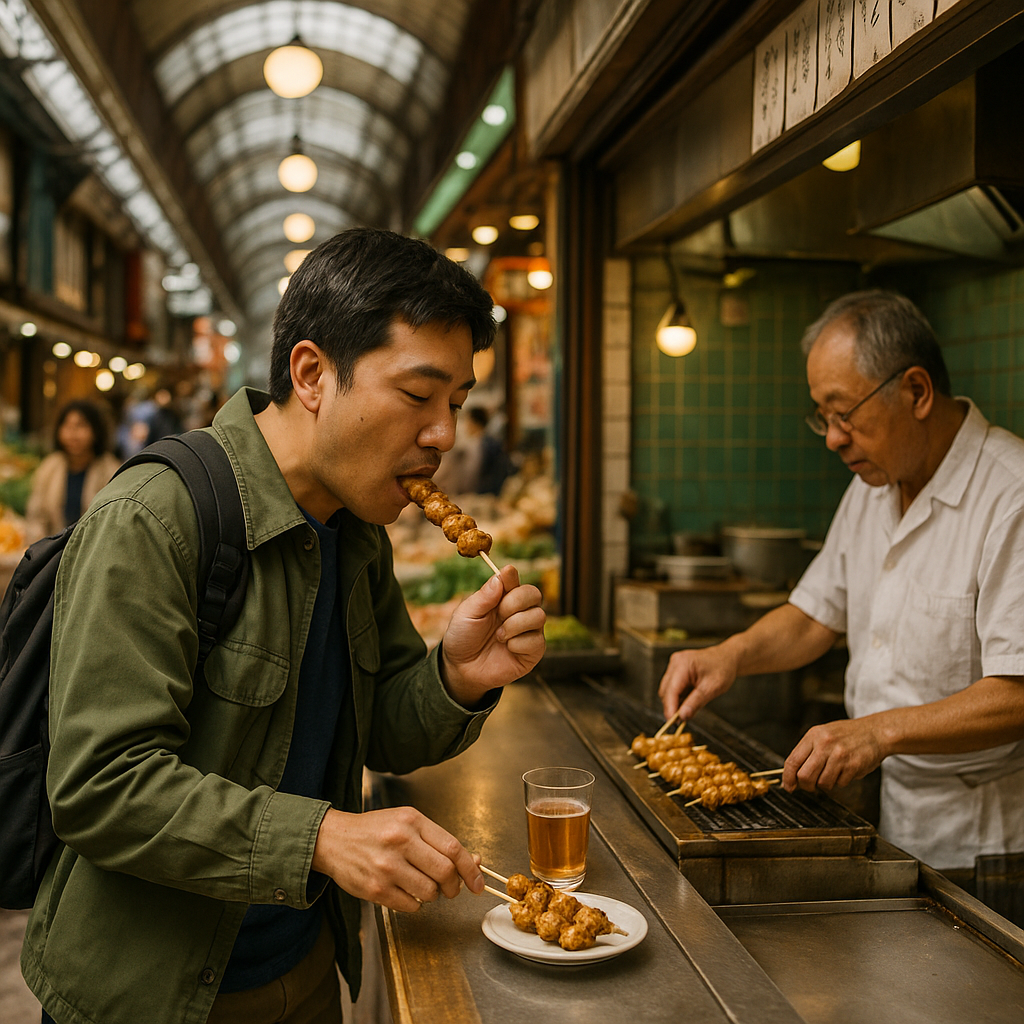
If I have a rail day with a built-in layover, I don't spend it power-walking to a cathedral and back. I pick a stop where good food is close to the station. That might mean a covered arcade, a small produce market, or a counter restaurant crowded with regulars. That kind of quick neighborhood detour is much easier to work into a rail day.
Here's how I do it without missing my train. I pick one stop with a buffer of 60 to 90 minutes and keep the radius tight: a 10-minute walk at most. I'm looking for somewhere built for quick turnover, such as a standing counter, a ticket-machine restaurant, or a place serving fast lunch sets. In Japan, that might be a soba shop tucked inside the station concourse. In Spain's Basque Country, it might be a bar with pintxos lined up on the counter near the station. Elsewhere, I look for a busy stall with a short menu and a steady stream of regular customers. If several regulars order the same thing, I usually take a closer look at it.
I also watch how the place works: whether diners clear their own trays, eat standing at the counter, or use condiments I don't usually see at home. Even the side soup can point me toward local ingredients, although I treat those clues as prompts to investigate rather than proof of where a dish comes from.
Rail stops also let me watch the station between trains. I notice school groups, commuters, families, and travelers with luggage moving through while I eat. By the time I get back on the train, I usually have one more local dish or ingredient to look up later.
Onboard snacks show me what people actually buy between stops
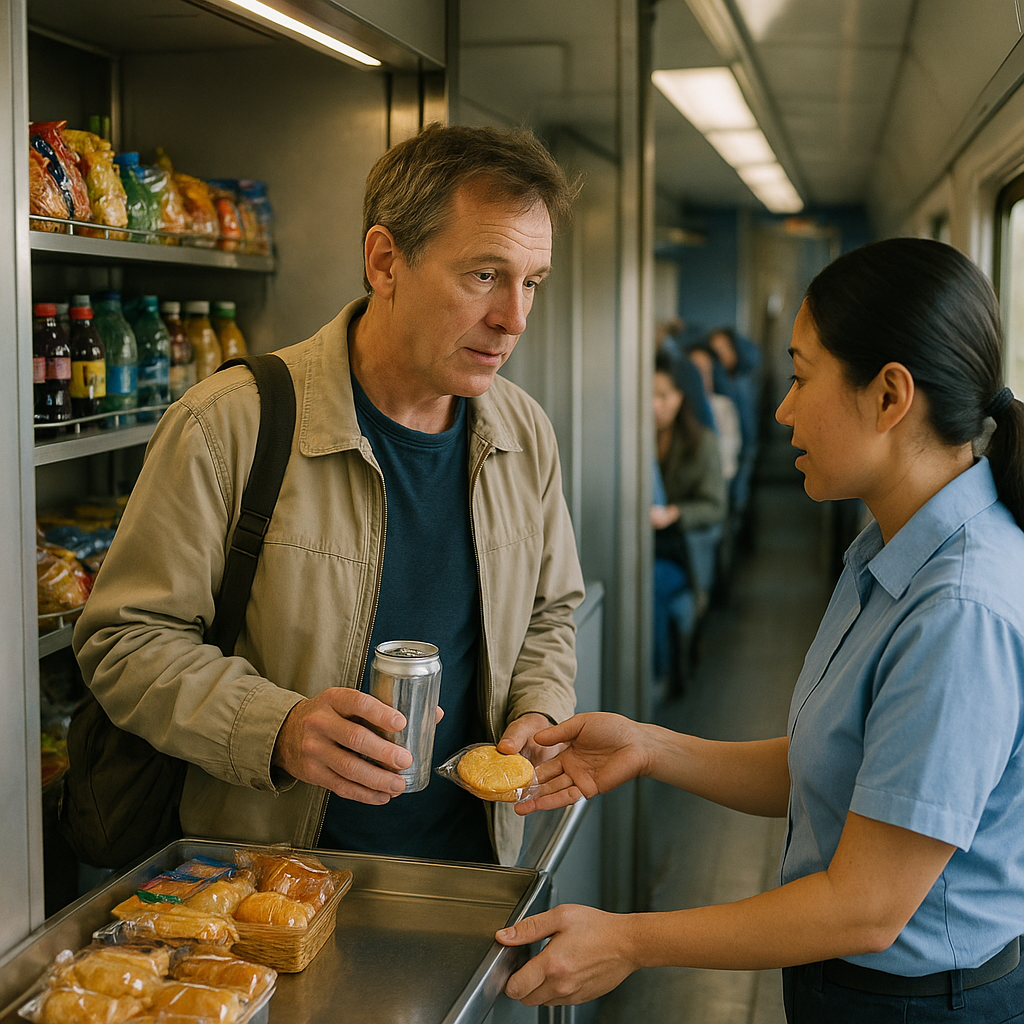
I love a dining car when it's available, but everyday snack options are often easier to spot at an onboard counter or kiosk. That's where I notice what people buy for an ordinary couple of hours on the train. On one route, it was canned coffee and a specific brand of butter cookie. On another, it was dried squid and beer at 11:00 a.m. (I was mostly impressed by the 11:00 a.m. commitment.) Those choices give me a sense of what sells on the route, without telling me much about the individual passengers.
If I'm trying to understand what people actually buy along a route, I pay more attention to everyday snacks than the fanciest option on the menu. When I board, I do a quick scan of what other passengers are carrying: paper cups with lids, a plastic bag that smells like fried dough, a neatly tied package from a station bakery. Then I walk to the cart with a small bill and ask the attendant what's popular that day. Sometimes the answer is as simple as pointing to the item that has been selling fastest that day.
I can spread the snacks across the trip, trying one while the train passes vineyards and another when the scenery shifts to pine forest or industrial sprawl. Eating them at different points in the trip helps me connect each snack with what I'm seeing outside.
I also pay attention to the packaging because it often carries regional names, seasonal designs, or clues about the producer. I notice seasonal designs, packaging that's easy to handle at a seat, and how passengers handle wrappers afterward. I also pay attention to whether people save a snack for later, share it, or finish it before the next stop.