10 Bizarre Vertical Forests That Are Changing the Way We Build Cities
Cities already house 56% of the global population, which equals about 4.4 billion people, and that number is expected to reach nearly 70% by 2050. That growth projection is pushing cities to address heat, pollution, and limited space simultaneously. Vertical forests answer that pressure by stacking greenery onto high-rise buildings, thus turning concrete towers into working ecosystems that absorb carbon dioxide, cool the air, and support wildlife.
Bosco Verticale (Milan, Italy)
Credit: Getty Images
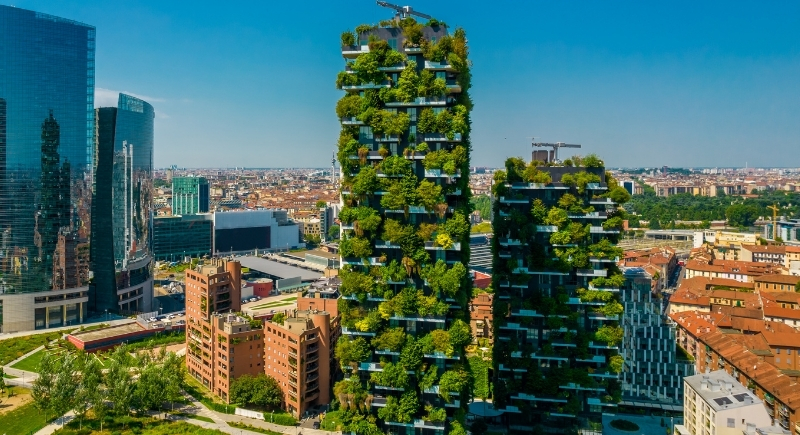
Milan changed the skyline in 2014 when Stefano Boeri completed Bosco Verticale, a pair of towers rising 27 and 18 floors. More than 900 trees and 20,000 plants cover the structure, creating a vertical forest equal to about 215,000 square feet of woodland. It absorbs roughly 30 tons of carbon dioxide annually.
Nanjing Vertical Forest (Nanjing, China)
Credit: Youtube
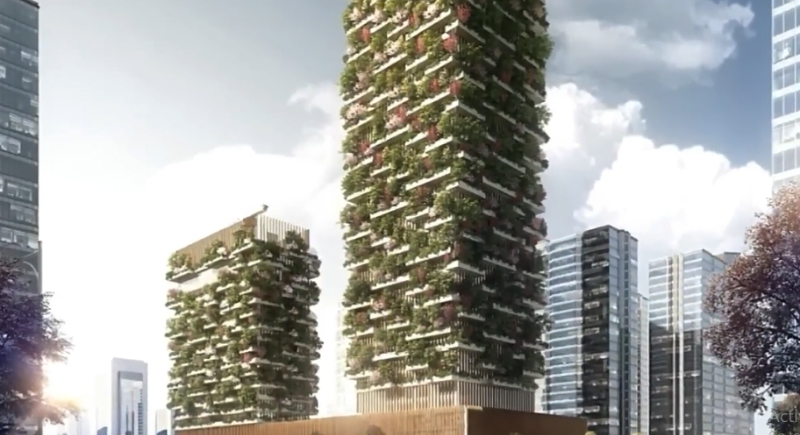
Nanjing’s Vertical Forest adapts the Milan model to local conditions by using 27 native plant species. The buildings support more than 800 trees and 2,500 shrubs across roughly 4,500 square meters of facade. This vegetation absorbs about 18 tons of CO2 each year and produces about 16.5 tons of oxygen.
Oasia Hotel Downtown (Singapore)
Credit: Canva
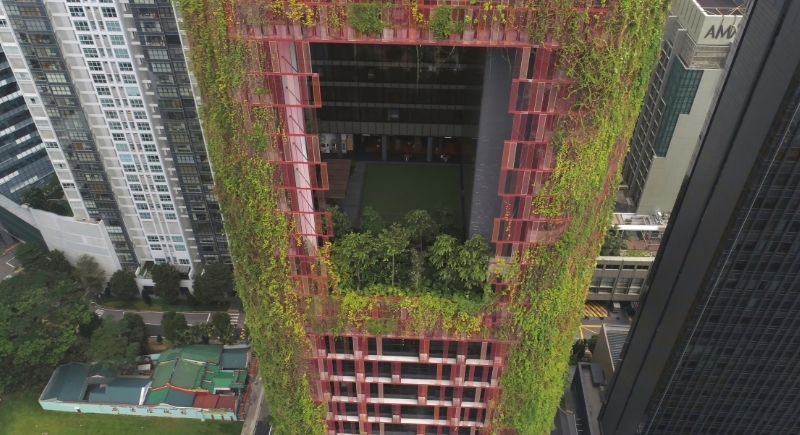
Wrapped in a bold red lattice, this 27-story Singapore tower uses its outer frame as a living support system. Designed by WOHA, the structure achieves a Green Plot Ratio of 1,100%, meaning it introduces more greenery than the combined area of 10 nearby plots. Birds and insects moved in quickly and turned a dense business district into shared habitat.
One Central Park (Sydney, Australia)
Credit: Wikimedia Commons
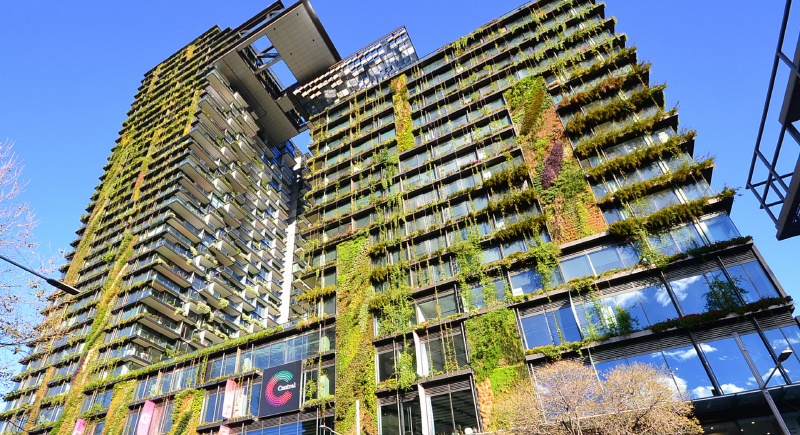
Sydney’s One Central Park combines architecture and botany through a collaboration between Jean Nouvel and Patrick Blanc. Plants cover about 50% of the facade using hydroponic walls and climbing systems. The greenery provides natural shading and reduces indoor heat during summer. It’s the first residential tower in the city to earn a 6 Green Star rating.
Easyhome Huanggang Vertical Forest City Complex (Huanggang, China)
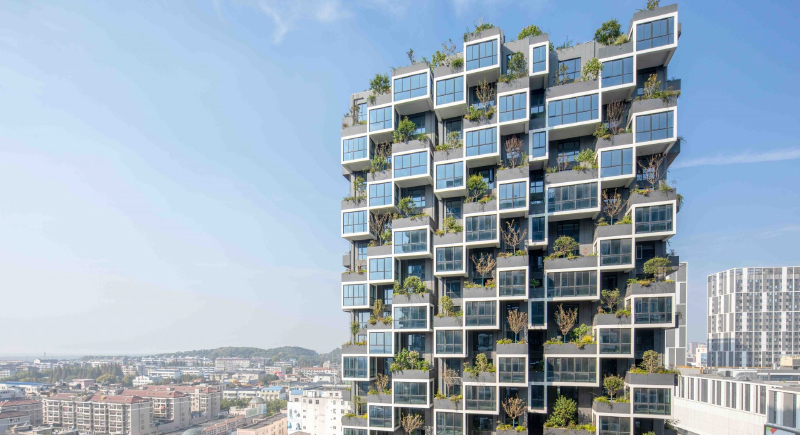
Credit: Stefano Boeri Architetti
Rather than focusing on a single tower, this Chinese development scales the concept across multiple buildings. Vegetation lines balconies and terraces. It’s a reflection of how entire neighborhoods can integrate plant life without expanding outward.
PARKROYAL Collection Pickering (Singapore)
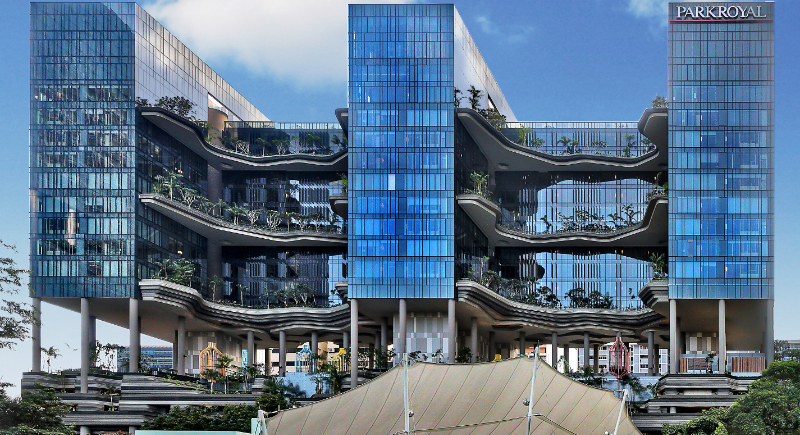
Credit: Wikimedia Commons
Instead of placing plants on the surface, this hotel stacks entire garden terraces throughout its structure. Vegetation appears across both interior and exterior spaces. Studies show these facades can lower surrounding temperatures by up to 5°C.
Nanjing Zendai Himalayas Center (Nanjing, China)
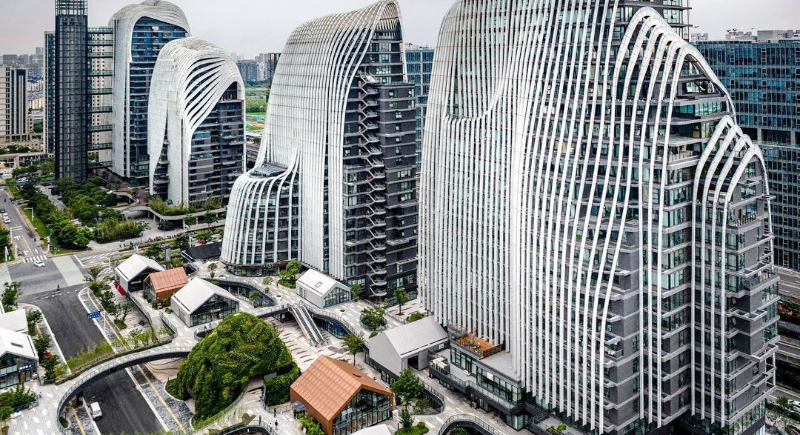
Credit: Reddit
This project explores how vertical forests can fit into commercial districts without losing function. It aims to show that greenery can coexist with large-scale business infrastructure. Designers incorporated vegetation while accounting for wind patterns and irrigation challenges at height.
Rosewood Tower (São Paulo, Brazil)
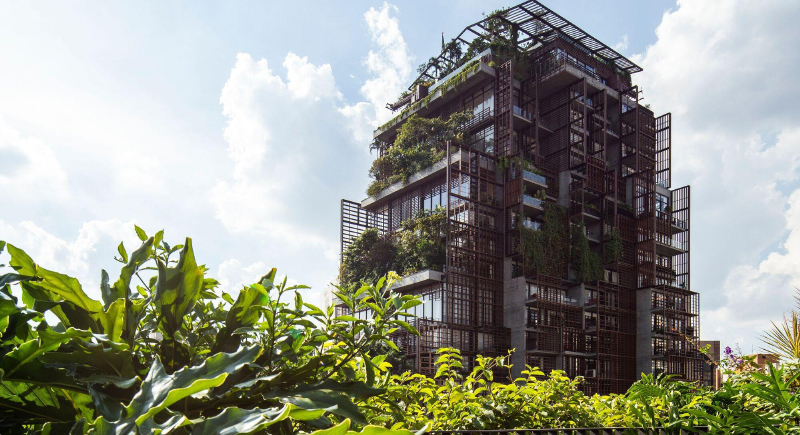
Credit: Reddit
In Brazil, vertical greenery helps restore biodiversity in dense urban areas. Plants along the facade provide habitat for birds and insects that often disappear during development. Research around similar projects in Milan recorded more than 1,600 species returning.
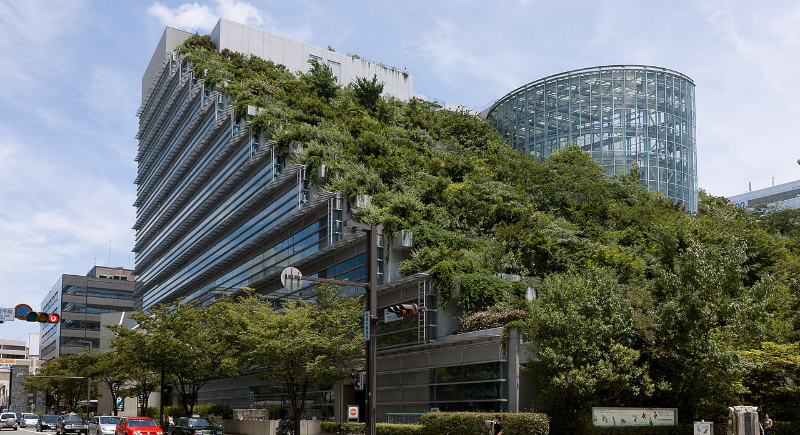
ACROS Fukuoka Foundation Building (Fukuoka, Japan)
Credit: Wikimedia Commons
Japan approached the concept differently by turning an entire structure into a stepped green hill. Terraced gardens climb the building. The plants also capture airborne dust and pollutants. It combines architecture with landscape.
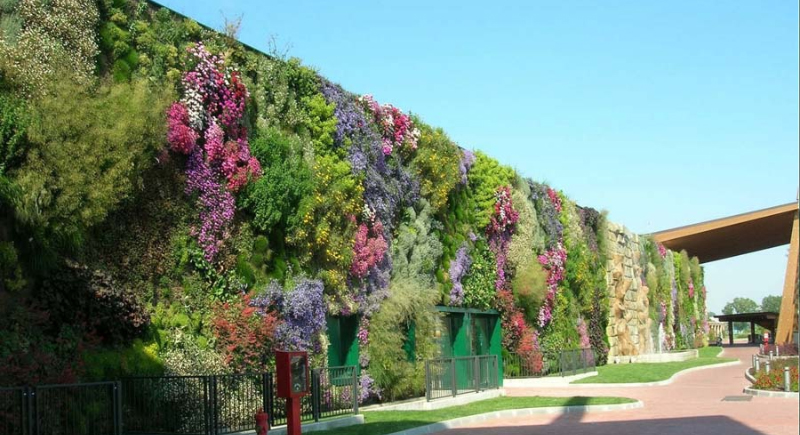
Peverelli Garden Center Cultivation System (Como, Italy)
Credit: Peverelli Srl
Before plants ever reach a vertical forest, many are grown in specialized nurseries like the Peverelli Garden Center near Como. Trees and shrubs have been cultivated for years to adapt to wind, height, and limited soil conditions on high-rise facades. This preparation ensures that vegetation survives once installed on towers dozens of floors above ground.