10 U.S. Places With the Best Public Transportation (That Aren’t NYC)
Car-free living is far from niche. Walk Score evaluated 130 U.S. cities with populations over 200,000 and assigned each a score out of 100. The rating considers factors such as how often vehicles run, how close transit stops are to residents, and the types of service available. Rail systems receive higher scores than bus routes because they typically carry more passengers and operate on fixed, faster lines. New York often dominates this conversation, but many other cities make life without a car realistic as well.
San Francisco

Credit: Wikimedia Commons
Cable cars were climbing San Francisco’s hills in 1873, and three of those lines still run today. The city holds a Transit Score of 77.1, ranking second nationally in transit-focused evaluations. Bay Area Rapid Transit connects the region, while Muni trains and buses handle local routes. An 89 Walk Score supports daily errands on foot, and average annual precipitation of 27.94 inches keeps weather disruptions relatively limited.
Boston

Credit: Canva
Boston’s subway system dates to September 1, 1897, when the Tremont Street Subway opened as the first underground transit line in the United States. Parts of that original tunnel remain in use today. The city holds a Transit Score of 72.4 and a Walk Score of 83. Annual precipitation averages about 41.9 inches, which can disrupt service. Dense neighborhoods and extensive rail coverage still allow many residents to live without a car.
Jersey City

Credit: Canva
Nearly 50% of Jersey City’s more than 286,000 residents commute via public transportation. That’s an unusually high share for a U.S. city. Its transit Score of 70.5 reflects strong access to buses, ferries, light rail, and PATH trains. Plus, direct links to Manhattan and other parts of New Jersey reduce the need for personal vehicles. The proximity to New York City fuels steady ridership and frequent service. Living here means the skyline across the river is part of the daily routine.
Washington, D.C.
Credit: Getty Images
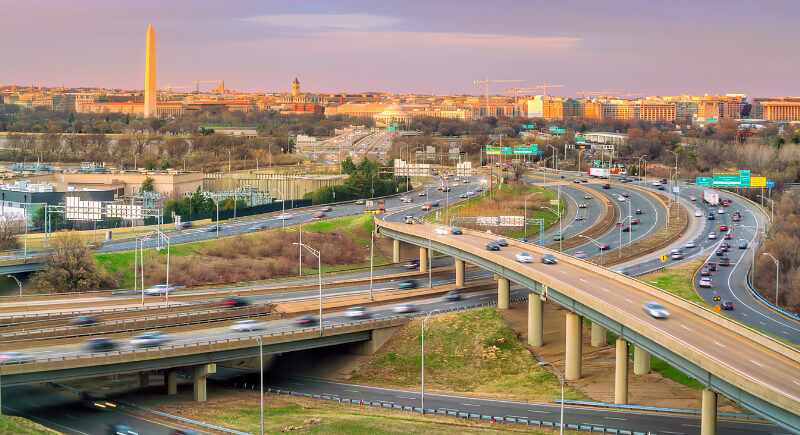
Rail service in the capital began in 1976 under the Washington Metropolitan Area Transit Authority, and the network now spans Virginia, Maryland, and the District of Columbia. The city posts a Transit Score of 68.7, while broader rankings award it a perfect 100 for transit access and 98 for walkability. Annual precipitation totals 42.82 inches, which can complicate commutes during heavy storms.
Philadelphia

Credit: Canva
SEPTA operates more than 120 bus routes in Philadelphia, along with subways, elevated trains, and trolleys. The city earns a Transit Score of 67.0, and service stretches into five surrounding counties. Annual precipitation averages 41.44 inches, which influences travel conditions throughout the year. Regional rail lines expand options beyond city limits. It is a system built for volume, and it shows.
Chicago

Credit: Wikimedia Commons
A staggering 224 miles of rail track weave through Chicago and extend into 35 suburbs. The city holds a Transit Score of 65.0 and a Walk Score of 77. The network feels expansive because it is. Annual precipitation reaches 34.72 inches, with winter snowfall adding seasonal hurdles. The “L” supports both local commutes and regional travel.
Newark

Credit: Canva
Matching Chicago with a Transit Score of 65.0, Newark benefits from its position along the Northeast Corridor. Trains and buses link residents to destinations across New Jersey and into New York City. Being part of a dense regional network increases frequency and access. The presence of two New Jersey cities in the top 10 shows the state’s depth in transit.
Seattle

Credit: Wikimedia Commons
Seattle has a Transit Score of 59.6, and the region continues to expand its rail network. Current service links major neighborhoods with surrounding suburbs through buses, light rail, and commuter trains. Ridership remains below pre-2020 levels, though the system still handles a large share of daily travel. Riders under 18 can use regional transit free of charge, a policy aimed at building long-term transit habits.
Arlington

Credit: Canva
Arlington posts a Transit Score of 58.6 and benefits directly from Washington’s Metro system. Local bus routes supplement subway access and strengthen neighborhood connectivity. Close ties to the capital’s grid give residents a broader reach without having to cross long distances by car.
Portland

Credit: pexels
Across the country, Portland earns a Transit Score of 56.7 and stands out for integrating buses, streetcars, and MAX light rail into one coordinated system. TriMet operates the regional network and links downtown with surrounding suburbs and the airport. The city’s Walk Score of 81 reflects dense neighborhoods that support daily errands without a vehicle.