Train vs. Plane: The Math Reveals Which Is Actually Better When Prices Match
When airfare and train tickets cost roughly the same, the choice feels less obvious than it used to. Flights are faster on paper, while trains feel easier in practice. For years, price alone settled the debate, but on many major routes, that advantage has narrowed or disappeared entirely.
So when the numbers line up, which option actually delivers more value? Let’s find out.
Price Parity Is No Longer Rare

Image via Getty Images/juststock
Dynamic pricing has reshaped how travelers book both flights and trains. Airlines have relied on it for decades, and Amtrak now uses it aggressively, especially along the Northeast Corridor.
On routes such as New York to Washington, Boston to New York, and New York to Chicago, it is increasingly common to see train and plane tickets separated by only a few dollars.
Bookings often pull both options into the same price range during non-peak windows. When that happens, ticket cost stops deciding the trip.
Door-To-Door Time Changes Everything
Flight times usually look unbeatable at first. A one-hour flight appears decisive until you consider door-to-door time. Air travel adds fixed time costs that do not shrink with cheaper fares.
Travelers still have to reach airports that are far from city centers, arrive early for security and boarding, wait through taxiing and potential delays, and navigate baggage claim or ground transportation after landing.
Those steps can turn a short flight into a four- or five-hour commitment. Train trips work differently. Stations are typically located downtown, boarding takes minutes, and arrival places travelers directly in city centers. On many Northeast routes, a three- to four-hour train ride frequently matches or beats total flight time once the full journey is measured.
Time Has Economic Value
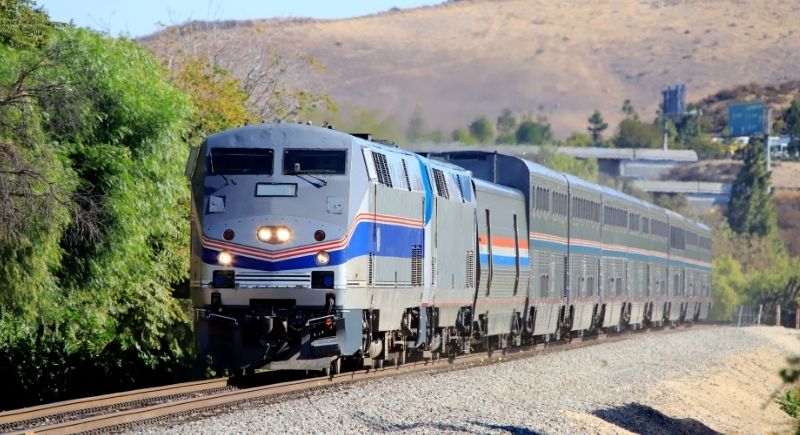
Image via Getty Images/Laser1987
Time has measurable value. Train travel allows uninterrupted work, phone calls, reading, or rest from departure to arrival. Wi-Fi tends to remain usable for longer stretches, power outlets are standard, and getting up to move around is easy.
Air travel breaks time into fragments. Devices come out late and go away early, movement is limited, and productive windows are short.
When two trips cost the same but one preserves two or three usable hours, the effective value of that ticket rises. The difference matters most for business travelers, but it applies to anyone with a packed schedule.
Hidden Costs Favor the Train
Equal ticket prices do not produce equal total costs. Apart from some additional time costs, air travel frequently adds fees that do not appear during the initial search. Checked bags often cost extra, carry-on restrictions push travelers toward paid upgrades, and airport food prices run high.
Train travel tends to include more generous baggage allowances, no bag fees, lower station food prices, and cheaper local transportation. When ticket prices match upfront, these secondary costs often push flights higher in the end.
Then, there is the issue of delays. Even though they can affect both trains and planes, their consequences differ.
Flight delays cascade. Missed connections, gate changes, crew schedules, and weather systems can cancel or reroute entire itineraries. Recovery options become limited once travelers are inside an airport system.
Train delays more often stretch arrival times. Missed connections are less common on direct corridors, and rebooking is usually simpler. Stress carries its own cost, even if it never appears on a receipt. Predictability has real value, particularly on shorter trips.
When the Plane Still Wins
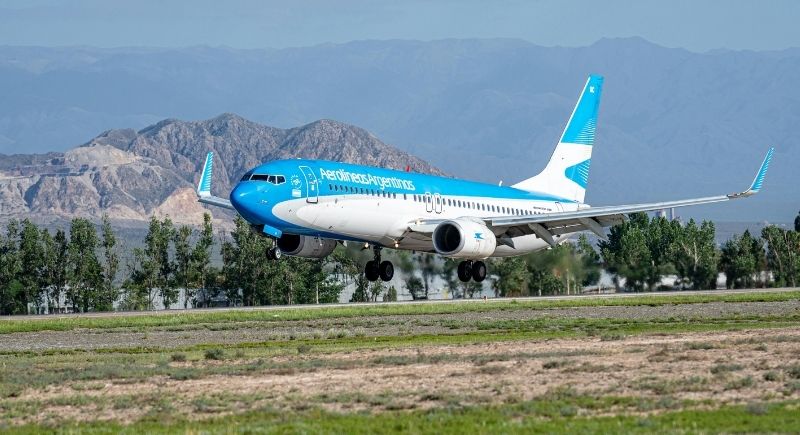
Image via Pexels/Franco Monsalvo
The math does not favor trains everywhere. Flights outperform trains when distances extend beyond roughly 500 or 600 miles, rail routes require multiple transfers, service is infrequent, or arrival time matters more than usable travel time.
In regions with limited rail infrastructure or on cross-country routes, flights retain a clear advantage. Price matching in those cases is uncommon, and when it happens, speed still dominates the equation.
The real decision zone is between about 200 and 450 miles, especially in dense travel corridors. In this range, ticket prices frequently converge, door-to-door times align, airport friction carries more weight, and centrally located train stations outperform distant airports.
This is where the math most consistently tilts toward rail.