10 Ways Tokyo’s Robot Baggage Handlers Are a Total Game Changer
Tokyo’s airports operate with remarkable precision. At Haneda Airport and Narita International Airport, millions of passengers pass through every year, and rising tourism numbers have intensified the operational pressure. More visitors mean more suitcases, tighter aircraft turnarounds, and heavier workloads for ground crews already affected by Japan’s aging workforce.
Instead of absorbing that strain as a cost of growth, Tokyo’s aviation sector has turned to robotics and assistive technology. These upgrades are reshaping airport operations.
Power Suits Expand the Labor Pool Immediately
Credit: The Government of Japan
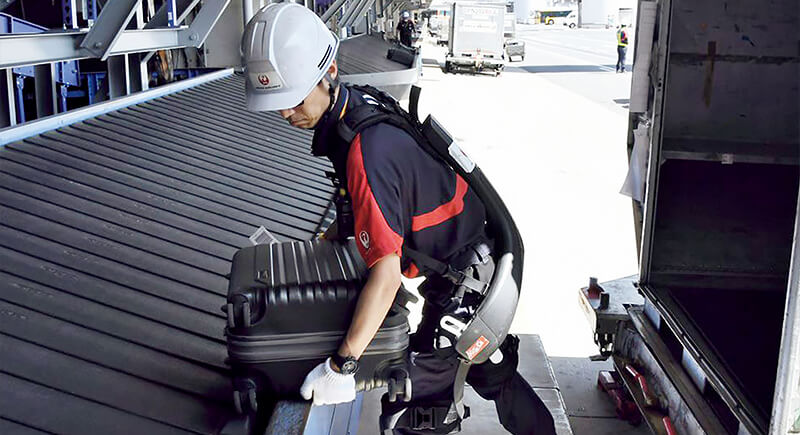
Japan Airlines introduced wearable power-assist suits developed by Panasonic’s offshoot Atoun for handlers at Haneda and Narita. The exoskeleton runs along the spine and hips, using sensors that detect bending and lifting. When strain begins, mechanical support activates automatically. Physical strength no longer determines eligibility for baggage handling. Older workers, women, and employees of smaller build can safely lift heavy luggage. In a country grappling with labor shortages, the shift widens hiring options overnight and stabilizes staffing levels.
Injury Reduction Becomes Built Into the Workflow
Credit: Nikkei Asia
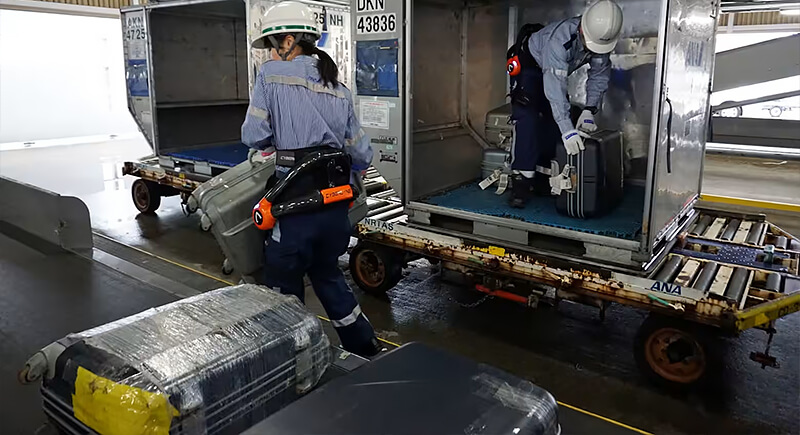
Repeated lifting of 50-pound suitcases is one of the most common sources of musculoskeletal injuries among airport ground crews worldwide. Pairing wearable assistance with automated systems sharply reduces repetitive strain. Fewer injuries translate into fewer absences, lower compensation costs, and more experienced staff remaining on the job. Operational consistency improves when teams are not constantly rebuilding around injured workers.
Floor-Level Scales Remove a Friction Point at Check-In
Credit: Reddit
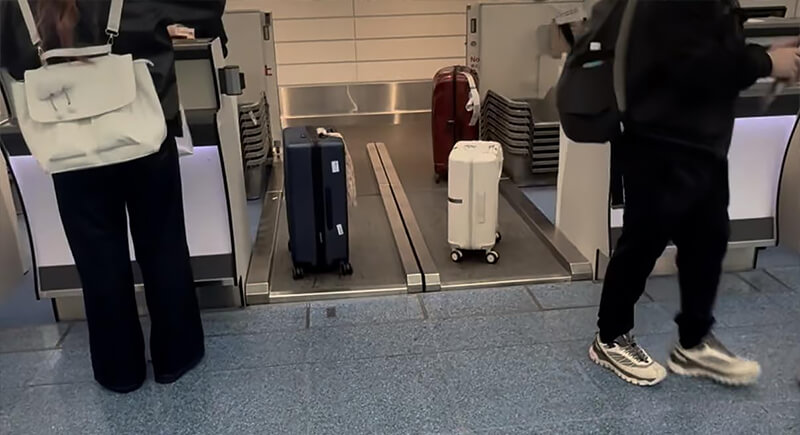
A viral video from Haneda showed baggage scales embedded flush with the floor. Instead of lifting suitcases onto raised platforms, passengers roll them directly onto the scale. The design removes an awkward lift from every check-in interaction. When multiplied across thousands of daily departures, the cumulative time savings and physical relief are significant. The check-in line moves faster because no one pauses to wrestle with their luggage.
Automated Bag Drops Reshape Passenger Flow
Credit: Youtube
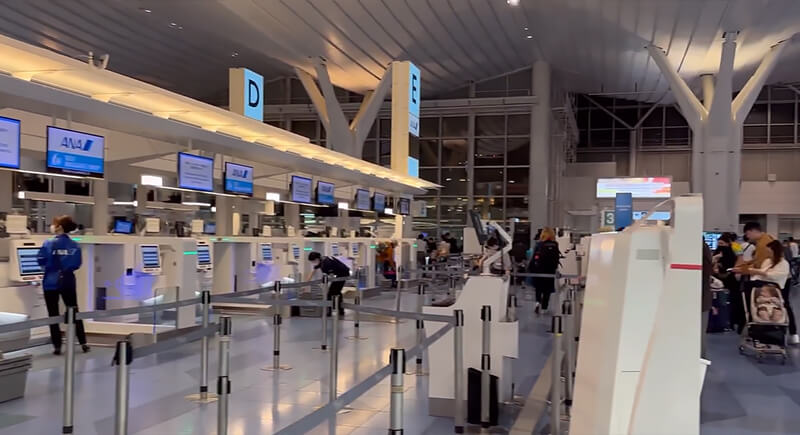
Haneda and Narita both use automated self-baggage drop systems, including units developed by Daifuku. Travelers tag and deposit luggage independently, which shortens queues and repurposes staff to assist passengers with special requests. Human employees’ responsibilities have shifted away from repetitive scanning tasks toward higher-value service roles that require judgment and communication.
RFID Tracking Dramatically Reduces Misrouting
Credit: Youtube
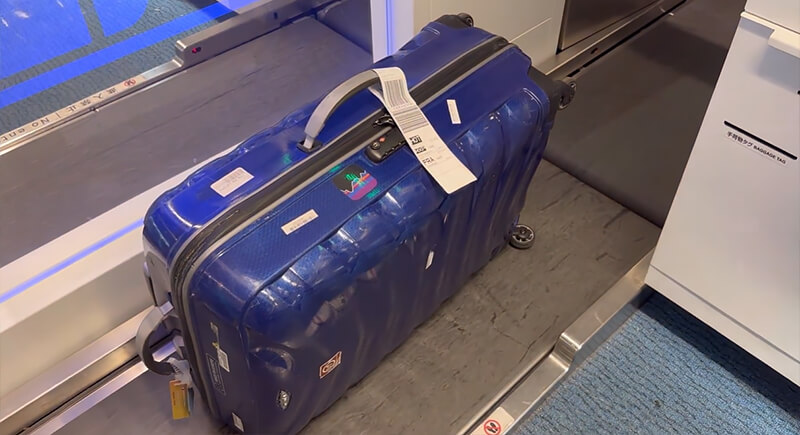
Airlines around the world misplace millions of bags annually, often due to manual sorting errors. Tokyo’s automated systems rely on RFID data to identify each suitcase precisely. Machines read digital tags instead of relying on visual matching, which minimizes confusion between similar-looking bags. If a problem occurs, the digital tracking history makes locating and redirecting luggage far faster. Suspicious irregularities are easier to detect and investigate, too.
Autonomous Vehicles Increase Turnaround Speed
Credit: Nikkei Asia
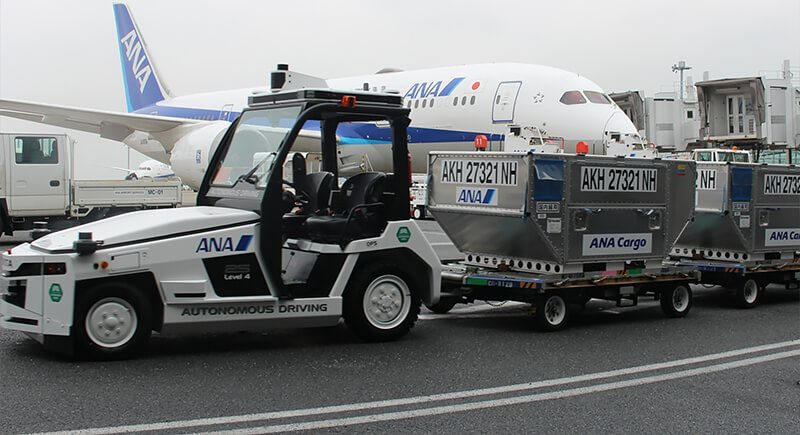
Automated guided vehicles transport baggage across the tarmac at consistent speeds that would be unsafe for manual cart operators. They do not tire, become distracted, or vary in performance. Faster and more predictable loading cycles shorten aircraft ground time. Even small improvements in turnaround speed ripple across airline schedules.
Assistive Robotics Lower Long-Term Operating Costs
Credit: Youtube
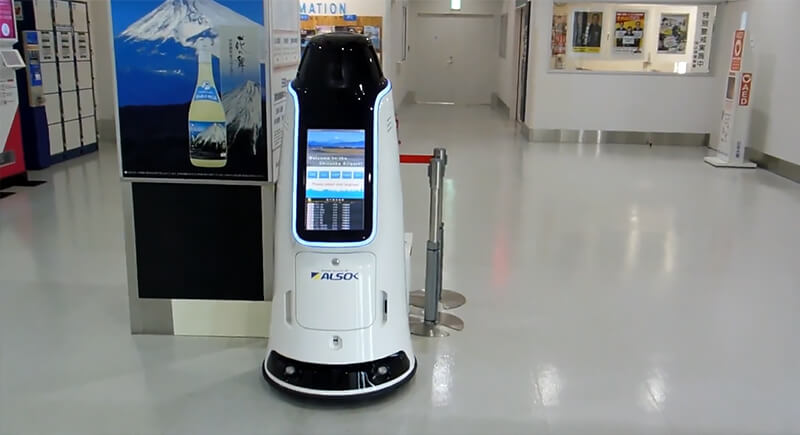
Fully autonomous operations often demand expensive maintenance and constant software oversight. Tokyo’s use of assistive robotics keeps humans in decision-making roles while technology handles physically taxing tasks. This hybrid structure avoids the heavy maintenance burden associated with fully replacing workers. It also reduces downtime because employees can step in immediately if a system encounters an issue.
Tourism Growth No Longer Overwhelms Capacity
Credit: Youtube
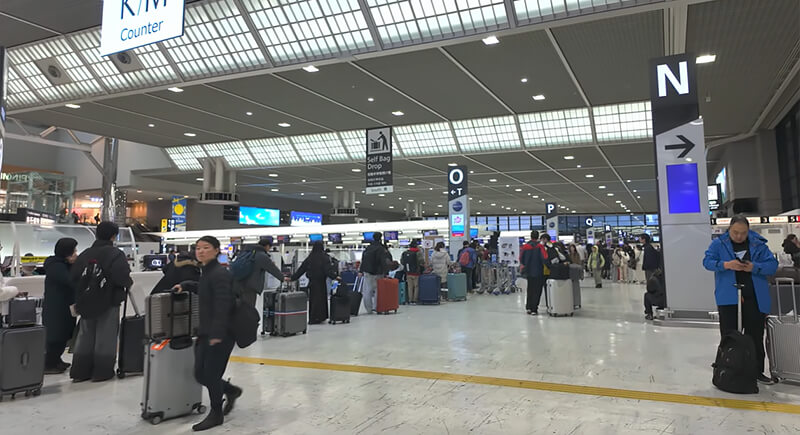
Japan’s government has actively promoted inbound tourism, and passenger numbers have surged accordingly. Traditionally, rising baggage volume would require rapid hiring. With robotics supporting lifting, transport, and sorting, airports can accommodate higher traffic without matching growth in headcount. The capacity has scaled with technology.
Smarter Stacking Improves Cargo Efficiency
Credit: Skift
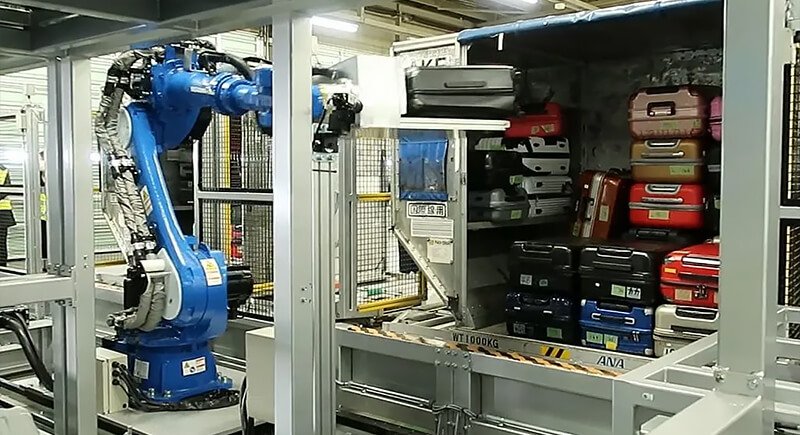
Some robotic systems grip luggage from the front instead of the top. The mechanical shift allows containers to be packed closer to the ceiling because the arm does not need overhead clearance. Tighter stacking reduces wasted space inside cargo holds. Over thousands of flights, this improves container density, stabilizes weight distribution, and minimizes last-minute reshuffling before departure.
Setting a Global Benchmark for Airport Operations
Credit: Wikipedia
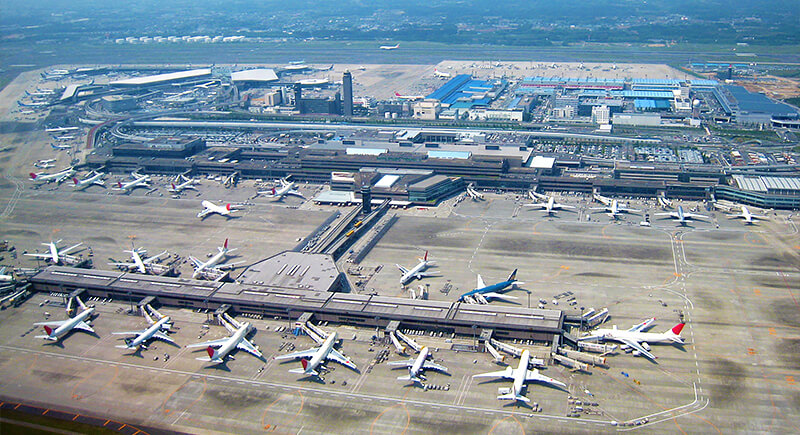
Airports compete on reliability, efficiency, and passenger satisfaction. By integrating power-assist suits, floor-level scales, automated drop systems, and robotic vehicles, Tokyo demonstrates how infrastructure can evolve without disrupting human roles. These changes reshape daily airport operations at every level.