
A paper wristband, a poster tube, and one sticky note trick to read how border festivals feel before you even pick a side.
Follow the wristbands, not the headliners
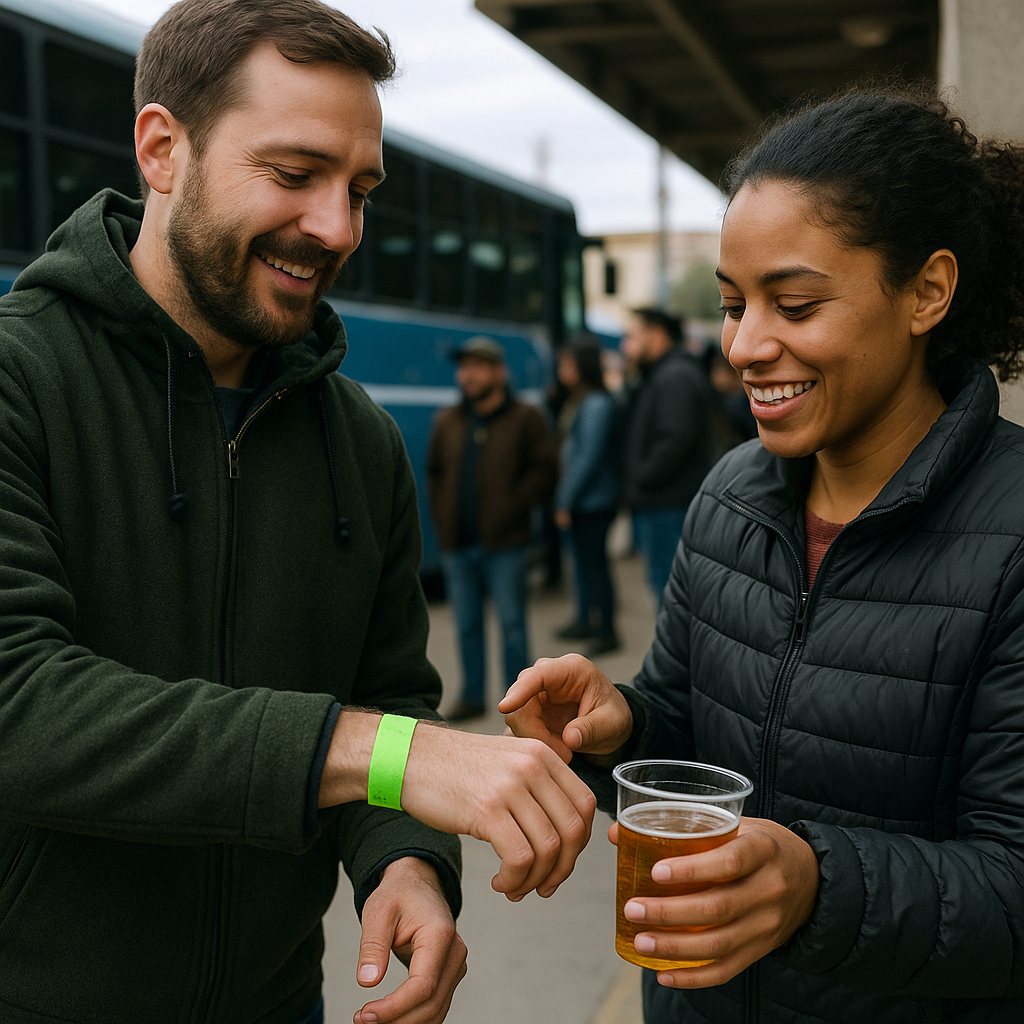
I started paying attention to festival wristbands on a trip where the lineup was fine, the scenery was ridiculous, and the border was the whole point. The wristbands caught my attention first. Not the VIP ones, not the laminated passes, the ordinary paper strips that end up stuck to your jacket cuff for three days. At a festival spread across a border region, wristbands can indicate how organizers manage admission, transportation, and event zones. They are useful festival credentials, but they never replace the travel documents required for an international border crossing.
Here is the move: when you get to town, don't start by hunting stages. Walk to the boring places. The pharmacy that sells sunscreen. The small grocery with the poster for tonight's procession in the window. The bus stop by the bridge. Look for wristbands in the wild and ask one question that doesn't feel like an interrogation: "Did you get that in town or at the gate?" People answer because it is practical. Where wristbands are distributed can offer practical clues about how admission works, but it does not reliably tell you who runs the festival or how locally rooted it is. Use it as a prompt to ask about entry points, schedules, and participating venues instead.
Once you start noticing, the band can become a useful clue. Colors and extra bands may distinguish dates, admission levels, venues, or transportation, depending on the festival. Check the official program before changing travel plans. An older wristband can also be a good conversation starter about the event's history, rather than proof of residents' views.
The poster-tube carry that keeps your street parade plan intact
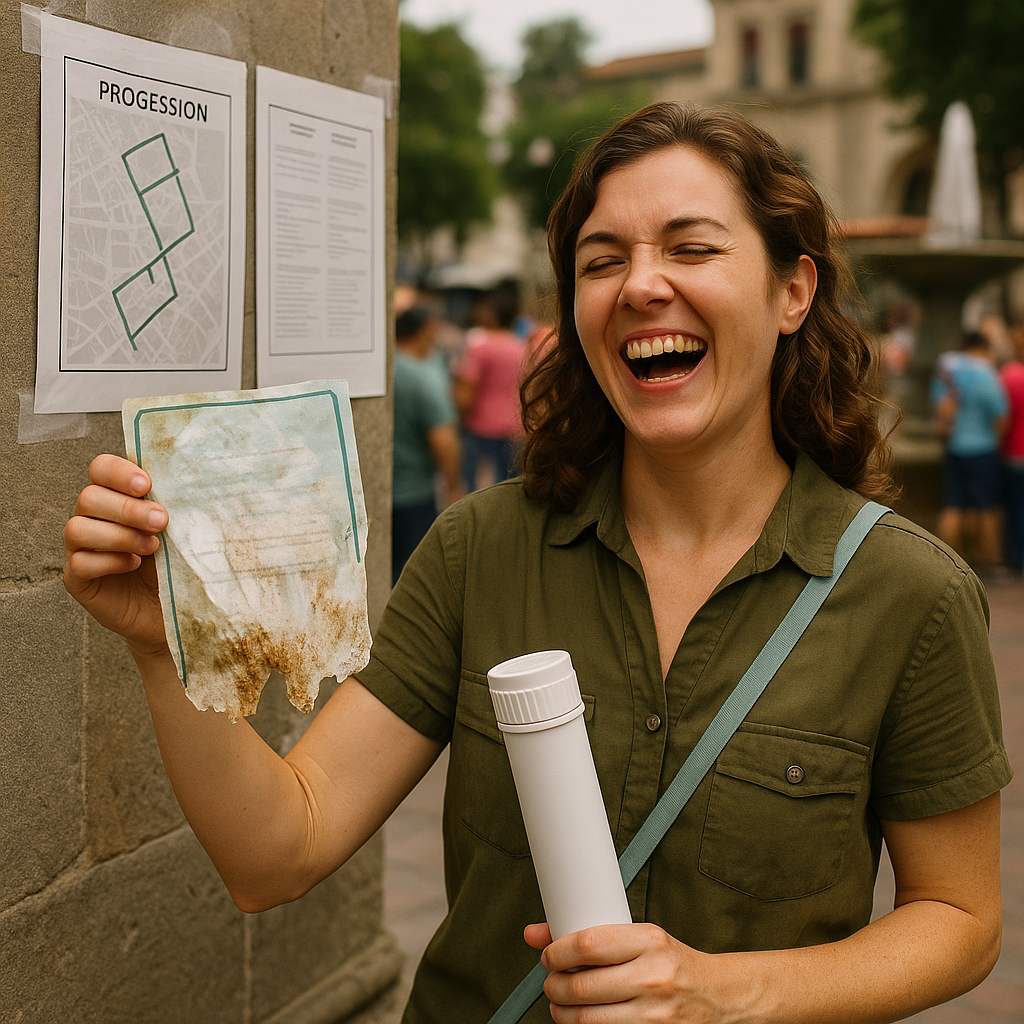
Border festivals love paper. Not in a quaint scrapbook way, in a practical, taped-to-a-wall way: procession routes, church noticeboards, handbills for a dance that starts after the official thing ends, and, in some places, schedules printed in more than one language for visitors arriving from both sides of the border. The problem is that paper disintegrates right when you need it. One rain shower, one spilled beer, one kid tugging at your pocket, and the route you were counting on is now a pulp sculpture.
I started carrying a cheap plastic poster tube after watching a woman on a bridge hold up a soggy flyer and laugh like she'd seen this movie before. Before bringing one into a festival area, I check the event's rules on bags and carried items. The tube does three things. First, it protects the one sheet that matters, which is usually not the glossy program but the photocopied route map taped near the plaza fountain. Second, keep the tube tucked securely against your body so it does not obstruct anyone when streets become crowded. If an area starts to compress or surge, move toward a less congested space and follow instructions from festival staff. Third, it gives you a place to store the small stuff you collect at these events: a ribbon from a costume group, a stamp card from food stalls, or the little bilingual flyer for tomorrow's ceremony on the other side.
How I use it: I roll the route map with the start time facing outward so I can check it without fully unrolling. I also tuck a single index card in the tube with two lines I write in pen as soon as I hear them from a local: the name of the neighborhood where the parade really gets loud, and the street corner where families stand because you can see over the crowd. Those are the kinds of details that may not make it into the official program. If you're crossing the border later, the card gives you a quick reminder of where you want to end up once you arrive.
Bonus: if you end up buying a poster or a long paper banner from a craft stall, you can get it home without folding creases. That sounds small until you've watched someone try to flatten a souvenir in a hotel room with a hair dryer and a prayer.
A one-note translation trick for the announcements you can't replay
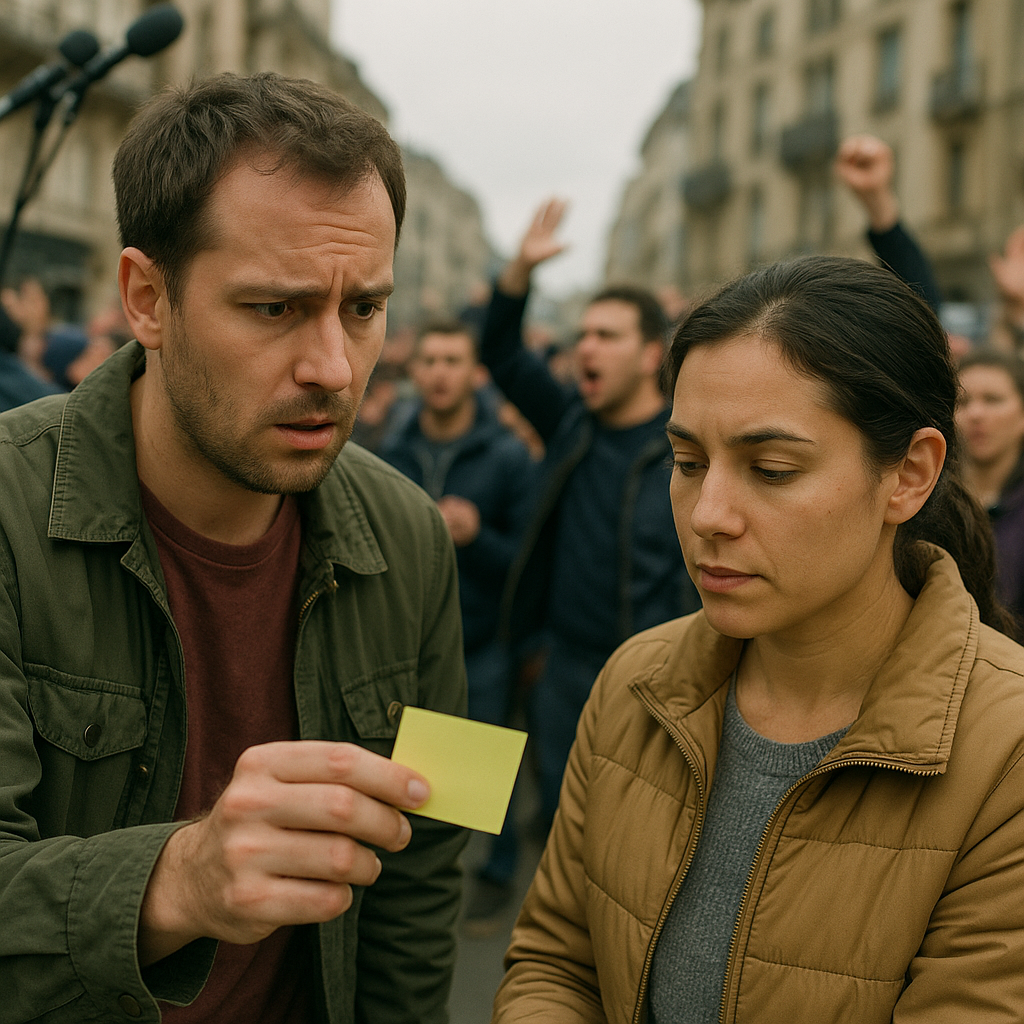
If you've ever stood in a packed square while someone announces in a language you half-know, you already understand the specific kind of panic I'm talking about. You catch three words, the crowd reacts, and suddenly everyone is moving. At a border festival, announcements may cover changes to processions, transportation updates, or schedule shifts. For border hours, entry requirements, and required documents, check the relevant government's official border information rather than relying on a festival announcement or an informal translation.
I don't try to record it. Audio in a crowd is a mess, and you end up staring at your phone instead of the thing you came for. Instead, I keep one sticky note in my pocket, and I use it as a translation trap. The rule is simple: I write down exactly one phrase I hear repeated, spelled however I can manage, plus one noun that I recognize. That's it. Then I turn to the nearest person who looks calm and ask, "What does this mean right now?" The sticky note matters because it stops me from babbling, and it gives the other person something concrete to react to. People are surprisingly generous when you're not asking them to translate a whole speech, just a single useful slice of it.
Later, I type the phrase into a translation app to check what I heard, keeping in mind that a phonetic spelling may produce the wrong result. Camera translation is more useful when I have actual printed text, such as a sign, flyer, or notice. A translation app can still misread phonetic spellings or unfamiliar local terms, so I treat the result as a check rather than a definitive translation. I've used this for everything from understanding why a dance troupe paused at a particular doorway (local tradition, not random) to figuring out that the fireworks were delayed, not canceled, which saved me a long walk back across the river for no reason.
By the end of the weekend, a few recurring local terms may start to sound familiar. That small bit of vocabulary can make schedules, announcements, and conversations easier to follow.