This Iconic Waterfall Turns Bright Orange Every Year: Here Is How to See It
Each February, a narrow waterfall on the side of a granite cliff in Yosemite National Park briefly appears to have caught fire. The effect lasts only a few minutes, appears on select evenings, and depends entirely on the proper alignment of sun, water, and sky. When it works, the result is the famous “Firefall,” a natural light phenomenon that turns Horsetail Fall a vivid orange as the sun sets behind El Capitan. And the good news is that you can plan a realistic visit.
What Causes Yosemite’s Firefall
Horsetail Fall is a seasonal waterfall that drops about 2,130 feet down the eastern face of El Capitan. It flows during winter and early spring, fueled by snowmelt and runoff, and typically fades by summer. During mid to late February, the setting sun strikes the waterfall at a precise angle, illuminating the thin stream of water as it descends the cliff.
For a brief window near sunset, the sunlight reflects off the water and surrounding granite, producing a vivid orange or red glow. The color comes from direct sunlight interacting with moving water and rock.
Three elements must align at the same time: The sun must be positioned correctly in the seasonal sky, Horsetail Fall must be flowing with sufficient water, and the skies must be clear enough for sunlight to reach the cliff.
When all three occur together, the Firefall appears.
When to See the Firefall

Image via Getty Images/Sean824
The Firefall typically occurs between February 10 and February 27, though the exact timing varies each year slightly based on weather and snow conditions.
On successful evenings, the glow usually begins 5 to 15 minutes before sunset and can continue briefly after sunset if sunlight still reaches the cliff face. Thin cloud cover near the horizon can determine whether the effect appears, even on otherwise clear days.
Since snowfall, temperatures, and cloud conditions change quickly, many visitors plan to stay several nights to increase their chances of seeing the phenomenon.
Where to Watch It
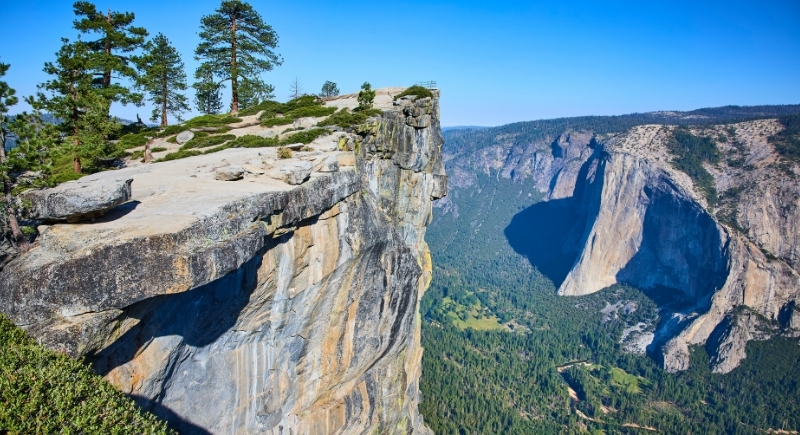
Image via Canva/Nicholas J Klein
The El Capitan Picnic Area in Yosemite Valley is the most common and accessible viewing location. It provides a direct line of sight to Horsetail Fall and serves as the primary gathering point for photographers and visitors.
Crowds are common during peak evenings. Many people arrive hours in advance to secure an unobstructed view, particularly those setting up tripods or long lenses.
Other viewing angles exist throughout the valley, though they require experience navigating winter conditions and careful positioning. For first-time visitors, the picnic area offers the most practical vantage point.
Parking, Shuttles, and Getting There
Firefall season brings heavy traffic to Yosemite Valley, especially during weekends.
The nearest general parking is located near Yosemite Falls, close to Yosemite Valley Lodge. From there, visitors walk approximately 1.5 miles to reach the El Capitan Picnic Area. When those lots fill, additional parking is available at Yosemite Village or Curry Village, with free shuttle service connecting major stops throughout the valley.
Traffic controls are strictly enforced during Firefall season to protect sensitive riverbanks and prevent congestion. Visitors should plan to arrive in the valley by late morning or early afternoon to allow time for parking and walking.
What to Bring
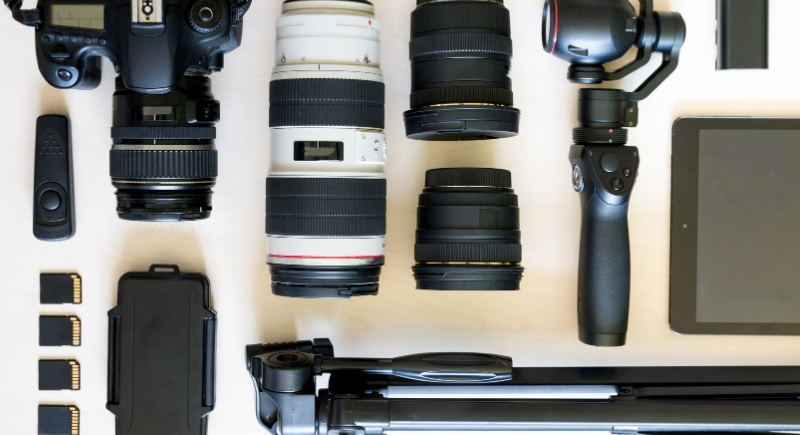
Image via Canva/Tatiana Dyuvbanova
Viewing the Firefall often involves several hours outdoors in winter conditions. Evening temperatures in February are cold, and the walk back after sunset requires preparation.
Recommended items include:
Warm layers, including gloves and a hat
Insulated, comfortable footwear for paved paths
Food and water
A headlamp or flashlight for walking after dark
A folding chair or an insulated pad for waiting
For photography:
A telephoto lens, typically 200mm or longer
A sturdy tripod
Extra batteries, as cold temperatures reduce battery life
Many modern smartphones can capture the glow when zoomed optically, though dedicated cameras provide more control in low light.
Why the Firefall Varies Year to Year
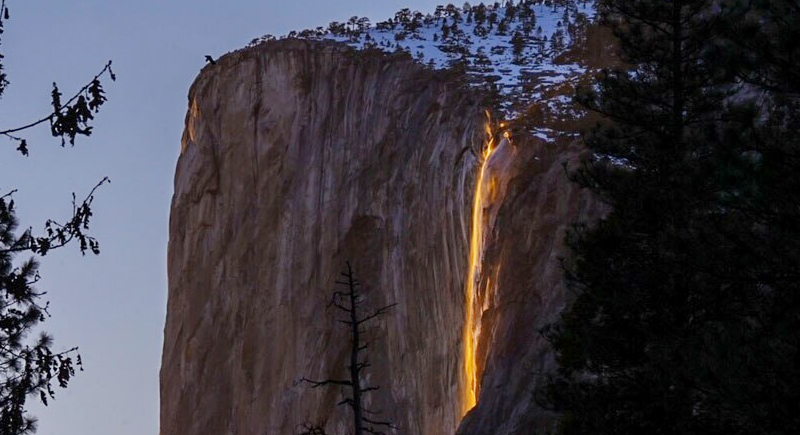
Image via Wikimedia Commons/NPS
Horsetail Fall depends entirely on snow accumulation and melting patterns. Snowfall must be sufficient, daytime temperatures must allow melting, and skies must clear at sunset for the Firefall to appear. Each factor influences the intensity and duration of the glow.
This variability makes every Firefall season slightly different. Some years offer multiple strong evenings, while others provide only brief or subtle displays.
How the Firefall Got Its Name
The term “Firefall” dates back to a historic attraction in Yosemite Valley. In the late 1800s, hotel operators created a spectacle by pushing glowing embers off Glacier Point to draw visitors. The practice ended in the 1960s as the National Park Service shifted focus toward preserving natural features.
In the early 1970s, photographer Galen Rowell captured the glowing Horsetail Fall at sunset. The visual similarity to the earlier attraction led the modern phenomenon to adopt the same name.