This Hidden Gem City Just Beat London for the Best Art Scene
For years, London has felt untouchable in the art world. The British Museum alone draws millions of visitors each year, and the National Gallery holds works like Van Gogh’s Sunflowers. With dozens of museums and hundreds of galleries across the city, it seems like an easy winner.
But a 2026 global ranking from German travel agency Tourlane tells a different story. After analyzing 50 cities known for strong arts communities and then adjusting the numbers per one million visitors to level the playing field, Mexico City came out on top.
Once the data was recalculated that way, Mexico City ranked first. London placed second, followed by Paris, Berlin, and Dublin.
The Numbers That Changed the Narrative
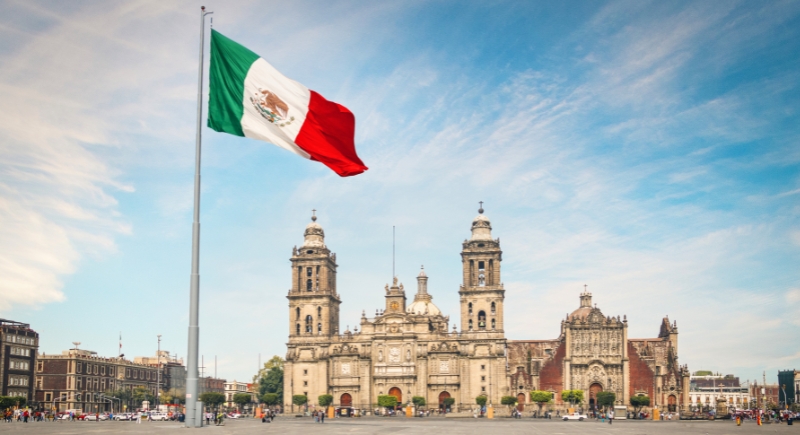
Image via Getty Images/diegograndi
Mexico City’s cultural footprint is substantial. The capital is home to 44 art museums, 110 galleries, 19 history museums, and 14 science museums. That level of concentration, when measured against visitor numbers, gave it a measurable advantage in Tourlane’s analysis.
What distinguished the city even further was its ability to combine major institutions with a dynamic contemporary art presence rather than relying solely on historical prestige.
Heavyweight Institutions With Global Impact
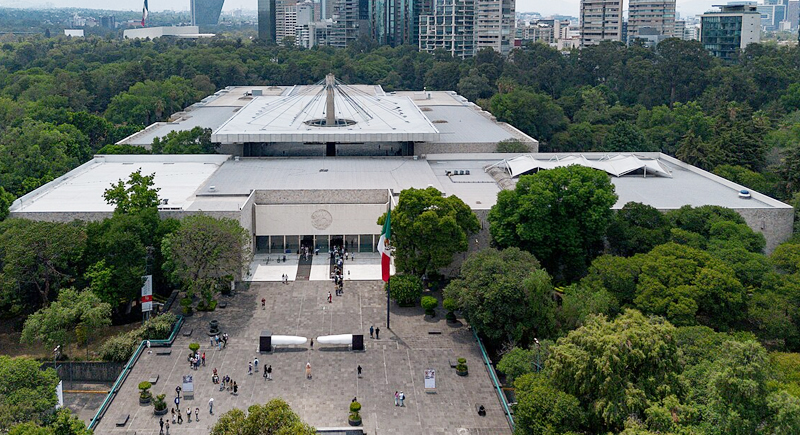
Image via Wikimedia Commons/ProtoplasmaKid
The Museo Nacional de Antropología, which opened in 1964, anchors the city’s museum landscape. Spread across 23 exhibition rooms and holding more than 600,000 artifacts, it contains the world’s largest collection of ancient and present Mexican objects.
Within its galleries, visitors encounter the Aztec Sun Stone, colossal Olmec heads, and the jade mask of Pakal the Great, pieces that frame Mexico’s cultural narrative through pre-Columbian civilizations. It remains the most visited museum in the city.
Another landmark, the Palacio de Bellas Artes, opened in 1934 and stands as both an architectural and artistic symbol of Mexico. Designed with an Art Nouveau exterior and an Art Deco interior, the building houses monumental murals by Diego Rivera, David Alfaro Siqueiros, and José Clemente Orozco. Its Tiffany glass curtain depicting the Valley of Mexico adds to its reputation as one of the capital’s defining cultural spaces.
Frida Kahlo’s Casa Azul, converted into a museum in 1958, offers a different type of experience. The former home of Kahlo preserves her paintings, personal belongings, and studio spaces, allowing visitors to understand her life and work in context.
Museo Soumaya adds an international dimension with works by Auguste Rodin and Salvador Dalí, while Museo Tamayo, founded in 1981 in Chapultepec Park, presents modern and contemporary art and has featured exhibitions by artists such as Andy Warhol and Pablo Picasso.
MUAC, the Museo Universitario Arte Contemporáneo, further strengthens the city’s commitment to experimental and multimedia art.
Art Beyond Museum Walls
Art in Mexico City is not confined to formal institutions. In neighborhoods such as La Roma and La Condesa, murals by artists including Smithe, Saner, Paola Delfín, ROA, and Curiot adorn streets lined with Art Nouveau and Art Deco buildings built during the Porfirian era between 1876 and 1911.
The integration of architecture, street art, performance venues, and galleries creates a cultural environment that feels continuous rather than compartmentalized.
While London continues to command global attention through sheer volume and historical weight, Tourlane’s visitor-adjusted analysis suggests that Mexico City delivers greater cultural density.
For 2026, the data points to a clear shift in the cultural spotlight. By blending ancient heritage, revolutionary muralism, and contemporary experimentation within a compact urban framework, the capital has repositioned itself at the forefront of the international art conversation.