This Cave Is So Massive It Has Its Own Jungle and Weather System
In 1991, a Vietnamese man named Hồ Khanh was walking through the jungle near the Laos border while searching for agarwood, a resin used in perfume and incense. During a storm, he took shelter near a rock overhang and noticed strong, cold air blowing out of a dark opening nearby. He could also hear rushing water inside. The experience was unsettling, and he left without exploring further.
For years, he could not find the opening again. In 2009, he finally relocated it and led a group of cave explorers to the site. They discovered Hang Sơn Đoòng, now recognized as the largest cave passage on Earth. Unlike most caves, this one contains forests, rivers, and internal weather patterns.
A Cave That Functions Like Its Own Environment
Hang Sơn Đoòng is located in Phong Nha-Ke Bang National Park in central Vietnam. The cave formed about three million years ago when underground rivers eroded limestone along a fault line. Over time, parts of the ceiling collapsed and created large openings called dolines.
These openings allow sunlight to reach the cave floor. With light, moisture, and stable temperatures, plants began growing underground. Today, some areas are densely vegetated, including ferns, vines, moss, and trees. One section, known as the Garden of Edam, supports a small but stable ecosystem that includes insects, birds, and cave-adapted species.
How Clouds Form Inside the Cave
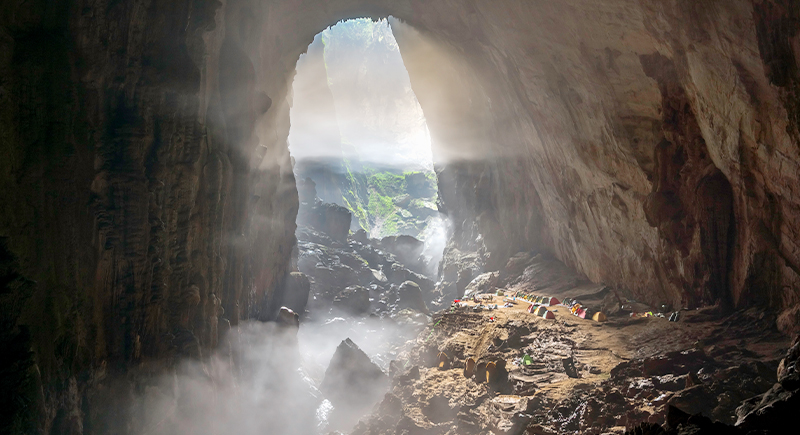
Image via iStockphoto/Geng Xu
Hang Sơn Đoòng has its own local weather due to its size. Warm, humid air from outside enters the cave through its openings. The interior stays cooler due to limited sunlight and constant underground water flow.
When warm air meets cooler cave air, moisture condenses. In smaller caves, this creates light mist. In Hang Sơn Đoòng, the chambers are large enough for fog and cloud-like formations to develop and drift through sections of the cave.
The Scale of Hang Sơn Đoòng
The cave extends more than 9 kilometers, or about 5.6 miles. Some chambers reach nearly 200 meters, or about 660 feet, in height. That is tall enough to fit large skyscrapers inside.
The total internal volume is measured in tens of millions of cubic meters. This large space allows air circulation and temperature layering similar to surface environments. Underground rivers continue to shape the cave and supply moisture to support plant life. During rainy seasons, river levels rise significantly, which limits exploration.
After Hồ Khanh relocated the entrance, he guided members of the British Cave Research Association to it in 2009. Their surveys confirmed the cave was significantly larger than any previously recorded cave passage.
By 2013, Hang Sơn Đoòng was officially recognized as the world’s largest cave passage. Later exploration identified underwater tunnels that may connect it to nearby cave systems, suggesting that the full system could be larger than current measurements indicate.
Visiting Hang Sơn Đoòng
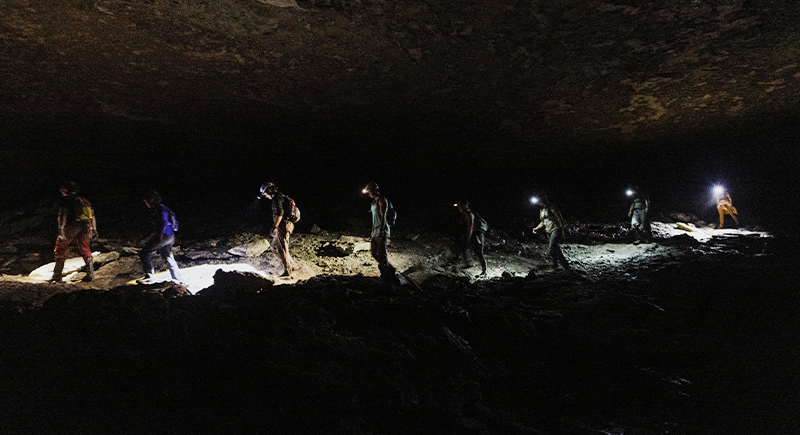
Image via Pexels/Kelly
Access to the cave is tightly controlled to protect the environment. Only one licensed tour company operates expeditions. Visitor numbers are limited each year.
Trips involve multi-day jungle trekking, river crossings, rope descents, and steep climbing. The expedition costs about $3,000 and usually requires advance booking.
Participants must meet fitness requirements, including the ability to complete long hikes and climb difficult terrain.
Scientific Importance
Hang Sơn Đoòng is changing how scientists study caves. Instead of viewing caves only as isolated underground spaces, researchers now consider how large cave networks can support ecosystems, maintain stable climates, and influence local environmental conditions.
The cave also provides insight into how life adapts to low-light and high-humidity environments. Hang Sơn Đoòng contains underground rivers, plant life, and climate zones within the same system. Only a portion of the surrounding national park has been fully explored, so additional large cave systems may still exist in the region.