This Bike Path in Belgium Literally Goes Through a Lake, and It Is Magical
In northeastern Belgium, inside the province of Limburg, a cycling path cuts directly through a lake in Bokrijk, part of the De Wijers lake district. The installation opened in April 2016 as part of a long-term regional tourism and mobility strategy built around cycling.
Limburg has invested in cycling infrastructure for decades, starting with its large regional network launched in 1995, which now spans more than 1,200 miles (about 1,930 kilometers) of paved routes.
Regional planners are focused on building infrastructure that allows visitors to interact closely with protected landscapes while supporting fragile ecosystems. The project combines civil engineering, landscape architecture, and tourism planning into a single immersive outdoor experience.
What “Cycling Through Water” Actually Is
The path, officially called Cycling Through Water, is a concrete cycling route built directly through an existing pond as part of the natural landscape. The structure stretches roughly 200 meters (656 feet) across the water. The riding surface is slightly below the surrounding waterline, while concrete retaining walls hold the lake back on both sides.
Water stays contained behind the retaining walls, so the path remains dry. Because the waterline is at eye level, the effect is immersive, as if you’re moving through the lake environment.
Cycling Through Water is just one key installation inside Limburg’s larger cycling ecosystem. The region’s network, launched in 1995, connects towns, parks, reserves, and cultural landmarks via a node-based navigation system that lets riders build custom routes.
With more than 1,200 miles of paved cycling routes, Limburg markets itself as a major European cycling destination. The concept draws inspiration from scenic infrastructure projects in Norway, where architecture frames and highlights natural surroundings.
The Bokrijk Park Environment Around The Path
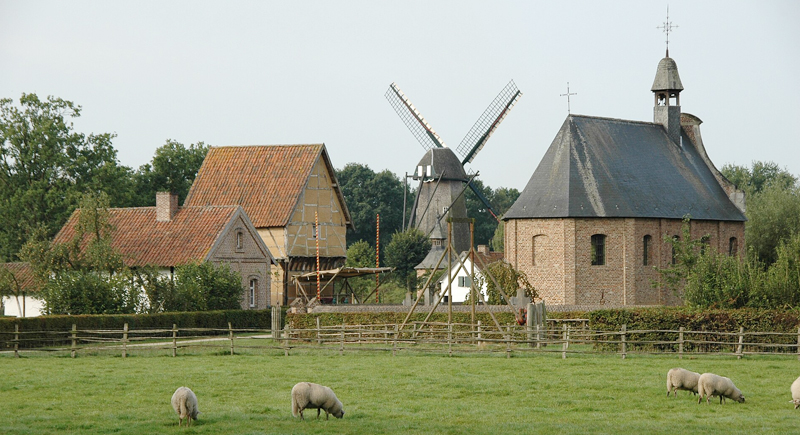
Image via Wikimedia Commons/Bokrijkbart Bart Bosmans
The cycling path is inside the larger Bokrijk park complex, which combines cultural heritage with nature conservation. The surrounding area includes a 19th-century castle, a large open-air museum, an arboretum, protected nature reserves, and historic pond systems dating back centuries.
This path also functions as an entry point into a broader destination that combines history, ecology, and outdoor recreation. Visitors often explore the surrounding parkland alongside their cycling experience.
Tourism data from regional sources shows the path draws steady visitor traffic. On average, roughly 650 people use the installation daily. During peak tourism days, usage has reached about 3,500 visitors.
Across the year, the broader attraction brings hundreds of thousands of visitors to the region. The installation helped strengthen Limburg’s identity as a destination for landscape-focused cycling tourism.
A Larger Movement In Cycling Tourism
Cycling Through Water forms part of a broader series of immersive cycling infrastructure projects across Limburg. Other installations include Cycling Through the Trees, which lifts riders into the forest canopy along a circular elevated path.
Additional projects have been planned or proposed, including routes through heathland landscapes and underground cave systems.