This Ancient New Zealand Forest Hides Giant Trees and Natural Night Lights
Waipoua Forest is on New Zealand’s North Island in the Northland and Bay of Islands region, near Dargaville and about 1 hour and 45 minutes south of Whangārei. It holds the largest remaining native forest tract in Northland. Inside this protected ecosystem is Tāne Mahuta, the country’s largest known kauri tree, estimated at 2,000 years old and still growing. Scientists and cultural historians both closely monitor this site because kauri dieback disease threatens these ancient trees across New Zealand.
The forest also connects directly to Māori history. Oral history credits the Polynesian navigator Kupe with discovering this region more than 1,000 years ago. That history still shapes how tours operate today, with Māori guides leading many forest walks and sharing traditional knowledge tied to the land.
The Giants That Make Waipoua World Famous
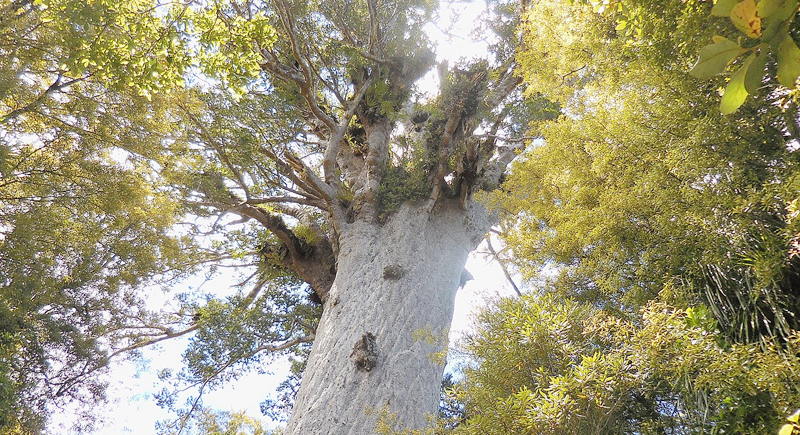
Image via Wikimedia Commons/David Broad
Tāne Mahuta carries the title “Lord of the Forest.” The tree is roughly 51 meters or 167 feet tall, and its trunk girth exceeds 13 meters, while branches begin about 18 meters above ground. Standing near it shows how massive prehistoric forests once covered large parts of New Zealand.
Nearby stands Te Matua Ngahere, known as “Father of the Forest.” Estimates place its age between 2,500 and 3,000 years. Its trunk girth reaches about 16 meters. Several other formations also draw attention, including the Four Sisters, a cluster of kauri trees growing tightly together.
Visitors typically reach Tāne Mahuta via a short, 5-minute roadside walk. Twilight guided walks often include traditional waiata, forest ecology education, and local legend storytelling that explains how Māori spiritual beliefs link humans, the forest, and the sky.
Why Parts Of Waipoua Seem To Glow After Dark
The glow effect associated with this region primarily connects to the nearby Kawiti Glowworm Caves, a major stop on many Northland tours. These caves contain thousands of glowworms that release visible light. The caves also feature limestone structures formed over thousands of years. Visitors see stalactites hanging downward and stalagmites rising upward, shaped slowly by mineral-rich water drops.
Tour itineraries often combine visits to Waipoua Forest with glowworm cave tours in a single day trip. Many full-day tours run about 8 hours and often depart from Paihia around 8:00 a.m. As listed in the 2025 schedules, pricing is near NZD $139 per adult and NZD $69.50 per child, though operators adjust pricing seasonally.
The Hokianga Region Adds Historical Depth
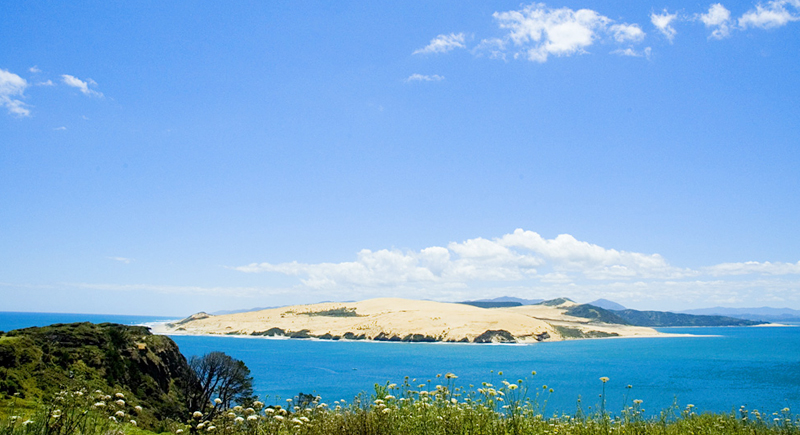
Image via Wikimedia Commons/JShook
Travel routes through this region follow historic Māori trade paths that later became stagecoach supply routes linking both coasts. Traders once transported kauri gum, timber, and supplies across these trails.
Many tours stop in Opononi, a small coastal town on the Hokianga Harbour. That stop helps balance nature exploration with local culture and regional history. Guides often explain how kauri timber once drove major export industries before strict conservation protections began.
The Importance of Conservation Rules
Kauri dieback disease remains the biggest threat to these ancient trees, and once infected, kauri roots slowly fail, eventually killing the tree. Visitors must follow protection guidelines to slow the spread of disease and protect trees that took thousands of years to reach their current size.