There Is a Food Capital in Italy That Tourists Keep Skipping
When people plan a trip to Italy, they usually circle Rome, Florence, or Venice. Bologna rarely makes the first draft of the itinerary. Still, it sits at the center of the country’s most important food region and has shaped much of what the world thinks of as Italian cuisine. If you care about where those iconic dishes actually come from, this city deserves your attention.
Bologna lies in Emilia-Romagna, the region responsible for some of Italy’s most protected and respected foods. Parmigiano Reggiano, Prosciutto di Parma, traditional balsamic vinegar from Modena, and mortadella all come from this area. These names are subject to strict DOP and IGP regulations, with detailed production rules and aging standards that producers have consistently followed for generations.
Parmigiano Reggiano must age a minimum of 12 months, with many wheels matured for 24 months or more. Traditional balsamic vinegar from Modena ages at least 12 years in wooden barrel batteries before earning its designation. These foods are foundational elements of the regional diet.
The Origin of Ragù Alla Bolognese
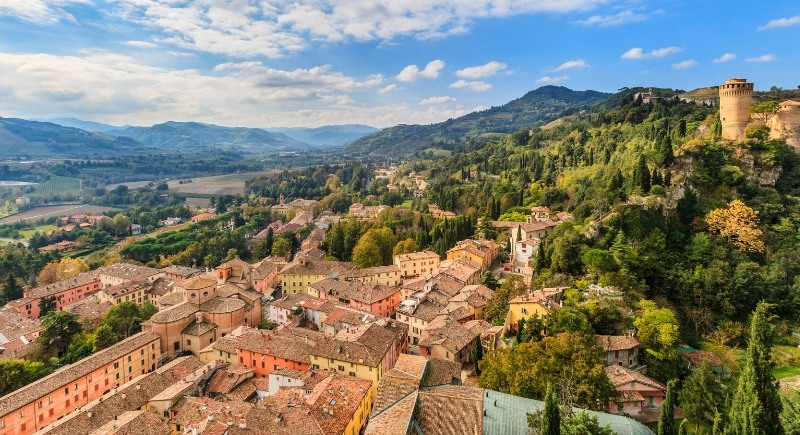
Image via Getty Images/Flavio Vallenari
Outside Italy, “spaghetti Bolognese” has become a familiar phrase. In Bologna, the traditional dish is tagliatelle al ragù. The sauce is slow-cooked and served with fresh egg pasta cut into wide ribbons designed to hold it properly. The official recipe for ragù alla Bolognese has been registered with the Bologna Chamber of Commerce.
Tortellini in brodo, small stuffed pasta served in broth, is another defining dish. Mortadella originated here as a finely ground pork sausage with centuries of history. These recipes remain central to everyday dining.
A City Shaped by Knowledge and Craft
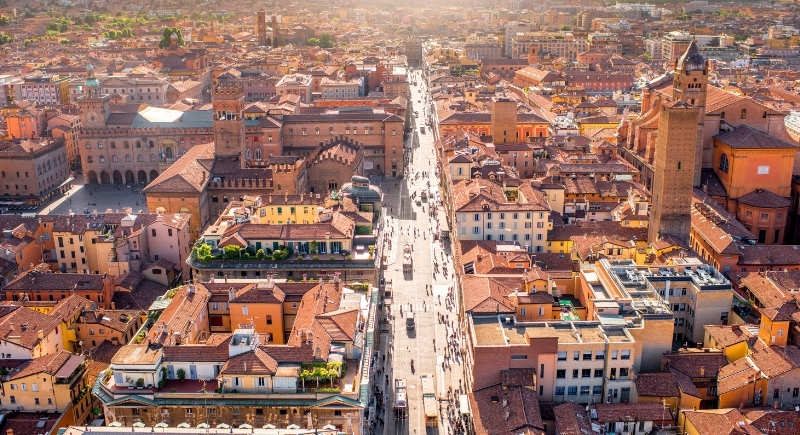
Image via Getty Images/RossHelen
People often describe Bologna through three historic nicknames, and each one tells you something real about the city.
La Dotta, meaning “The Learned,” points to the University of Bologna. Founded in 1088, it is widely recognized as the oldest university in continuous operation in the Western world. Students have shaped the city’s character for centuries, and they still do.
La Grassa, “The Fat,” reflects the richness and precision of its cuisine. This is a place that takes food seriously, from handmade pasta to carefully aged ingredients.
La Rossa, “The Red,” refers to both the warm terracotta tones of its buildings and its political history.
The university continues to influence daily life. Walk through the streets, and you feel it in the steady flow of students, professors, and conversations that give the city its rhythm.
Architecture Designed for Daily Life
Bologna’s historic center is defined by its porticoes, which stretch approximately 62 kilometers across the city, with more than 40 kilometers concentrated in the historic core. In 2021, the Porticoes of Bologna were recognized as a UNESCO World Heritage Site.
These covered walkways provide shelter, connect neighborhoods, and support daily routines. Cafés, bakeries, and bookstores line the arcades. Piazza Maggiore anchors the city center, alongside landmarks such as the Basilica di San Petronio and the Neptune Fountain.
Markets and Food as Infrastructure
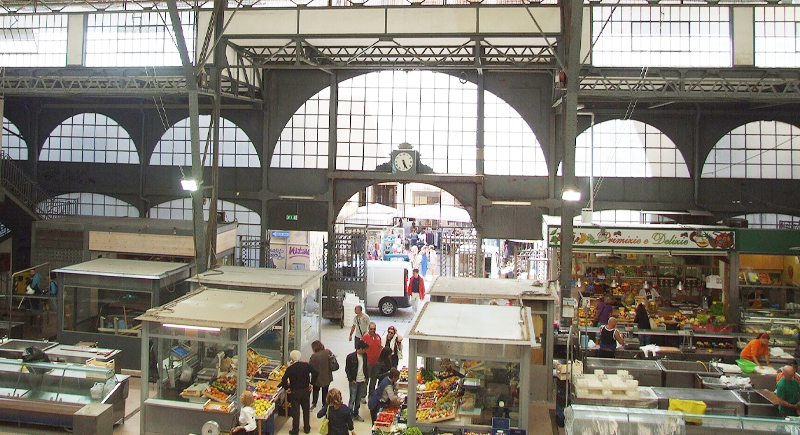
Image via Wikimedia Commons/Diego Baglieri
Food culture in Bologna operates as part of daily life. Markets such as the Quadrilatero district and Mercato delle Erbe remain working markets where butchers, cheesemongers, and pasta makers serve residents shopping for household meals.
Lambrusco, produced in the region, is typically served dry and lightly sparkling. Fresh pasta shops display tortellini in careful rows. Dining centers on trattorias that prioritize regional menus grounded in seasonal availability and longstanding practice.
Accessibility and Location
Bologna is one of Italy’s primary railway hubs. By train, it is less than an hour from Florence, about two hours from Rome, and roughly an hour and a half from Venice.
The Marconi Express monorail connects the airport to the central station in under 10 minutes. Its central location makes it easy to reach, whether as a primary destination or part of a broader itinerary.
A Regional Perspective
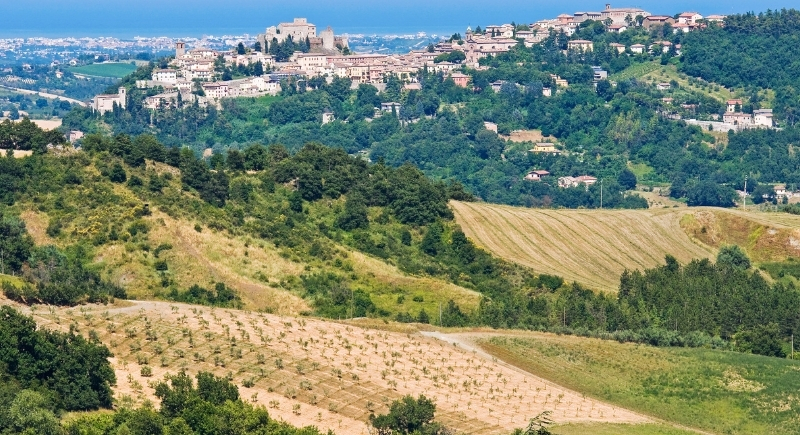
Image via Getty Images/milla1974
Emilia-Romagna’s landscape contributes directly to its cuisine. The fertile Po Valley supports dairy production. Hills near Parma and Modena create conditions suitable for curing prosciutto and aging balsamic vinegar.
Olive oil is also produced in nearby areas, including Brisighella, one of Italy’s earliest DOP-certified olive oils. Producers across the region follow regulated processes rooted in tradition. Cheesemakers, prosciutto producers, and acetaie maintain techniques that rely on time, environment, and consistency.
A City Defined by Continuity
Bologna maintains a strong connection between its history, food systems, and daily routines. Markets function as neighborhood anchors. The university remains active. The porticoes frame everyday movement through the city.
Culinary heritage operates as a living practice. Recipes are passed down and prepared in home kitchens and restaurants alike. Ingredients reflect geography and regulation rather than trend.
For travelers interested in understanding how Italian cuisine developed and how it continues to function, Bologna offers a clear view of that continuity. Italy’s culinary identity evolved through regions like Emilia-Romagna, with Bologna at its center.