There Are 20,000 Castles in Germany, and the Stats Are Insane
Germany has around 20,000 castles spread across the country. The total includes intact structures, partial ruins, foundations, and documented sites where castles once stood. Together, they form one of the densest concentrations of fortified architecture anywhere in the world.
These castles are distributed across cities, villages, forests, river valleys, and rural landscapes throughout Germany.
Only A Small Fraction Are Famous
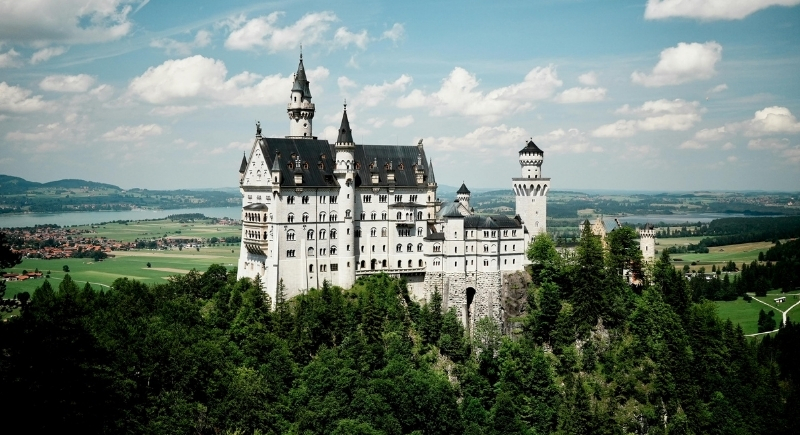
Image via Pexels/Zhang Thomas
A limited number of castles account for most public attention. Neuschwanstein Castle alone receives more than 1.3 million visitors per year.
That single site represents a tiny percentage of Germany’s total castle count. The majority do not operate as tourist attractions. Many are privately owned, closed to the public, or accessible only as ruins without signage or visitor facilities.
Condition Tells The Real Story
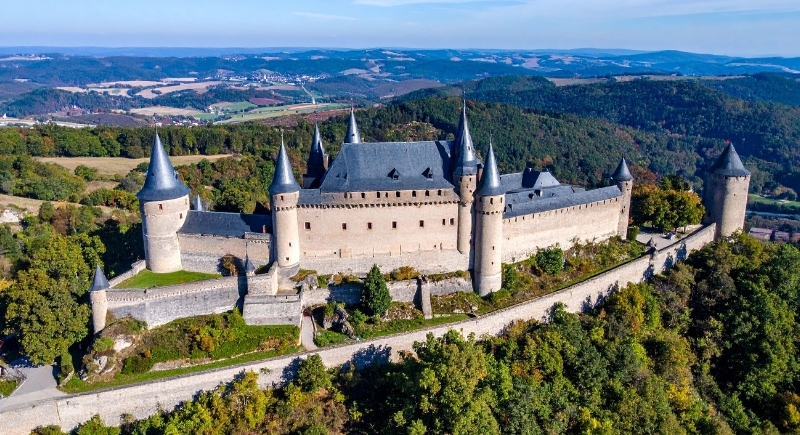
Image via Canva/Truecreatives
Only 20% of German castles still have a roof. Around 40% are classified as ruins, often reduced to walls, towers, or fragments. The remaining sites exist as foundations, earthworks, or historically documented locations with little or no visible structure.
Many castles were abandoned as their military relevance declined. Others were dismantled for stone or destroyed during conflicts. Despite this, they remain cataloged as part of Germany’s historical record.
During the medieval period, the region that is now Germany was divided among hundreds of rulers, including dukes, bishops, princes, and free cities. Each territory maintained its own defenses.
Castles were constructed to control trade routes, river crossings, and borders. In many regions, they were built within visual range of one another. Along rivers such as the Rhine and Moselle, fortifications appear at frequent intervals.
Castles As Part Of Everyday Geography
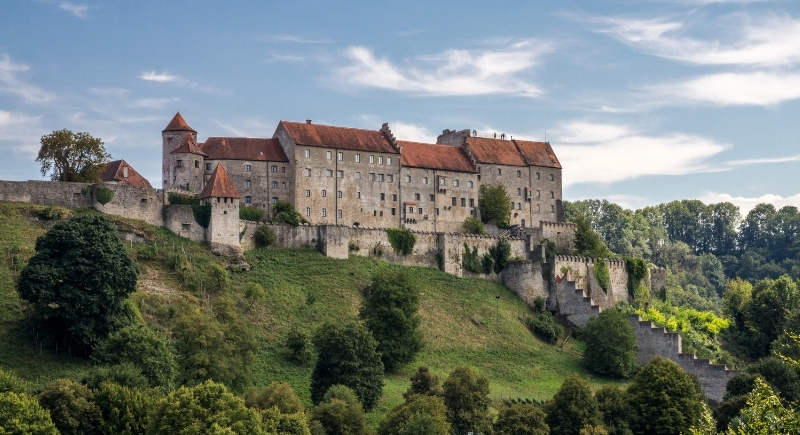
Image via Getty Images/uhg1234
Germany contains Europe’s longest castle complex, Burghausen Castle, which extends more than one kilometer along a ridge.
Several cities developed directly below major castles that continue to dominate their skylines, including Heidelberg Castle.
Thousands of castles remain in private hands. Others function as museums, hotels, administrative buildings, or cultural venues. Many are inaccessible and known primarily through historical documentation.
What The Total Represents
The figure of 20,000 castles reflects how governance, defense, and territory were organized over long periods of German history. These structures served practical purposes tied to control and security.
Many castles remained in place because removing them was impractical or unnecessary. Viewed together, the total number represents the physical scale of medieval power structures across Germany.