The Stunning Bike Path That Cuts Across a Pond With Water at Eye Level
Inside Belgium’s Limburg province, a concrete cycling path travels directly through a pond inside the De Wijers wetland reserve near Bokrijk Park. The structure stretches roughly 200 to 212 meters long and about 3 meters wide. Engineers lowered the path roughly 1.6 meters, thus placing riders at the same height as the surrounding water.
The structure prevents water spillover while maintaining pond circulation and clarity. At peak times, daily visitor counts can reach around 5,000 people, including cyclists, runners, and walkers.
The project opened in April 2016 and quickly gained global attention, with travel publications later placing it on major global destination lists. Social media helped push visibility even higher as drone footage and rider-level photos created a strong visual impact.
How A Post-Industrial Region Reinvented Outdoor Tourism
Limburg spent decades shifting its economy after the coal industry declined. Local planners invested heavily in cycling tourism as a long-term strategy. Over roughly 25 years, the province built about 2,000 kilometers, or roughly 1,242 miles, of paved and largely car-free cycling routes.
The strategy produced multiple signature routes, including a raised forest cycling spiral known as Cycling Through The Trees. The route stretches roughly 700 meters and rises about 10 meters high, which allows riders to travel through the treetops’ height. Together, these projects built a reputation that attracts both casual tourists and serious cyclists. The region now markets itself as one of Europe’s strongest cycling destinations.
Engineering Protected The Wetland Instead Of Damaging It
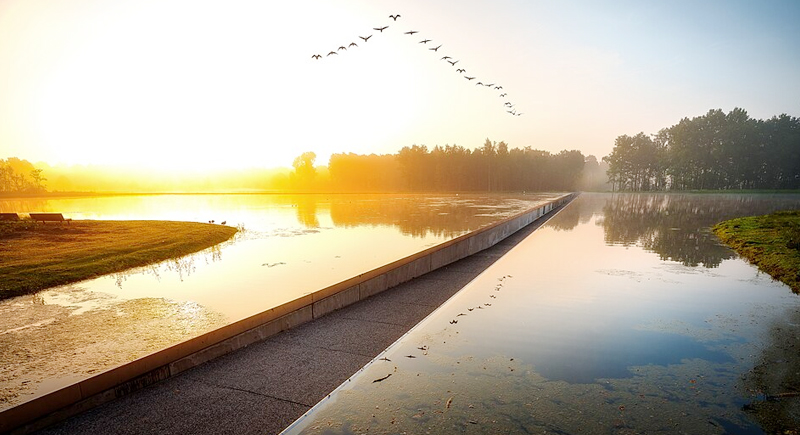
Image via Wikimedia Commons/Visitlimburg.be
The cycling path required careful design because De Wijers holds roughly 700 hectares of interconnected ponds. Many originated as historic fish farms and now support birds, amphibians, and aquatic ecosystems. Design teams used concrete construction combined with historic water control techniques called monniken, systems dating back to medieval water management. These regulators help maintain stable water levels and improve water quality across the pond network.
Construction planning focused on protecting bird migration patterns and aquatic flow. Ecological corridors now allow animals to move between ponds more easily than before construction. Water circulation improvements also helped improve amphibian survival rates in some areas. The result showed how tourism infrastructure and environmental restoration can work together inside a sensitive habitat.
The Reason It Keeps Going Viral
The visual effect drives massive online sharing. Photos taken at a distance show riders appearing to glide directly across the water surface. At rider height, the view creates a rare perspective where ducks, reflections, and open water surround cyclists at shoulder level.
The path also connects easily to the regional cycling node network near junction 91. Visitors can reach it using public transit stops near Bokrijk Domein. Bike rental shops, including e-bike options, operate across the surrounding park region.
The path remains free to access and open year-round, which keeps visitor numbers steady across seasons. Summer brings wildlife activity and reflective water surfaces, while winter can create frozen pond reflections that change the visual character of the ride completely. Nearly a decade after opening, planners still view it as a working model for combining tourism growth, engineering design, and environmental protection inside one structure.