The Strange Luminescent Creatures Turning Pitch Black Caves Into Starry Skies
If you walked into a cave like this, the first thing you’d notice is how complete the darkness feels. There’s nothing to focus on at first. Then your eyes adjust, and small lights start appearing overhead. Slowly, they spread until the ceiling looks like a sky full of stars. Except they’re not stars or fireflies. They’re glowworms, and they’re what give these caves that surreal look.
Most of them are found in New Zealand and parts of Australia. Despite the name, they’re not worms but the larval stage of a fungus gnat called Arachnocampa luminosa. They hang from cave ceilings and use their glow to draw in insects. Below them, thin silk threads with sticky droplets act like traps, catching anything that drifts too close.
The Glowworm Cave Experience
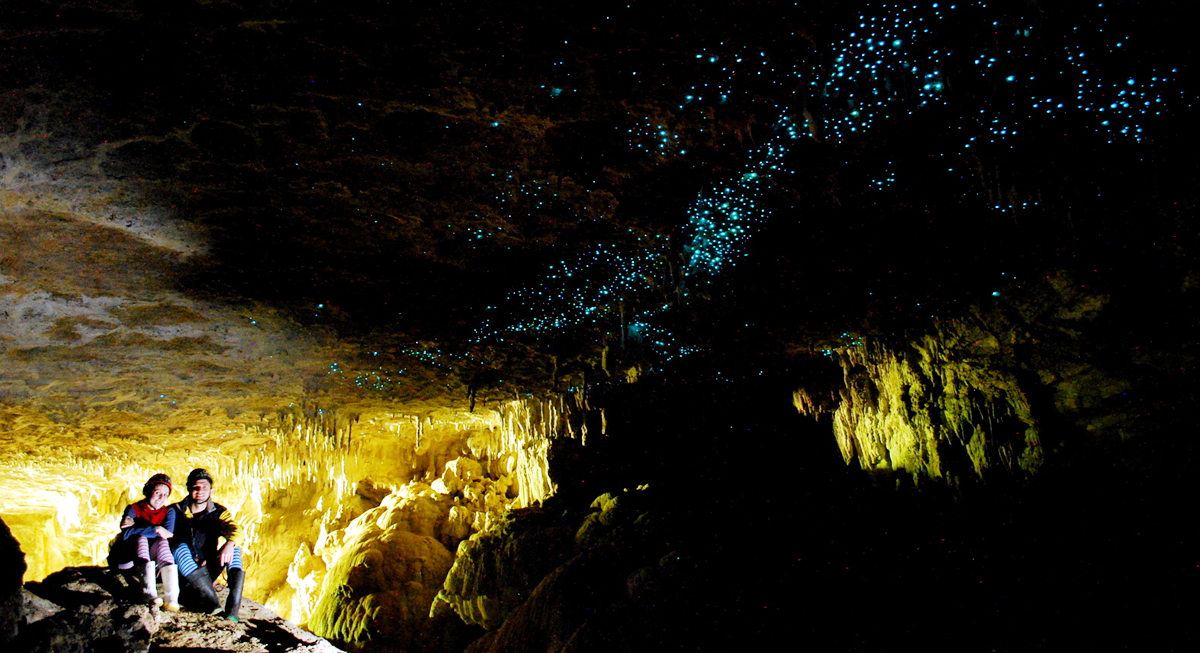
Image via Wikimedia Commons/Donnie Ray Jones
The most well-known place to see this up close is the Waitomo Glowworm Caves. The visit is guided and carefully managed. You sit in a small boat and move quietly through the Glowworm Grotto, with no talking or flash photography allowed. That silence matters, both for the setting and for protecting the glowworms themselves.
As your eyes adjust, the ceiling stops looking like rock and starts resembling a dense night sky. The light reflects off the still water below, doubling the effect. For a few minutes, it feels less like a cave and more like you’re drifting through open space.
If the crowds at the main caves feel a bit overwhelming, Ruakuri Cave nearby offers a different perspective. This cave is accessible on foot and features a massive spiral entrance. Walking through the limestone passages allows you to get much closer to the glowworms than you would on a boat. You can actually see the delicate, shimmering “snares” hanging down like beaded curtains.
Glowworms in the Wild
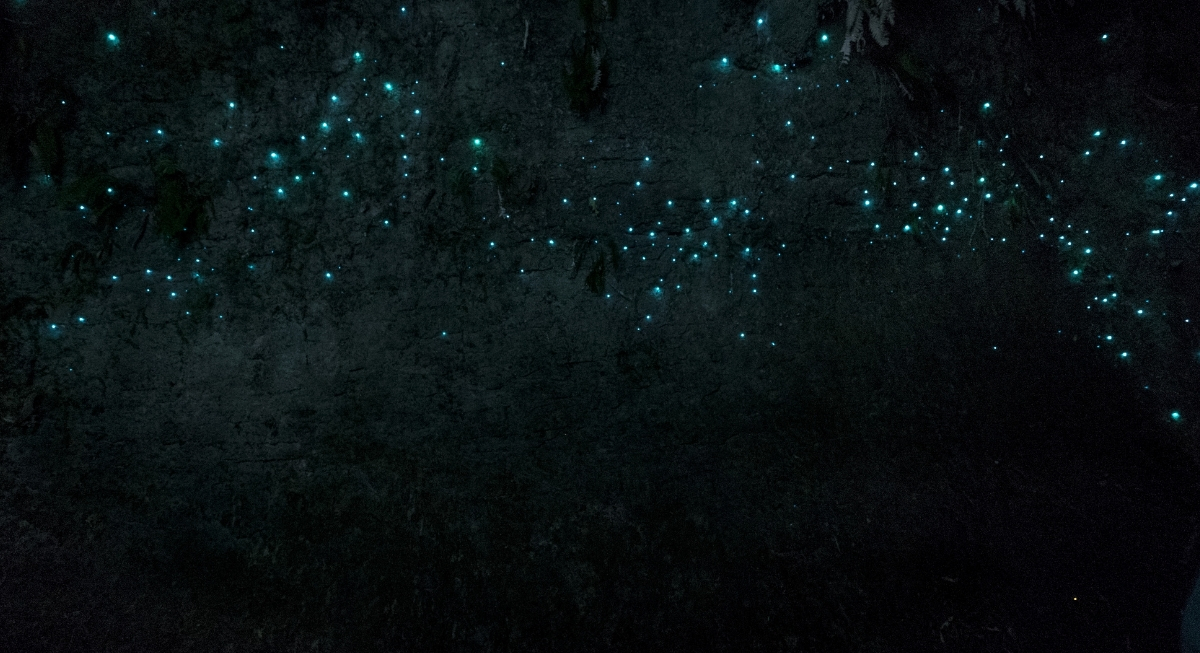
Image via Getty Images/Skyimages
If you want to avoid guided tours, you can see glowworms in places like the Waipu Caves. You’ll need boots and a flashlight to move through the muddy ground, but once you switch the light off in the main chamber, the ceiling becomes visible with its glow.
It’s a simple setup with no structured experience. You find your way in, adjust to the dark, and watch the glowworms overhead without the usual tour setting.
On the South Island, the Te Anau Glowworm Caves offer a more rugged trip. You have to take a boat across Lake Te Anau to reach the cave system, which is still geologically active. Unlike the quiet, still waters of Waitomo, these caves feature underground streams, with the rushing water creating a dramatic contrast to the still glowworm light above.
The contrast between the loud, powerful movement of the water and the silent, steady glow of the worms above creates a very different energy.
Glowworms Matter More Than Their Glow
The existence of these gnats says a lot about how life adapts to extreme environments. They spend most of their lives, about six to nine months, in this larval state, simply eating and glowing. Once they reach adulthood, they lose their mouthparts and survive only long enough to mate and lay eggs.
Their entire survival hinges on the health of the cave’s ecosystem. If the humidity drops or the insect population thins out, the lights go out. Seeing them is a reminder of how fragile these hidden habitats really are.