The Story Behind the Famous Tilted Buildings of Amsterdam
Amsterdam has thousands of historic canal houses, and a large number of them are visibly tilted. The reason these buildings are titled is rooted in the city’s construction, property taxation, and the method by which residents transported goods through narrow homes before modern construction methods were available.
A City Built on Unstable Ground
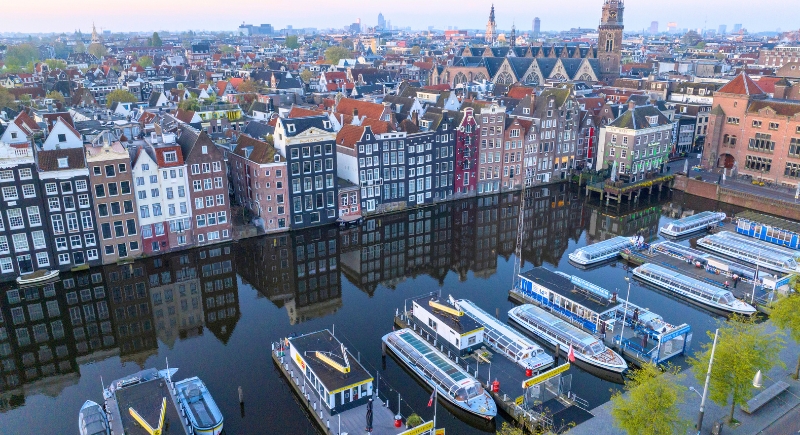
Image via iStockphoto/Oleksandr Tkachenko
Amsterdam did not rise on solid rock. Large parts of the city are situated on soft, waterlogged soil shaped by centuries of marshland development. Heavy masonry buildings and soggy ground rarely cooperate, so builders turned to an unusual solution. They drove long wooden piles deep into the earth until they reached a stable layer of sand.
Many historic homes still rest on hundreds of these wooden supports. As long as the piles remain submerged, they stay strong. Uneven pressure and age cause subtle movement over time. Some piles settle faster than others, and buildings begin to drift. The slow imbalance explains part of the tilt seen today, especially in older neighborhoods.
When Leaning Became Practical
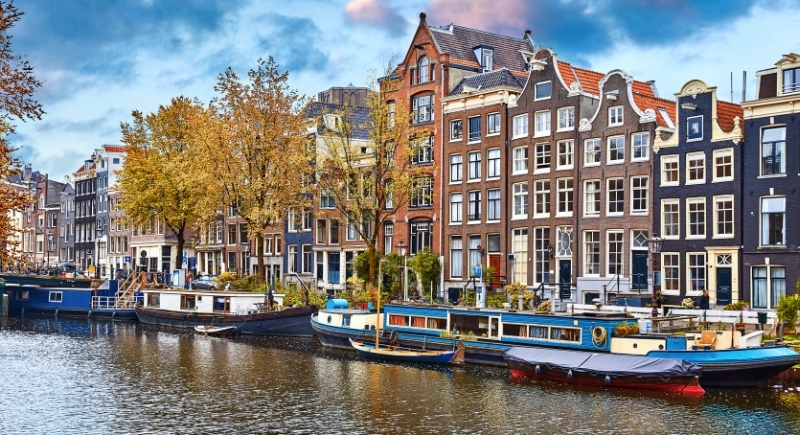
Image via Canva/yasonya
Amsterdam’s canal houses were built on narrow plots with steep, compact staircases, which left little room to move large furniture indoors. To solve this, residents used hoists mounted near the roof to lift items directly from the street into the upper floors.
Many façades were intentionally built with a slight forward tilt. This design created clearance between the wall and the lifted load, thus reducing the risk of damaging windows or brickwork. The roof-mounted hook and beam system, still visible today, was a functional necessity that supported everyday living.
Narrow Fronts and Creative Accounting
Money also shaped the skyline as much as engineering. For centuries, property taxes in Amsterdam depended on the width of a building’s street-facing façade. Wider frontage meant higher taxes. Homeowners responded in the most logical way possible. They built narrow fronts and stretched their houses deep into the plot. This approach resulted in tall, slender buildings packed tightly together.