
Those grease spots are a tracking system: they teach the hand, not just the ingredient list, even after you move away.
The batter line on the bowl is the real measurement
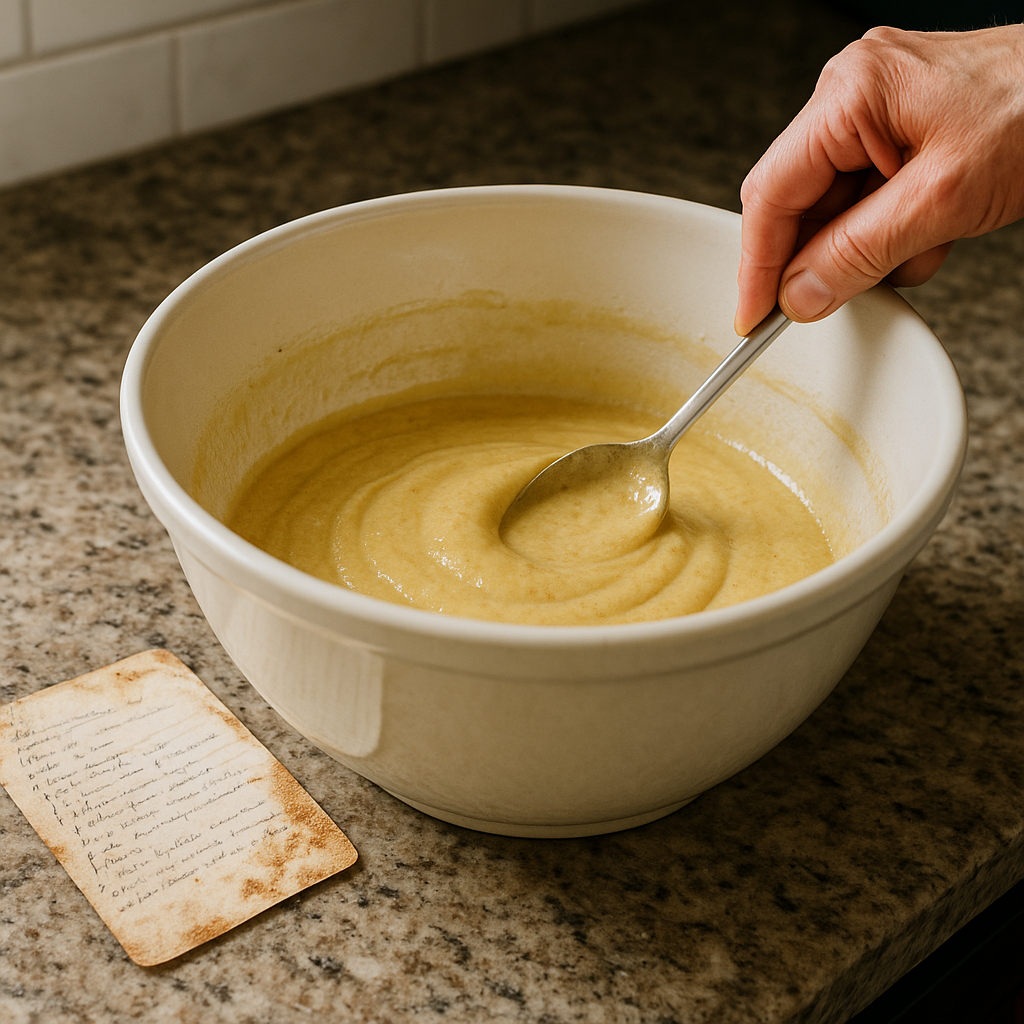
I can always tell which family recipes survived the moving-away years because they have physical tells that a typed document never develops. The one I think about most is the faint batter line inside a mixing bowl, right where the spoon kept circling. My aunt's banana bread card lists the basics, but it never says when to stop stirring. The first time she showed me, she didn't say a word about gluten or tenderness. She pointed to the bowl and said, watch for the batter to go from lumpy to glossy, and stop when it climbs the sides in one slow sheet. You don't learn that from a screenshot in a group chat. You learn it because someone stood next to you and let you make a slightly ugly version first.
That kind of teaching sticks around even after you leave town because it isn't tied to the original kitchen. It's tied to your senses and your timing. When I make it now in a different state, with a different oven that runs hot, I'm not trying to recreate the hometown counter. I'm trying to recreate that exact moment when the batter looks right, and I still hear her telling me to scrape the sides once, then quit fussing. The card in my drawer has the same smear of cinnamon sugar from the year I finally got the top crack just like hers. When younger cousins ask for the recipe, I don't send a clean rewrite. I send a photo of the card and the bowl line, because the mess is part of the instruction. It's a map of repetition. People move, ingredients change, and grocery store brands come and go, but a practiced eye for that texture travels pretty well.
Why a Sunday call turns into a cooking lesson
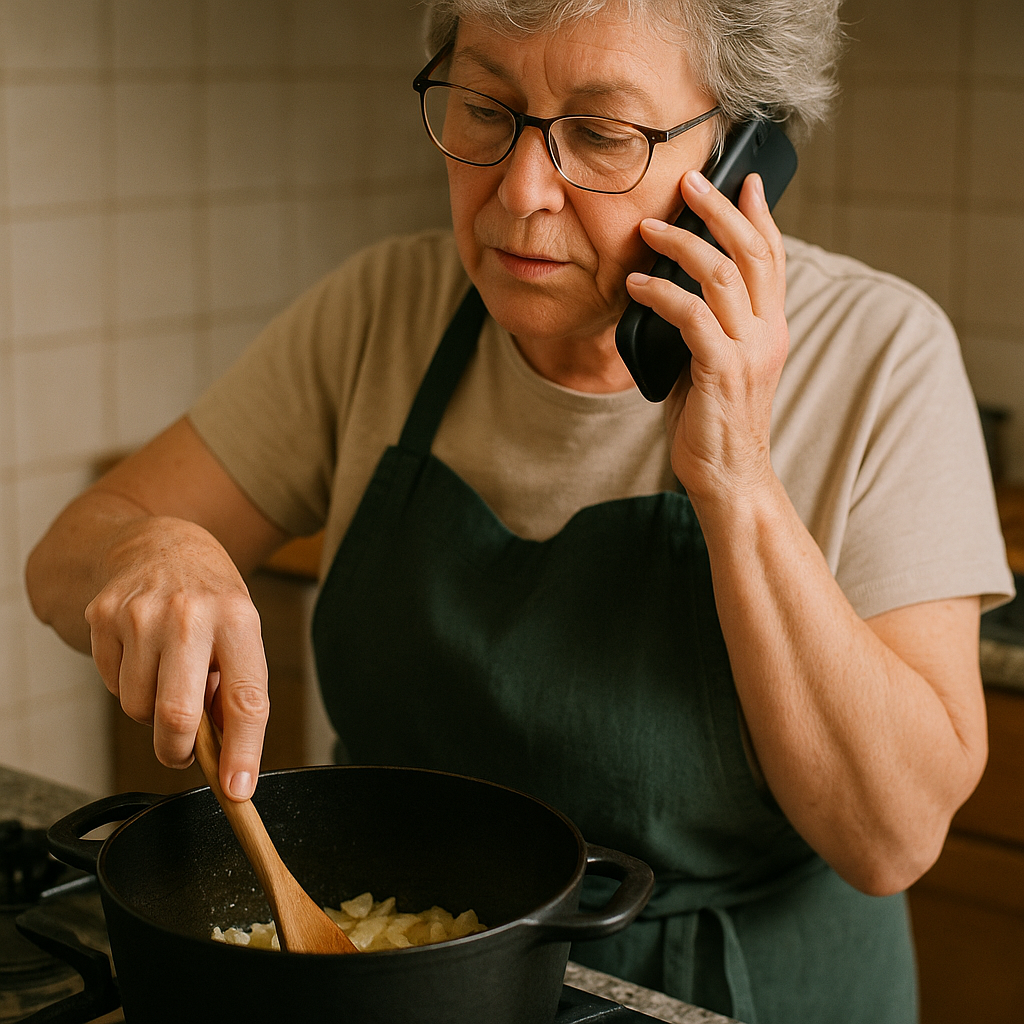
There's a reason the best recipe handoffs I know happen on the phone, not in a shared document. A call has built-in pauses: someone is waiting for onions to go translucent, or for water to boil, or for the roux to lose that raw flour smell. Those pauses are exactly where the older cook starts narrating the stuff that never makes it onto the page. You'll hear, don't rush the browning, and then a little local shorthand slips out, like how their side of the family says the gravy is ready when it looks like river mud after a storm. That phrase is silly, sure, but it's also precise if you've seen it once.
I learned my dad's red beans by calling him while I cooked, because he couldn't taste my pot from 800 miles away, but he could diagnose it from sound. He'd ask, are you hearing a sharp simmer or a lazy blup, and I'd hold the phone near the Dutch oven like a weirdo. If it sounded too aggressive, he'd tell me to crack the lid and turn it down until it sounded like it was thinking about bubbling, not doing it. That kind of coaching survives distance because it uses cues you can still access: smell, sound, the way a spoon drags through the bottom. It's also why regional food stays regional even when the kids scatter. The dish becomes a scheduled conversation, not a museum piece.
And it scales. Once one person in the younger generation can run the call, they become the interpreter for everyone else. I've watched a cousin in Seattle coach another cousin in Phoenix through the same pot, using the exact questions our dad used to ask. Nobody had to be in the original kitchen. The call creates a temporary shared kitchen anyway, full of tiny corrections that make the difference between decent and familiar. Later, when someone posts a photo of the finished bowl, the older cook isn't reacting to an image. They're reacting to the fact that the kid knew when to stop cooking the beans, and that knowledge is the inheritance.
The travel container that keeps a dish alive (and why it matters)
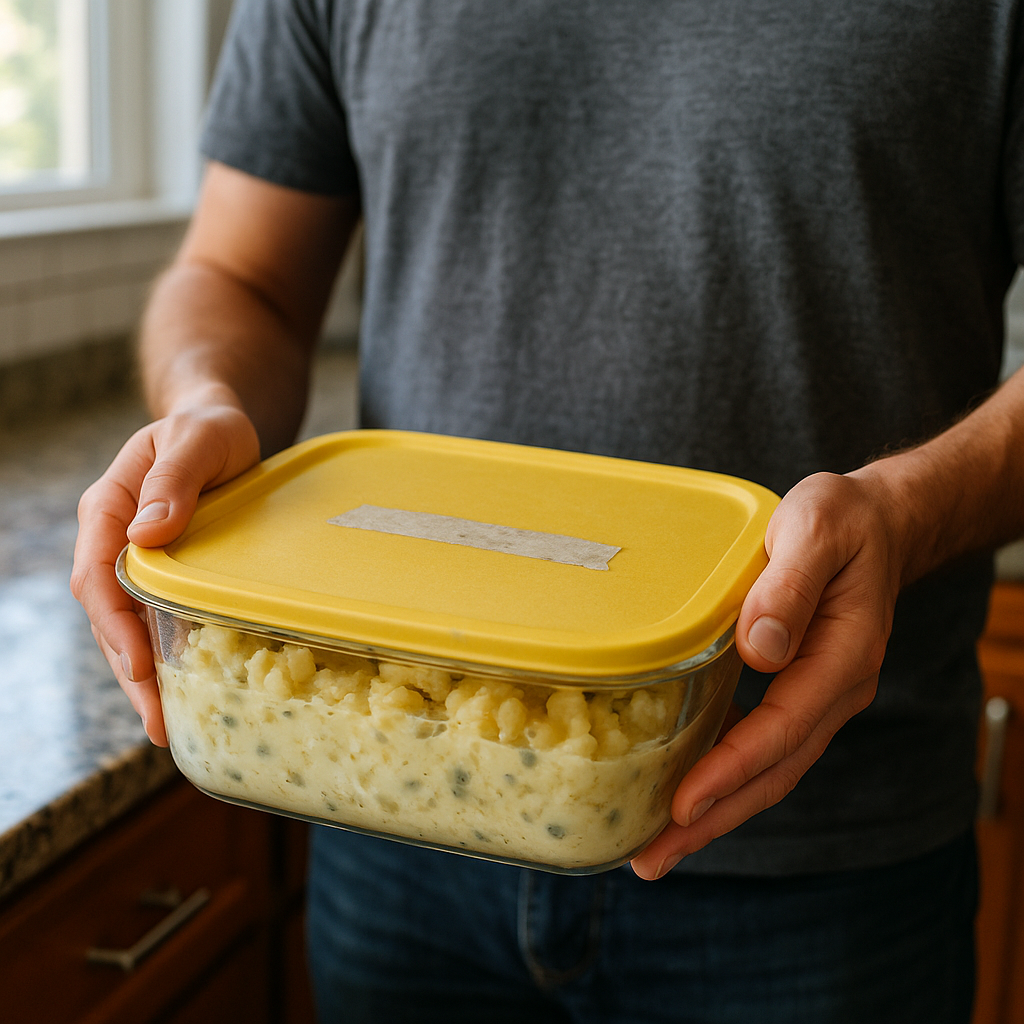
Every family I know has at least one traveling container with a reputation. Not fancy. Just specific. A dented stockpot that only comes out for gumbo. A Pyrex casserole dish that always returns with the lid slightly warped and a strip of masking tape that says whose it is in block letters. That vessel is a quiet tool for cross-generational recipe transmission because it standardizes the part young cooks mess up when they're far from home: scale and context. A written recipe might say, serve in a big bowl. The older generation knows what big means because they've been looking at that same bowl for thirty years. When you move away, you lose that reference point.
The travel container restores it. If you grew up seeing potato salad arrive in the same yellow-lidded tub, you learn the correct batch size without anyone lecturing you. When you inherit the tub, you inherit the portion expectation too. It's why some dishes feel wrong when they're made in the wrong shape of pan. Cornbread in a glass baking dish tastes fine, but if your memory is tied to a cast-iron skillet with a ring of crisp edges, your brain clocks the difference immediately. The equipment isn't an accessory. It's part of the sensory ID of the food.
I once watched my mom teach a niece to make holiday dressing by mailing her the old pan first. Not the recipe. The pan. When my niece called, the questions were suddenly concrete: should the mixture reach the rim, and how wet is too wet before it bakes? My mom could answer because she knew exactly how deep that pan is and how the top should look when it comes out. The pan turned a vague instruction into a shared measurement system across states and time zones. Years later, the niece still uses that same pan, and she doesn't need the recipe every time. She needs the feel of filling it to the same corner and smoothing the top the way she was shown. That's how a regional dish stays anchored to home even when home is now a flight away.