The Silver Coast Drawing Retirees Away From the Crowds
When Americans consider retiring in Portugal, Lisbon and the Algarve usually dominate the conversation. Between Porto and Lisbon, however, lies a 93-mile Atlantic coast corridor known as the Silver Coast, which attracts a growing number of U.S. retirees.
Locally called the Costa da Prata, this region stretches roughly 200 kilometers along Portugal’s central-western shoreline, beginning near Aveiro and extending south toward Torres Vedras. From Caldas da Rainha, Lisbon is about an hour away by car.
The proximity provides access to an international airport and urban services while allowing residents to live outside a major metropolitan center. That geographic position is one of the region’s strongest advantages.
A Climate Suited to Year-Round Living
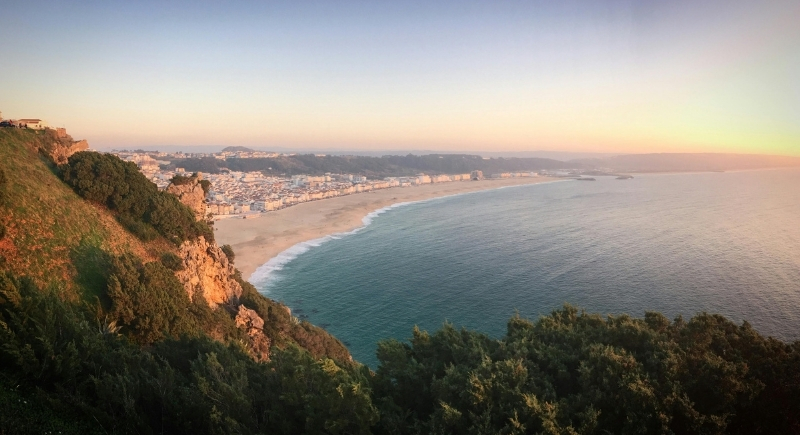
Image via Pexels/Sergei Gussev
Summer temperatures in Portugal’s Algarve can reach the high 90s°F, particularly inland. Along the Silver Coast, Atlantic winds moderate summer heat. Towns such as Nazaré benefit from consistent ocean breezes that reduce temperature extremes. Rainfall is also lighter than in northern cities like Braga and Porto, which results in a temperate coastal climate that supports outdoor activity throughout most of the year.
From October through March, Nazaré becomes internationally known for big-wave surfing. Swells have exceeded 100 feet, that draw drawing professional surfers and global media attention. Even for non-surfers, the cliffs near Fort São Miguel Arcanjo provide a clear vantage point to watch these winter storms.
Real Estate That Expands Options
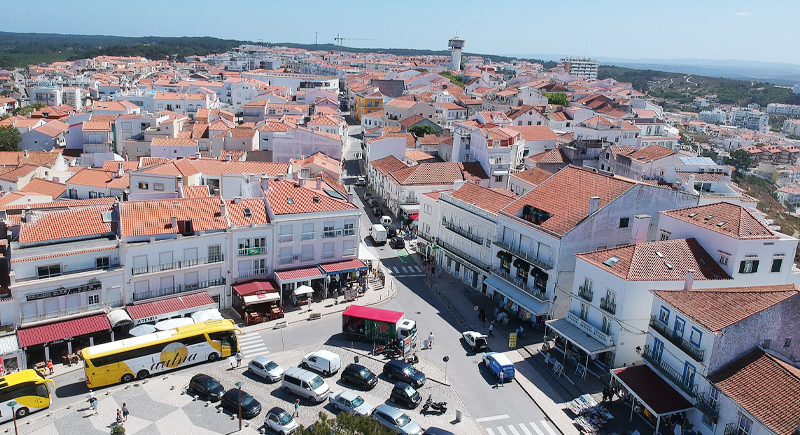
Image via Wikimedia Commons/Joseolgon
Housing costs often determine whether or not retirement abroad is a good idea. In Portugal’s most publicized coastal markets, a house with a private pool can easily cost more than $1,000,000. On the Silver Coast, properties near the beach typically start at around $300,000 in towns such as Foz do Arelho or Nadadouro. In Caldas da Rainha, two-bedroom apartments in the city center can start at around $100,000.
International Living estimates that a couple living comfortably in central Caldas da Rainha may spend around $2,200 per month. That figure includes rent, utilities, groceries, transportation, private health insurance, and entertainment. Individual budgets vary, but the baseline remains lower than comparable coastal living costs in many parts of the United States.
Healthcare Access at Predictable Costs

Image via Canva/charliepix
Portugal ranks 12th globally for healthcare quality and affordability. Public hospitals and private clinics operate throughout the Silver Coast region.
Private health insurance is required when applying for residency, and many American retirees continue carrying it because premiums remain comparatively affordable. Private coverage often provides access to English-speaking physicians and shorter wait times.
For retirees accustomed to higher U.S. healthcare costs, the system offers greater cost predictability.
Established Towns With Active Communities
The Silver Coast combines working towns with established expat populations. In Nazaré, traditional fishing practices continue alongside tourism. Women still wear the seven-skirt attire associated with local heritage.
The Sanctuary of Our Lady of Nazaré overlooks the Atlantic from the cliff-top district known as Sítio. Óbidos, located inland, remains enclosed by medieval walls. Cobblestone streets, preserved stone houses, and the central castle attract visitors year-round. The town is known for ginjinha, a sour cherry liqueur commonly served in small chocolate cups.
Peniche is widely recognized for surfing at Praia dos Supertubos, where Atlantic swells create powerful, tube-shaped waves. Offshore, the Berlengas Biosphere Reserve sits approximately six miles from the mainland, offering protected marine ecosystems and hiking trails.
These towns operate year-round, supported by residents rather than solely by seasonal tourism.
Coastline, Lagoons, and Open Space
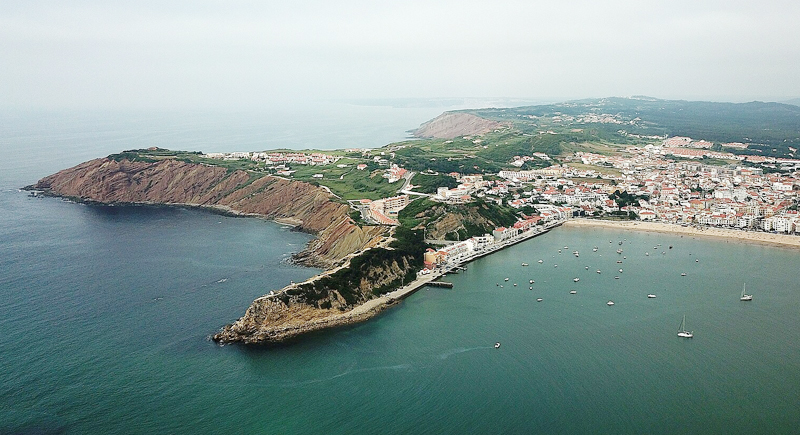
Image via Wikimedia Commons/Alvesgaspar
The region offers diverse coastal geography. São Martinho do Porto features a naturally sheltered bay with calm waters. Foz do Arelho borders the Óbidos Lagoon, where lagoon waters sit on one side and open Atlantic waves on the other.
Pine forests, dunes, and cliffside paths offer year-round hiking and cycling. In Caldas da Rainha, daily produce and fish markets continue operating in the town center, reflecting local agricultural and fishing traditions. Development exists, but large portions of the shoreline remain free of high-rise resort construction.
Connectivity Without Urban Density
The infrastructure supports long-term living without requiring daily engagement with a major city. The A8 highway connects Caldas da Rainha to Lisbon in approximately one hour.
Bus companies such as Rede Expressos provide direct routes to Lisbon and Porto. Coimbra is roughly two hours by car from Lisbon Airport.
Expat communities are present throughout the region, particularly in Caldas da Rainha, Nazaré, and surrounding coastal towns. Social groups organize language exchanges, hiking outings, and community dinners. English is widely spoken in areas with higher concentrations of international residents.
Why Retirees Are Choosing It

Image via Getty Images/PeopleImages
The Silver Coast’s appeal stems from a combination of factors: a moderate climate, accessible healthcare, affordable real estate, and established local communities.
For American retirees, purchasing a $300,000 coastal home instead of a $1,000,000 property significantly alters retirement projections. Monthly living costs around $2,200 for a couple also compare favorably with many U.S. coastal markets.
At the same time, the region offers historic towns, active fishing ports, surf culture, protected natural reserves, and proximity to Lisbon and Porto. Retirees prioritizing long-term affordability and quality of life are finding it increasingly difficult to ignore this balance.