The Seven Wonders Secrets the Guidebooks Never Told You
People have been talking about the Seven Wonders for more than two thousand years, yet most still can’t name them all. That gap is part of what makes them interesting. The original list was not meant to be a simple roundup of impressive structures. It reflected how the Greek world, especially after Alexander the Great, chose to present power and achievement to travelers moving through the eastern Mediterranean.
That context explains the choices. The list focuses on places tied to wealth and authority in regions the Greeks knew well, especially across Egypt and Asia Minor. What looks like a list of great buildings is also a record of which places mattered to them.
The Great Pyramid Was Built To Control The Afterlife
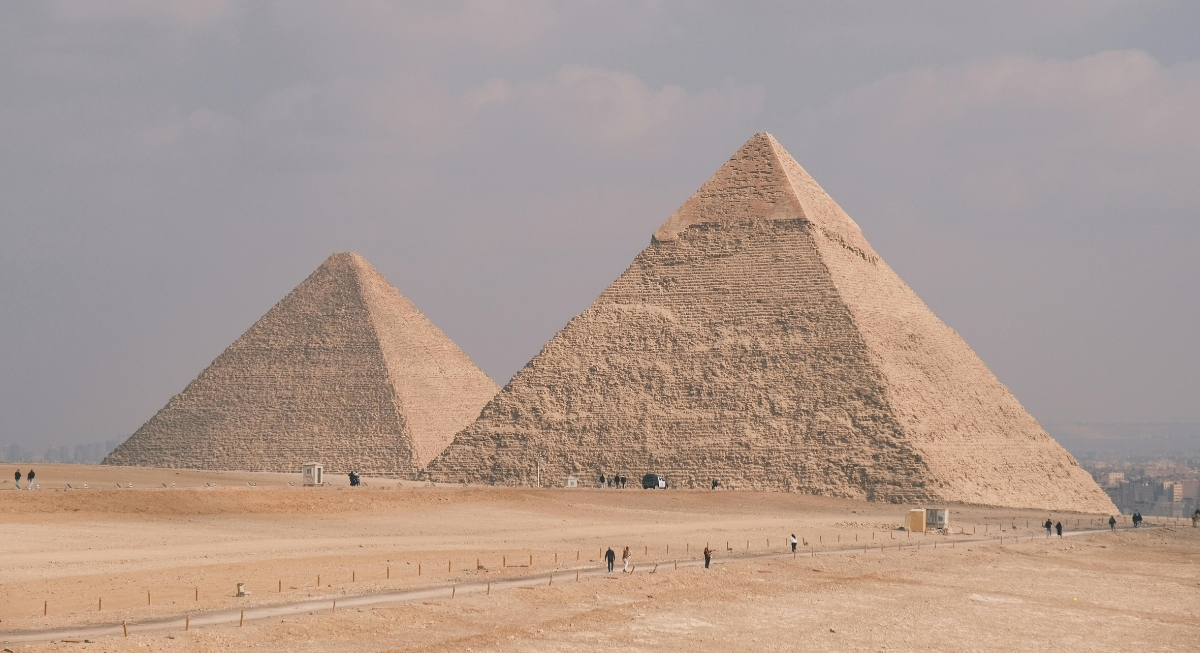
Image via Pexels/Junchen Zhou
The Great Pyramid of Giza, completed around 2550 BCE for Pharaoh Khufu, is the only surviving Wonder. It used roughly 2.3 million limestone blocks and once rose about 480 feet. What guidebooks often skip is their purpose. It functioned as a system meant to secure the pharaoh’s rebirth and, by extension, Egypt’s stability.
Ancient Egyptians believed the ruler’s successful journey into the afterlife kept the world in balance. It also wasn’t built in isolation. The Nile once ran close to the site, turning the area into a busy hub where materials and workers moved constantly. Around 20,000 laborers likely worked in shifts over decades, placing blocks at a pace that still shocks people.
The Hanging Gardens Might Be A Case Of Mistaken Identity
For something so famous, the Hanging Gardens of Babylon are strangely absent from the most reliable accounts of the city. They’re usually tied to King Nebuchadnezzar II, who ruled from 605 to 562 BCE, and described as lush terraces supported by advanced irrigation systems.
Writers who documented Babylon in detail, including Herodotus, never mentioned them. No confirmed archaeological evidence has been found either. That gap has pushed some historians to look elsewhere, particularly to Nineveh, where descriptions of royal gardens and water systems align more closely with what later writers described. It raises an uncomfortable possibility: the “Hanging Gardens” may not belong to Babylon at all, or even to a single site.
The Temple Of Artemis Was Also A Financial Powerhouse
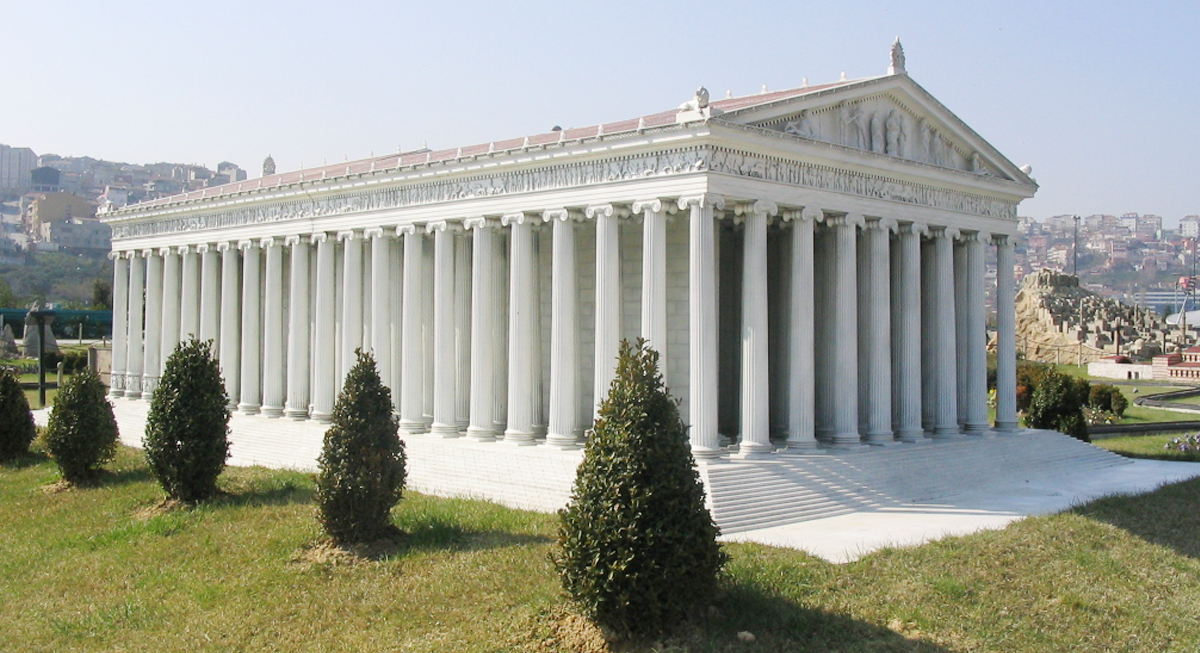
Image via Wikimedia Commons/Zee Prime
If you walked into the Temple of Artemis at Ephesus, you wouldn’t have found a quiet, restricted sanctuary. First completed around 550 BCE and rebuilt after a fire in 356 BCE, the structure stretched about 425 feet long and 225 feet wide, supported by 127 columns. It was open, active, and central to daily life.
The temple doubled as a secure financial center, protected by its religious status. That combination made it one of the earliest examples of a space where economic and spiritual authority overlapped. Its eventual destruction is tied to Herostratus, who set it ablaze solely to make his name known.
The Statue Of Zeus Was Designed To Intimidate
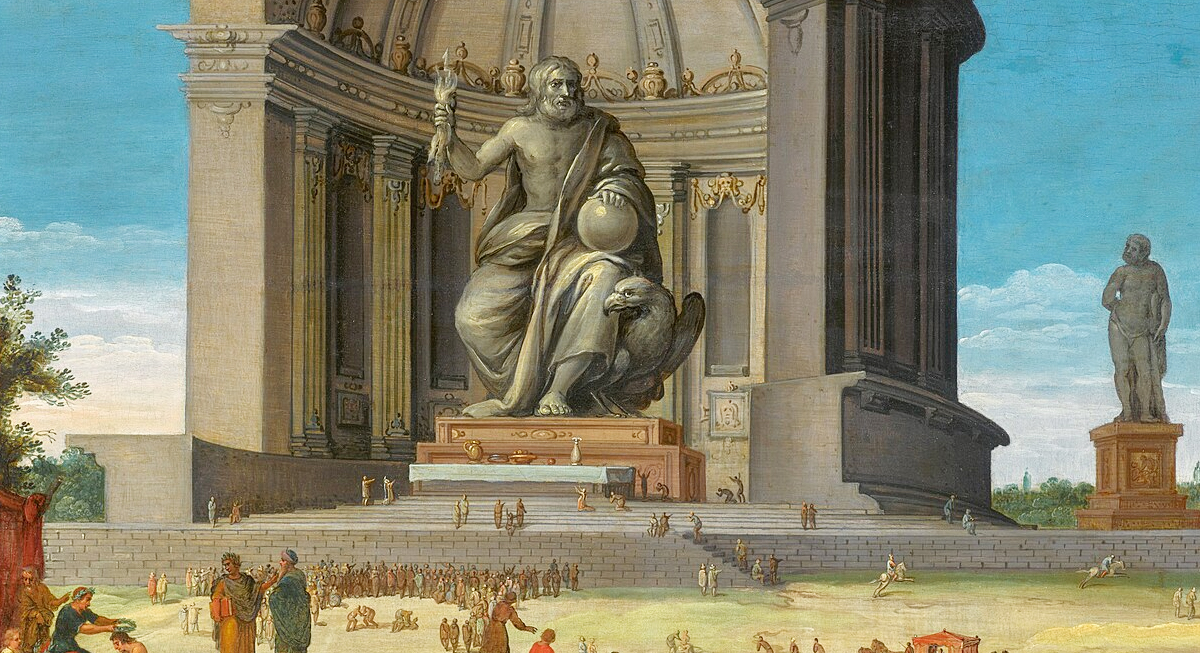
Image via Wikimedia Commons/Jane023
Created by the sculptor Phidias between 438 and 430 BCE, the Statue of Zeus at Olympia stood about 40 feet tall, or over 44 feet including its base. It used ivory for skin and gold for clothing, materials chosen for their visual impact.
The statue’s design forced visitors to look up at a towering figure seated inside a temple that barely contained it. If Zeus had stood, ancient accounts claimed he would have broken through the roof. It was built to overwhelm visitors and reinforce the idea that divine authority mirrored human power structures.
The Mausoleum Turned Grief Into A Public Statement
Grief can sometimes be private, but the Mausoleum at Halicarnassus made it impossible to ignore. Completed around 350 BCE for Mausolus, the structure rose to about 145 feet and blended Greek, Persian, and regional design elements into a single, highly visible statement.
Artemisia II commissioned it after Mausolus’ death, and later accounts claim she mixed his ashes into her drink. Whether literal or symbolic, the monument itself did the real work. It displayed loyalty, wealth, and cultural reach simultaneously. Its influence didn’t stop there. The term “mausoleum” still comes from his name, turning one ruler’s tomb into an architectural category.
The Colossus Of Rhodes Never Stood Over The Harbor
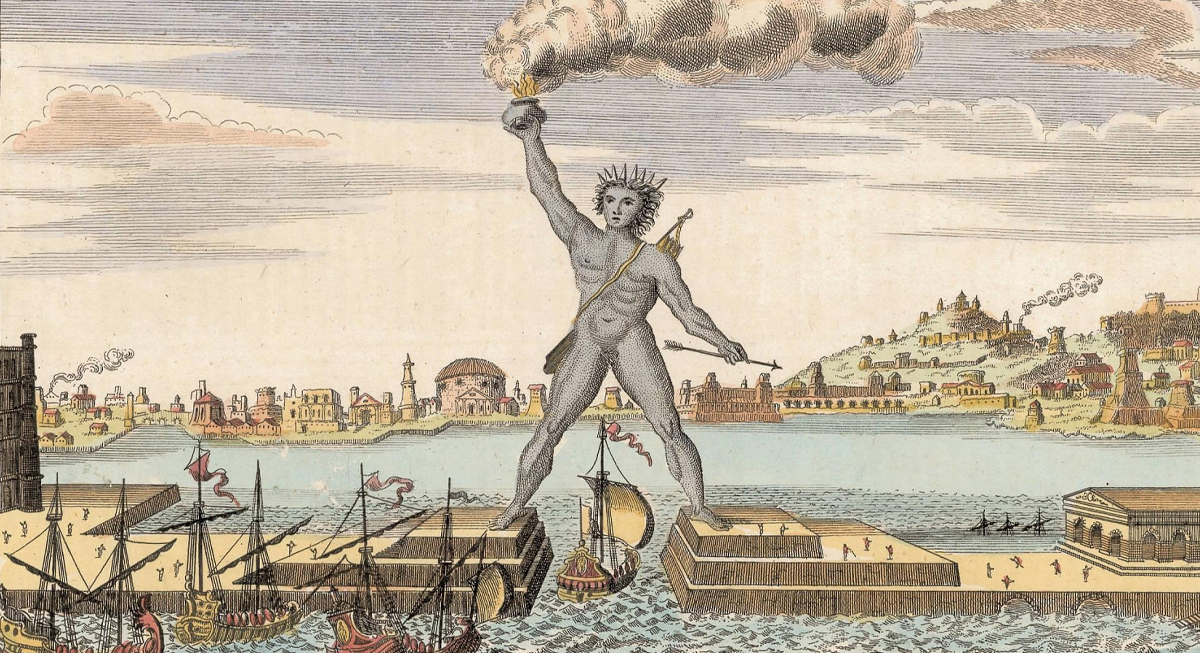
Image via Wikimedia Commons/Dencey~commonswiki
The Colossus of Rhodes, completed around 280 BCE, stood about 108 feet tall and was built to celebrate a military victory. Popular images show it straddling the harbor, but that idea appeared much later and doesn’t match practical engineering limits.
It likely stood on land, overlooking the port instead. Built from bronze over an iron framework, it took about 12 years to complete and collapsed during an earthquake around 227 BCE, after just a few decades. Its remains were visible for centuries, which helped turn a short-lived statue into legend.
The Lighthouse of Alexandria was a Signal and a Statement
The Lighthouse of Alexandria began under Ptolemy I around 297 BCE and was completed during the reign of Ptolemy II. Rising over 400 feet, it was one of the tallest structures of its time. At night, a fire burned at the top. During the day, polished surfaces reflected sunlight. Ships could spot it from miles away, which made it vital for trade in a city linking Africa, Asia, and the Mediterranean.
But it did more than guide ships. It showed who controlled those routes. In a major port like Alexandria, that mattered. The lighthouse stood for more than 1,500 years before a series of earthquakes brought it down in the 14th century. Its name, Pharos, later became the root for the word “lighthouse” in several languages.