
A rubber band, a receipt, and a few stall-by-stall habits I use to remember good finds without impulse-buying.
The Rubber-band Bookmark Method
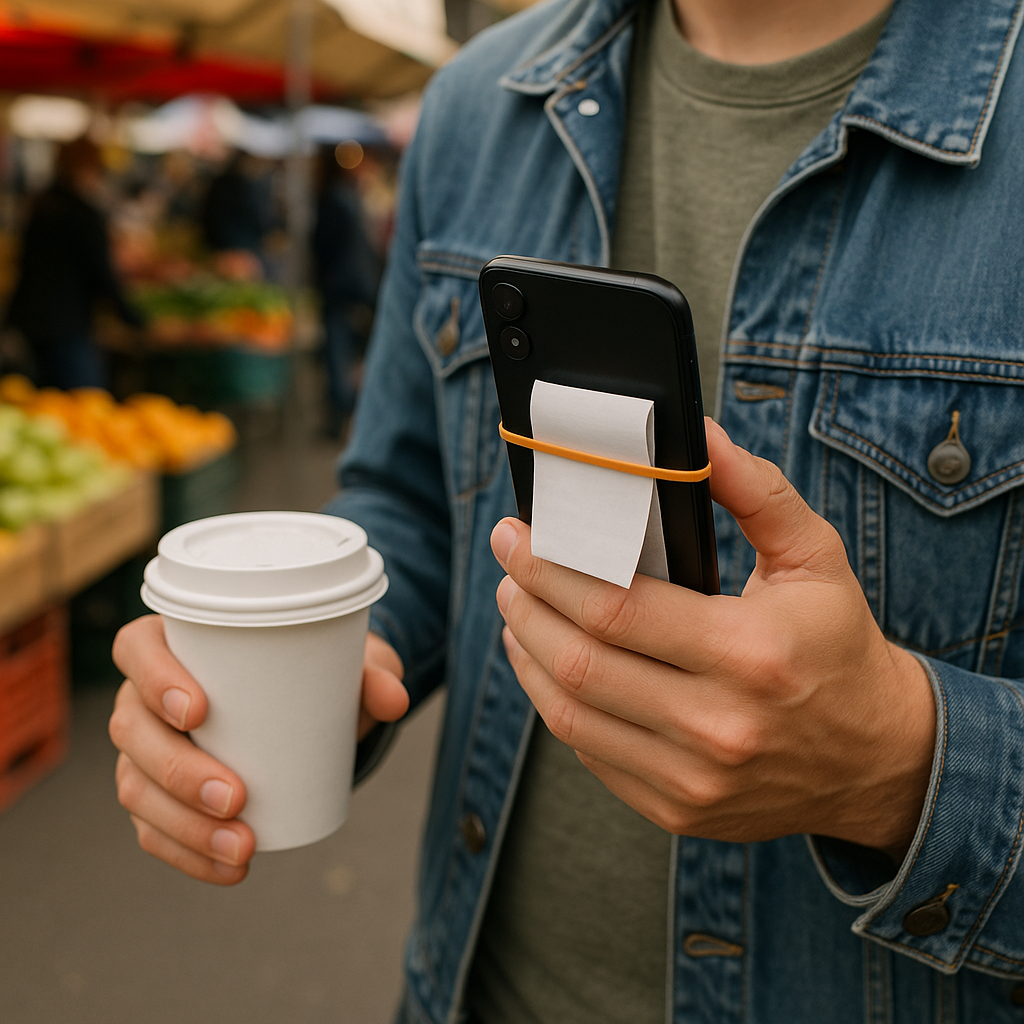
I started doing this after realizing my brain turns to soup about ten minutes into a busy market. Too many aisles, too many smells, too many stallholders calling out prices I can't compare fast enough. The trick that fixed it for me is embarrassingly low-tech: I wrap a rubber band around my phone and slide the first receipt I get under it so the paper sits like a bookmark. No apps, no notes that vanish into a camera roll, and I don't have to unlock my phone with sticky fingers.
Every time I see something that looks like a hidden treasure (a spice blend that smells like the back room of a bakery, a stack of old enamelware with real wear, a fruit I don't recognize but can't stop staring at), I write one line on that receipt: stall landmark + one detail + a number. Not the name of the market, not a big description. More like: "blue tarp, next to knife sharpener, dried limes $3" or "corner by bus stop, brass padlocks, small $5." The rubber band keeps the receipt from sliding away when I'm juggling a coffee, and the receipt lets me keep walking instead of panic-buying the first decent thing I see.
Two rules keep me from rushing. First, I do one full loop before buying anything beyond a drink. I compare prices, notice which items appear at several stalls, and jot down anything worth a second look. Second: when I circle back, I only buy from the receipt list. It stops me from buying something simply because one stall grabbed my attention first. It's also a weirdly good way to talk to vendors. When I circle back and mention the specific thing that caught my attention, it often gives us an easy way to start a conversation about what else the stall carries.
I Look Past the Most Polished Displays
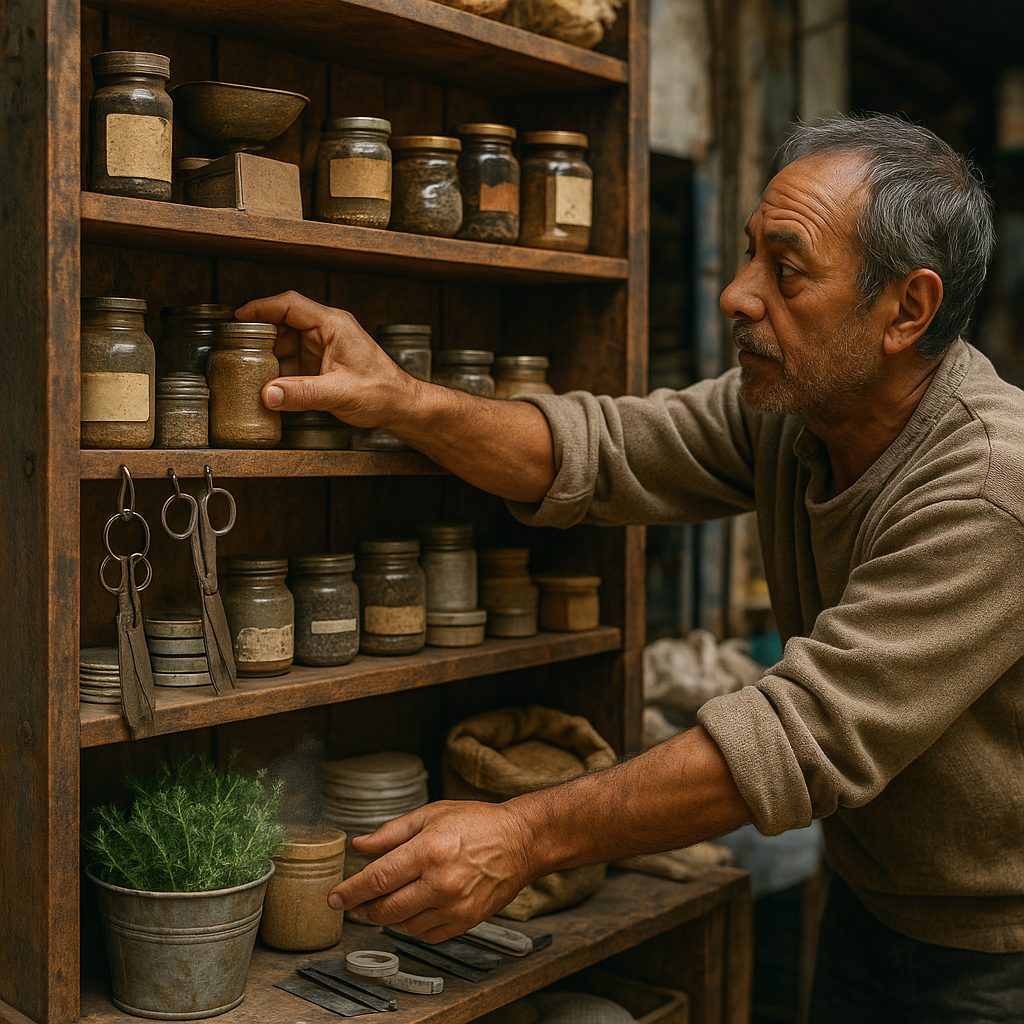
Stalls that look carefully curated for photos can be tempting, but I often find it more interesting to look beyond the most polished displays. I've had better luck lingering at less polished stalls with crowded shelves, handwritten signs, and plenty of stock beyond the main display. A messy setup doesn't guarantee a great find, but it can be worth a closer look.
Here's what I scan for in about five seconds: extra stock beyond the main display, handwritten labels, unusual sizes, and items that don't seem arranged specifically to catch passing shoppers. None of those things guarantees a great find, but they give me something concrete to ask about. A crowded lower shelf might hold extra produce or household goods, while less prominent corners sometimes turn up odd-sized kitchenware, old tools, or textiles I hadn't noticed at first.
When a stall has enough variety to make me curious, I don't start with price. I start with one specific question that can lead to a more useful answer: "Which one would you recommend if I wanted something people around here actually cook with?" for spices or honey, or "Which of these is your weird one?" for fruit and pickles. The answer can tell me more than the display does. Sometimes a vendor explains the differences between several options or mentions another size, variety, or item that isn't sitting out front. Sometimes that question sends the vendor looking through stock I hadn't noticed.
A Specific Question Can Reveal More Options
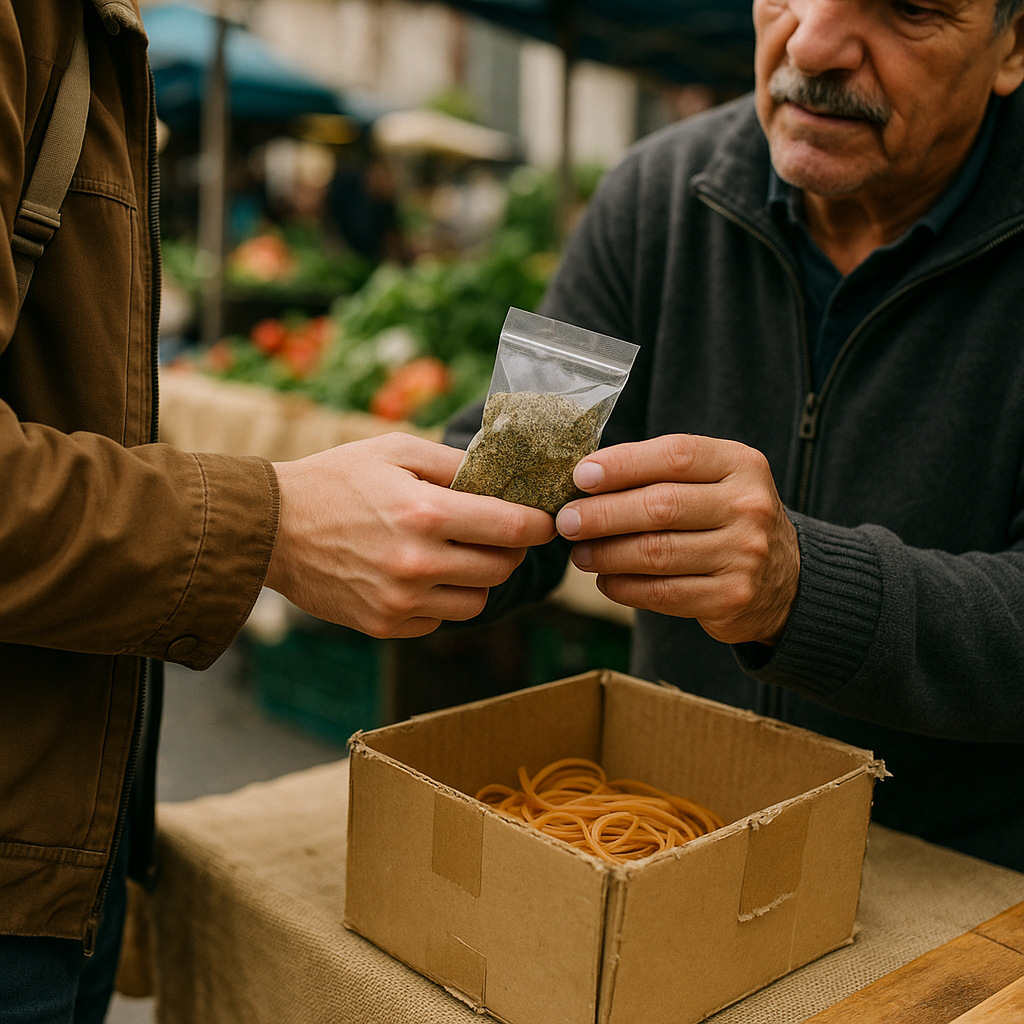
In some markets, asking a specific question reveals options that aren't visible on the main display. A vendor may have another size, color, variety, or batch stored nearby. I've found that a specific, practical question works better than a vague request about whether a vendor has anything special.
I do it with a tiny purchase that makes sense in that stall's world. At a spice booth, it's the smallest bag of something I know I'll cook with that week (cumin, smoked paprika, dried oregano). At a kitchen-goods stall, it's a single replacement item I always end up needing on the road, like a simple vegetable peeler or a pack of rubber bands. At a textile table, it's a plain cotton dish towel, not the loud, patterned scarf. The point isn't to spend more. It's to buy one boringly practical thing and then ask about a specific type of item that's harder to display: "Do you have any smaller jars of that?" "Any older ones of these?" "Any pieces with a little wear?"
Occasionally, the conversation becomes more detailed once I've shown genuine interest in what the stall sells. I've watched vendors pull out a shoebox of hand tools, lift a cloth to reveal a stack of tarnished metal buckles, or bring out another batch of dried fruit that wasn't part of the main display. It's not magic, and it's not guaranteed. Some stalls are just front-table stalls. It won't happen at every stall, and I wouldn't expect it to. The payoff is simply that asking a thoughtful question can reveal choices I might otherwise have missed. Those are often the purchases I remember best once I'm back home.