
Three dark-sky stops where local culture, interpretation, and guided experiences can change how you look up.
Uluru: Listen first, then let the sky do the explaining
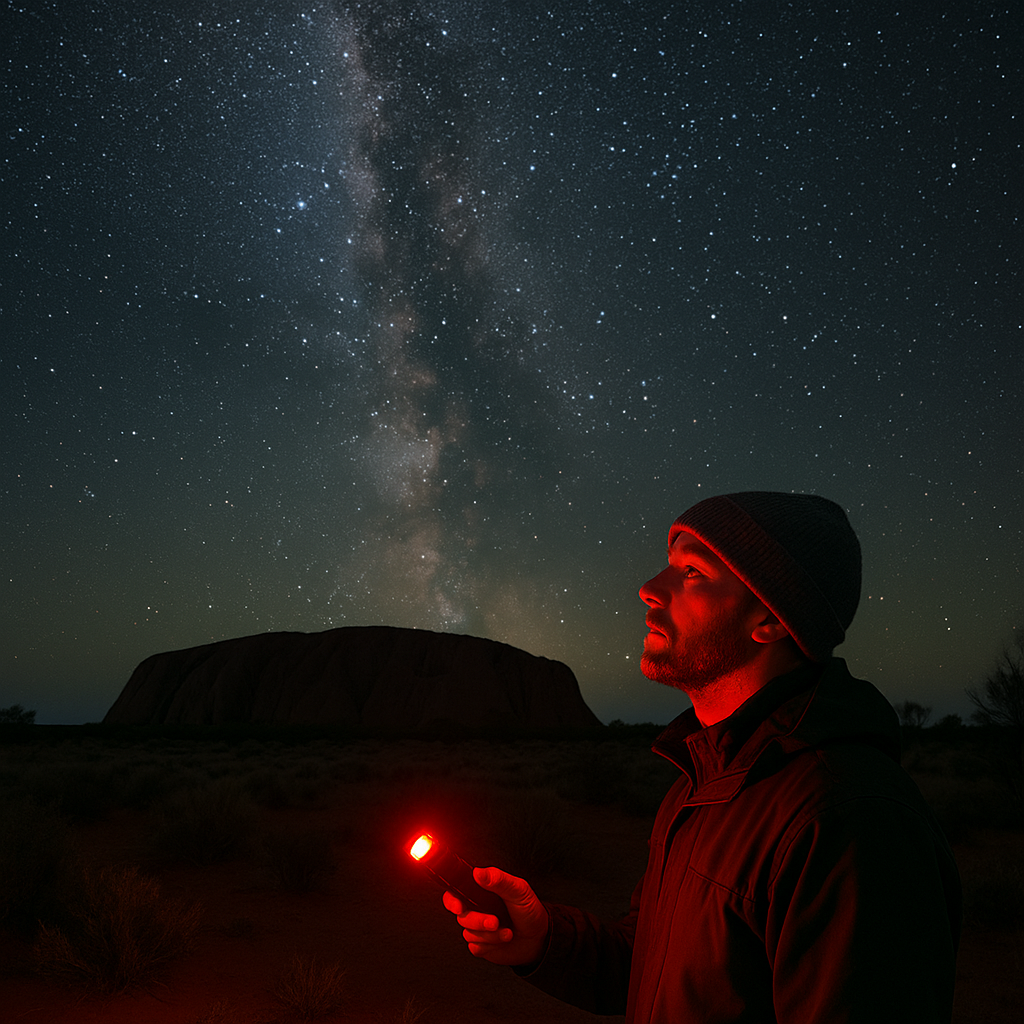
Uluru isn't a place to show up, point a laser, and announce constellations like you're running a backyard planetarium. If cultural interpretation is important to your visit, look for an experience that explicitly includes Anangu storytelling rather than assuming every astronomy tour does. The first practical thing it changes is where you put your body: not on the wrong side of a closed area, not wandering off a marked viewing spot because you saw a darker patch on your phone map.
Then the sky comes in. A culturally focused experience may connect the night sky with stories, relationships, seasons, and place rather than presenting only Western constellation patterns. A good rule is to listen without interrupting, avoid treating sacred knowledge like trivia, and respect anything a guide chooses not to share. The payoff is that you stop hunting for the one famous thing and start noticing timing: when a star rises relative to dusk, what season it signals, how it sits over the silhouette of the rock. If you're bringing gear, keep it low-impact. A small headlamp with a red filter (or even a red acetate sheet taped over the lens) lets you see your footing without blowing everyone's night vision. And yes, people still show up with bright flashlights on their phones. Don't be that person.
One more detail that feels very Uluru: the quiet matters. The desert at night isn't silent, but it is spare. When someone is sharing a story connected to the sky, you can hear every zipper pull and every clink of a tripod leg. Setting up a camera early can reduce noise and unnecessary movement once a cultural presentation or stargazing session begins.
Maunakea: Start at the visitor center, not the summit
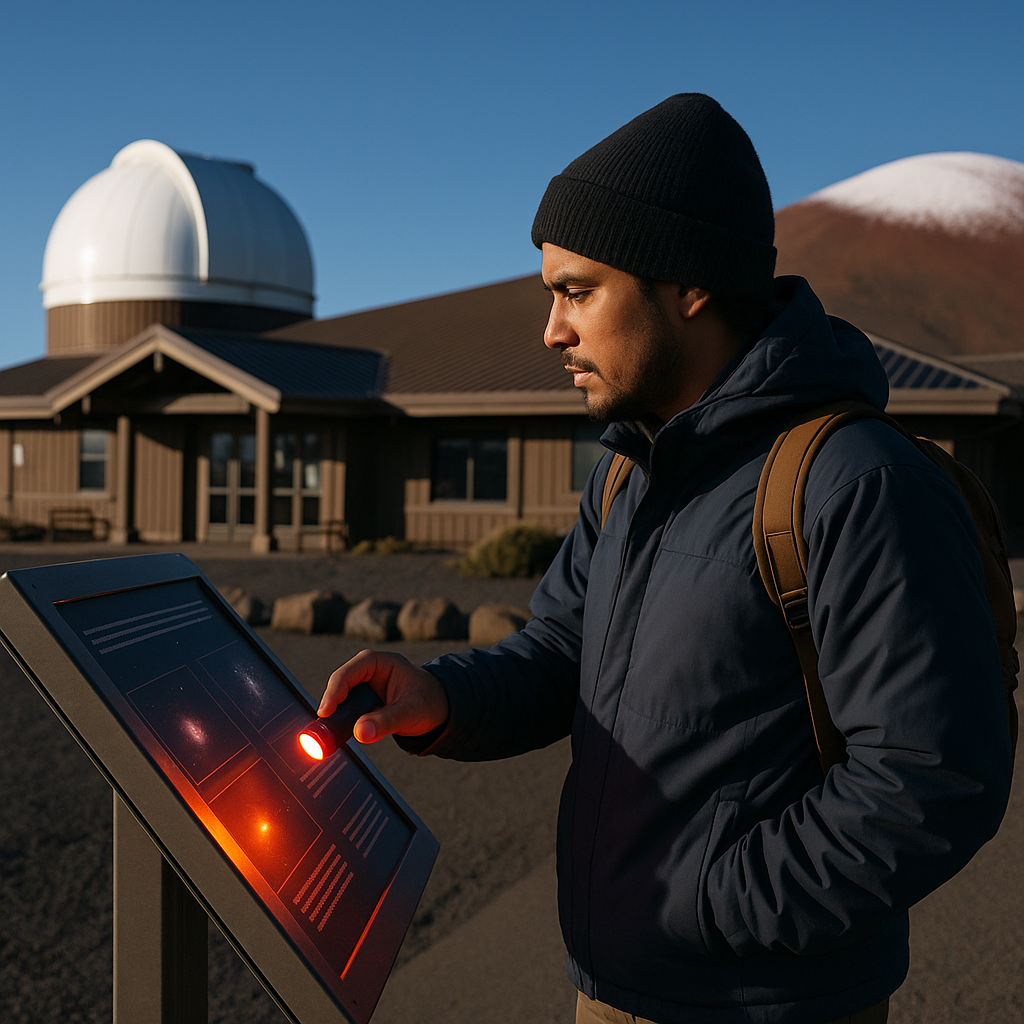
Maunakea has a reputation that makes people talk like the summit is the only place that counts. In practice, for most travelers, the Visitor Information Station at Onizuka Center is where the night becomes both safer and more grounded. Altitude is not a vibe; it is physics. If you haven't acclimated, racing up the mountain to chase darker skies can turn into a headache-and-nausea mess, and that isn't a heroic story. The Visitor Information Station offers stargazing and visitor education, and its evening presentations may cover astronomy, Hawaiian starlines, and wayfinding.
A sensible approach is to arrive in late afternoon with layers, spend time with the displays and staff, and give yourself time to acclimate before stargazing. The visit takes on more context once you understand that Maunakea is both a major astronomical site and a place of deep cultural significance in Hawaiʻi. That context changes your behavior in small ways. You keep your voice down. You don't wander into restricted areas. You don't treat every fence as a challenge.
When the sky finally shows up, it shows up hard. Even at the visitor center elevation, the transparency can be stunning. Binoculars can be an easy way to explore the sky without extra setup. If you bring your own telescope, use equipment you already know well rather than trying to learn a complicated setup in the dark. Don't use a laser pointer unless the site's rules or staff explicitly allow it.
Programs that discuss Hawaiian wayfinding can help visitors understand how stars have long been used as navigational guides across the Pacific.
Borrego Springs: A sculpture walk that doubles as a sky story map
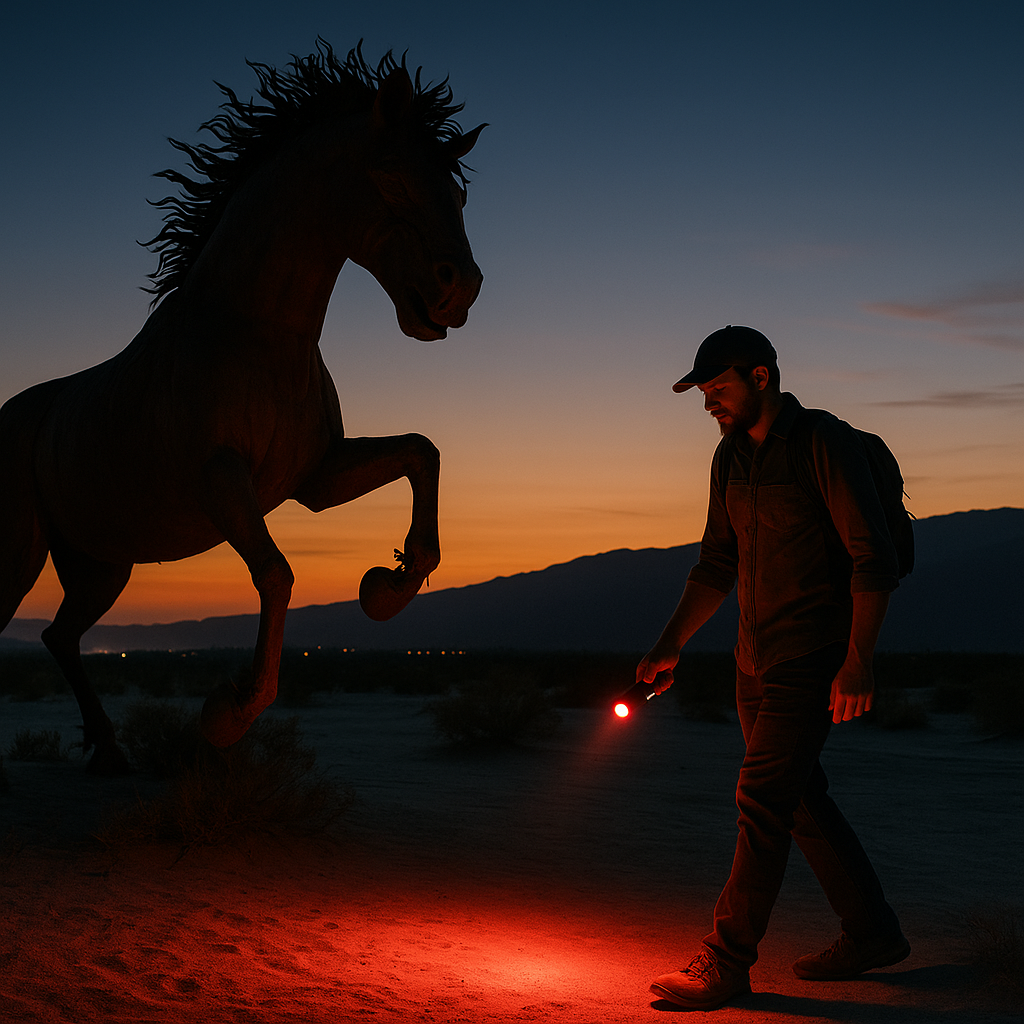
Borrego Springs changes character quickly after sunset. Daytime is all glare and distance. Then the sun drops, the town lights stay surprisingly restrained, and the sky comes on like someone dimmed a stage and turned up the band. If you're combining stargazing with storytelling, the sculptures provide a useful physical starting point: the Galleta Meadows metal sculptures out in the sand. They give you a route, a sense of scale, and a built-in reason to move slowly after dark.
Arriving before sunset makes it easier to learn the area while there's still light, park safely off the road, and walk a short loop while there's still color in the sky. The sculptures can serve as familiar reference points once darkness falls, provided you stay on established access routes. Then, when the first stars appear, you already have a horizon reference, and your eyes are trained for low light. This is where a red-filter flashlight becomes useful. Not a phone screen, not a headlamp on full blast. A simple handheld light with a red lens lets you see the sand ruts and the edge of the shoulder without resetting your night vision every two minutes. If you only have a headlamp, put it on the lowest setting and angle it down. People think they're being careful because they're using a headlamp, but if it's aimed straight ahead, it's still a moving spotlight in everyone else's face.
For cultural context, you can use a reputable resource created by or in collaboration with the specific Indigenous community whose sky traditions you're learning about, rather than treating Southwestern traditions as interchangeable. I don't mean playing professor with a constellation app. I mean simple, respectful noticing: which stars rise first, how the Milky Way's brightness changes as your eyes adapt, and how story traditions often track seasons, food cycles, and direction. If you want a hosted option, the community has astronomy groups and occasional programs that lean into interpretation rather than just telescope peeks.
One practical caution: desert access roads can be much harder to judge after dark, so scout unfamiliar viewing locations before sunset and stick to safe, legal access points. Keep a paper map in the car as a backup, and don't follow unfamiliar vehicles deeper into a wash after dark. The sky will still be there if you turn around and pick a safer pullout.