The Real Birthplace of Tiramisu Is Not Where You Think
In the mid-1980s, tiramisu seemed to appear out of nowhere. In 1985, The New York Times wondered how a dessert that had barely registered on American menus just a few years earlier had suddenly become a fixture across New York. By 1987, Paris restaurants were calling it a “creation 1987.” Two years later, San Francisco papers described it as a full-blown obsession.
It felt new, trendy, almost invented on the spot. But the truth is more complicated. The real birthplace of tiramisu is still debated, and the version most people repeat today may not be the original story at all.
A 1938 Claim That Sounds Convincing

Image via Getty Images/Robert Pavsic
One version traces tiramisu to 1938 in Friuli-Venezia Giulia. According to that account, Chef Mario Cosolo created it to honor King Vittorio Emanuele. The date makes it feel older and more authentic, and the royal link lends the story an air of importance hard to question.
The problem is documentation because food historians tend to place tiramisu decades later. The 1938 story survives largely through regional pride and repetition rather than clear contemporary records. It remains part of the debate, but it does not settle it.
Treviso And The Early 1960s
Most culinary evidence points to Treviso in the Veneto region during the early 1960s. A pastry chef named Speranza Garatti reportedly served a layered dessert called coppa imperiale in a goblet. Shortly afterward, restaurateur Ado Campeol of Le Beccherie created his own version, which he renamed tiramisu.
Le Beccherie, operated by the Campeol family from 1939 until its closure in 2014, later received official credit for inventing tiramisu. Garatti’s obituary in March 2010 reignited the dispute, noting her role in the dessert’s creation. Even in Treviso, credit splits between the two camps.
The Name That Changed Everything
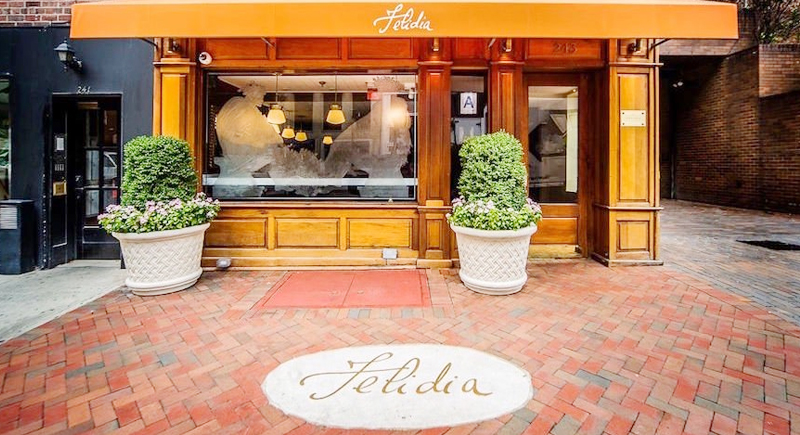
Image via Yelp/Randall M.
The phrase tiramisu translates to “lift me up.” In Venetian dialect, it appeared as tira me su. Restaurateur Lidia Bastianich, who opened Felidia in New York in 1981, recalled her grandmother using the dialect phrase for a similar dessert in Istria during her childhood.
Her grandmother whisked egg yolks and sugar into a loose zabaglione, spooned it into bowls, and added espresso with dried bread or cookies for dunking. That memory suggests that the concept existed in homes before it reached restaurant fame. It also explains why the name stuck.
Myths, Brothels, And Pine Nuts
Treviso also claims a more colorful origin story. According to local legend, a maitresse created the dessert to give strength to clients in a pleasure house. The ingredients support the myth’s logic. Espresso, cocoa, eggs, and mascarpone deliver energy.
There is also talk of an earlier sweet called the porcupine, studded with pine nuts. Some believe tiramisu evolved naturally out of regional recipes like that one. These tales add flavor to the debate, though historians still return to Treviso in the 1960s as the most credible starting point.
America Turns It Into A Star

Image via Getty Images/bluejayphoto
The United States played a major role in the rise of tiramisu. After Felidia opened in 1981, the dessert quickly gained traction. By 1985, it appeared regularly in New York restaurants and suburbs such as Red Bank, New Jersey. By 1989, it had reached San Francisco with full force.
In 1987, one report counted at least 200 variations. Pastry chefs added whipped cream, almonds, and different spirits. Some used Marsala, others rum. Raw eggs became a point of pride for chefs who argued that cooking them altered the flavor.
Pastry chef Brooks Headley, who won the James Beard Award for Outstanding Pastry Chef in 2013, made tiramisu thousands of times during his early career at Galileo in Washington, DC. He described its flavor as something that does not exist naturally, yet works because the parts balance each other.
So Where Was It Really Born?
While older legends persist, the strongest documentation still points to Treviso in the early 1960s, with Speranza Garatti and Ado Campeol at the center. That relatively recent origin explains why tiramisu feels modern beside classics like cannoli or sfogliatelle. Its rise in the 1980s was not a rediscovery of an ancient recipe. It was the global breakout of a mid-20th-century creation.