
Three ways I plan for small ceremonies, respectful photos, and the stuff posted only on a library bulletin board.
Follow the paper trail, not the hashtag
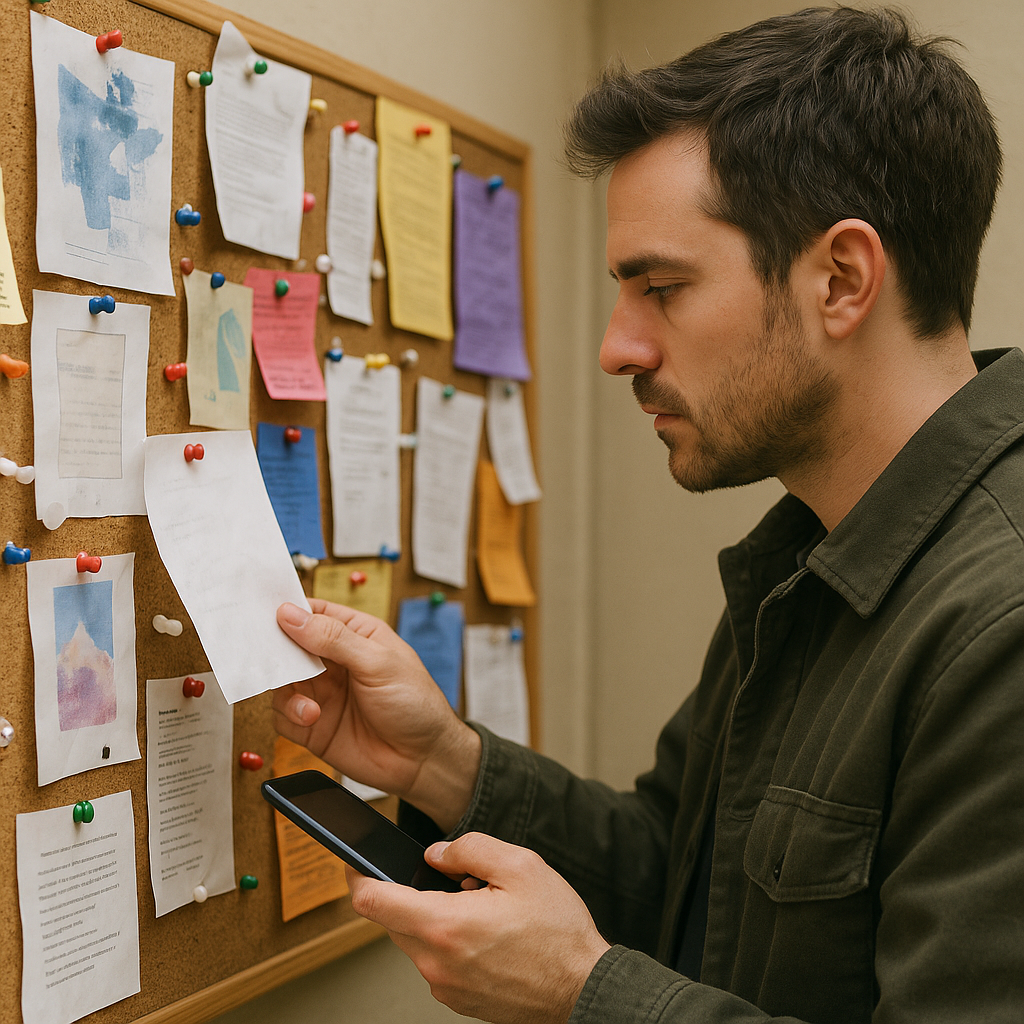
I love a big parade as much as anyone, but the best festival days I've had started with unsexy homework: finding the stuff that never makes it to an official tourism calendar. My most reliable source is still paper. If I'm in a small town, I walk into the public library first, then a grocery store, then the community center, and I look for the cluttered corkboard with hand-cut flyers and a phone number written in pen. If I'm in a city, I look for the neighborhood paper that lives by the door at cafes and laundromats. You'd be amazed how often the best lead is a one-line notice like "Procession begins at dusk" with no address, because locals already know the route.
When a flyer gives a contact number or an organizer's name, I don't cold-call with a script. I send a short message that makes it easy to say no: where I'm visiting from, what day I'm hoping to attend, and the one thing I want to confirm (start time, whether visitors are welcome, and if photos are OK). The tone matters. You're not applying for backstage access. You're asking whether it's appropriate to show up at all.
On the ground, I keep my gear low-key: a small mirrorless camera with a normal lens (think 35mm equivalent), no flash, and a strap I can tuck under a jacket if the room feels cramped. I've learned that the moment you pull out a long lens, you change the temperature of a space. If it's a ceremony that involves quiet or prayer, I leave the camera in the bag until I see what locals are doing. Half the time, the right move is to watch with your hands in your pockets and let the memory be the souvenir.
The side-entrance rule: arrive where people arrive
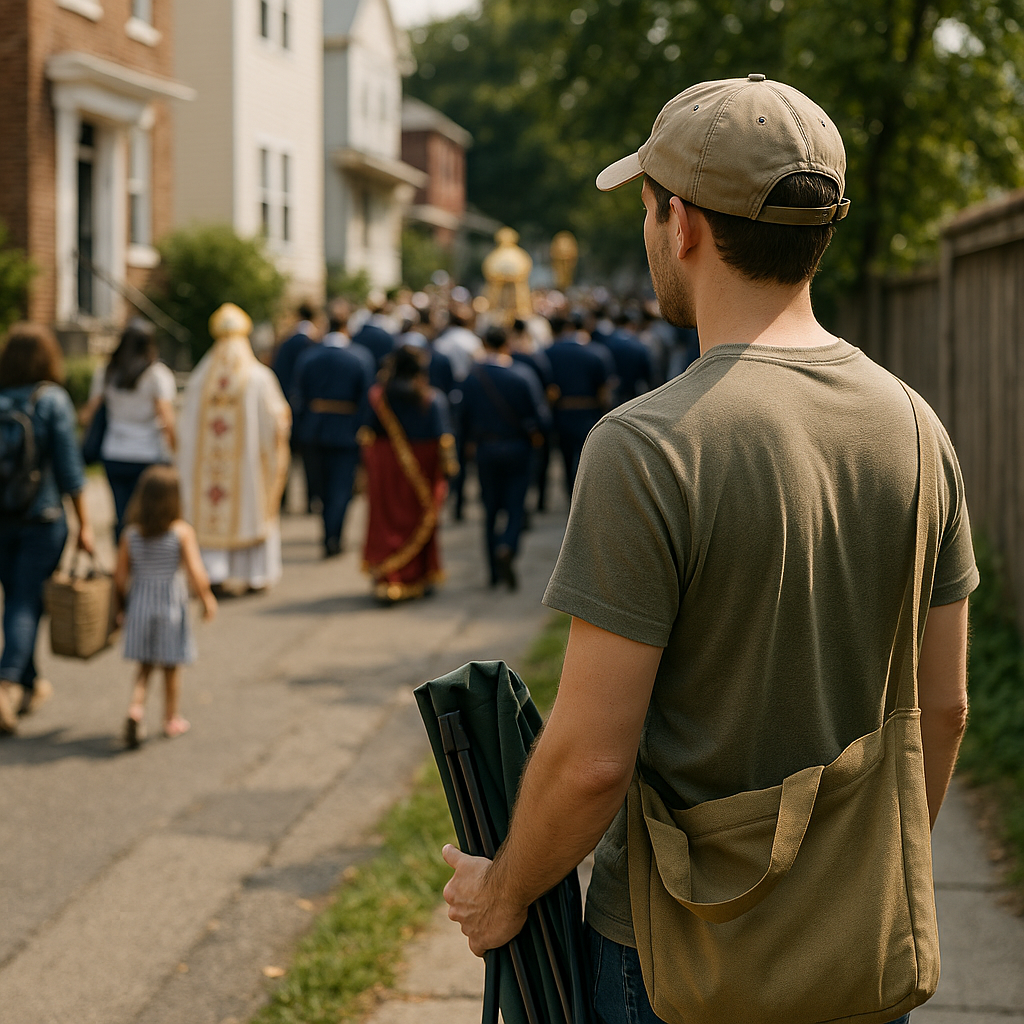
Here's the contrarian thing I learned the hard way: the "best viewpoint" for a festival is often the worst place to be if you're trying to catch the local ceremony that makes the day matter. Viewpoints create spectators. Ceremonies run on participation, or at least on attention that isn't performative. So I use what I call the side-entrance rule. I don't approach through the plaza with the stage, the sponsor banners, and the line of food trucks. I approach from the direction people are coming from with tote bags, folded chairs, and kids who look bored because they've done this every year.
Practically, that means I plan my route around ordinary infrastructure, not landmarks. I get off transit one stop early. I walk the residential blocks. I look for the small cues: handwritten Parking full signs taped to a fence, a row of shoes outside a hall, a volunteer with a stack of programs who isn't standing under a branded archway. If there's a procession, I don't plant myself at the most photographed corner. I find the stretch where it turns from wide street to narrow street, where the sound changes, where the band stops playing for a minute because people are navigating the turn. That's where you see who this is for.
This approach also keeps you from being the person who barges in at the wrong moment. When you arrive where locals arrive, you have time to pick up the unspoken rules. Is everyone keeping their voice down? Are people lining up to greet an elder? Are phones out, or are they mostly away? I mirror the room. If the space has a donation jar, I contribute. If food is being served and there's a price list, I pay without asking for a discount or a special item. I also keep a small pack of tissues and a water bottle because ceremonies can run longer than a posted schedule, and the fastest way to become that tourist is to start fidgeting like you're waiting for intermission.
One more thing: I dress for not standing out in photos. Neutral colors, comfortable shoes, nothing that swishes loudly. It's not about pretending I'm local. It's about not making myself the visual center of someone else's tradition.
Ask for the rule before you ask for the photo (one sentence)
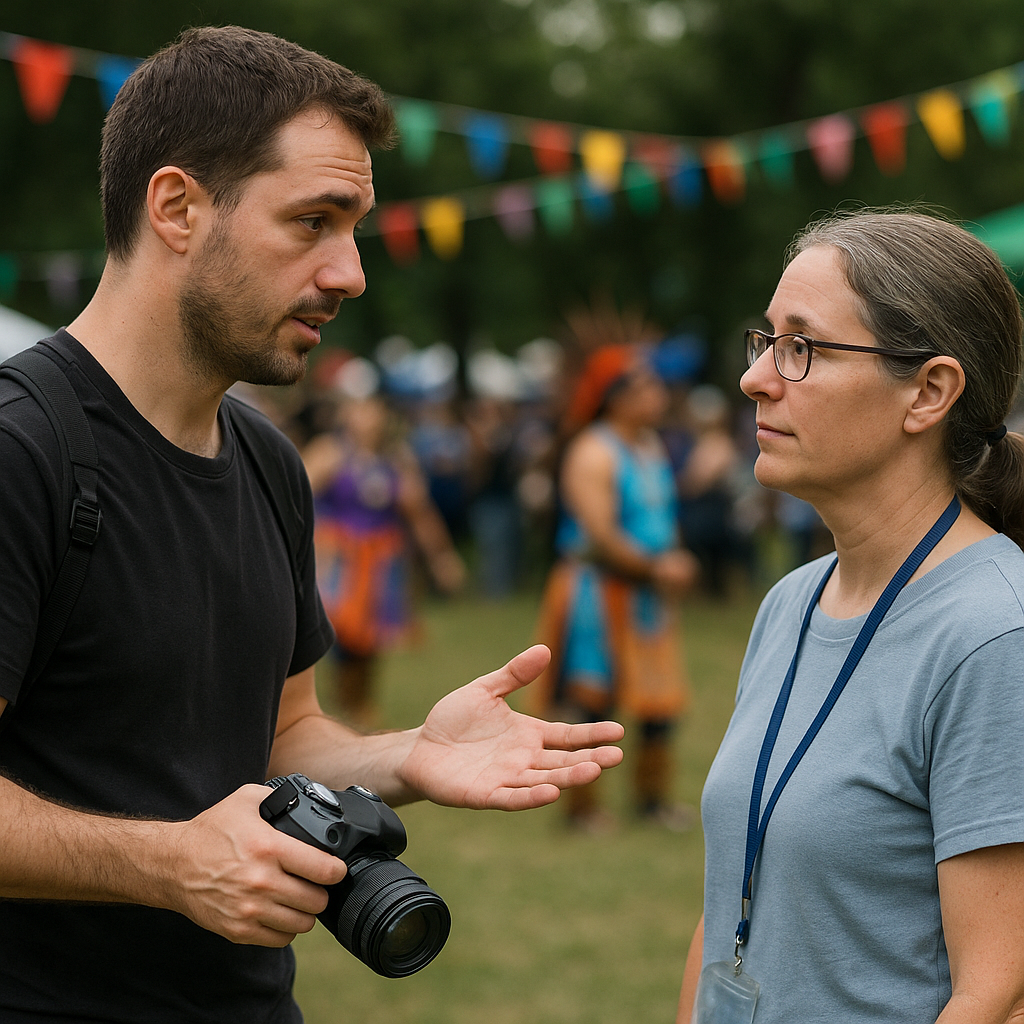
I used to overcomplicate this. I'd hover with my camera half-raised, trying to read minds. Now I do something that feels almost too plain, and it works in more places than it doesn't: I ask for the rule before I ask for anything else. Not permission for a specific shot. Not a selfie. Not a posed group photo. Just the rule.
If there's an obvious organizer or volunteer, I keep it to one sentence: "Is there a guideline for photos here?" Then I shut up. The answer tells you everything you need to know: no photos at all, photos only outside, no flash, OK during dancing but not during prayer, ask individuals, don't photograph children, don't photograph the altar, stay behind a line. A real guideline sounds specific, and when you follow it, people relax around you. If you get a vague I guess it's fine, I treat that as a no until I see locals taking pictures in the same moment.
And if you're dealing with a language barrier, you can still do this respectfully. I keep my phone locked on a translation screen with the single question and I point to the camera in my hand, then I make a little wait gesture so they don't feel rushed. I've also learned to accept the answer without negotiating. If someone says no, I nod, put the camera away, and stay. Leaving in a huff is the tell that you were only there to collect content.
When photos are allowed, I shoot like I'm borrowing the room. I avoid flash. I don't step into the center aisle. I take a couple frames, then lower the camera so I'm not staring through a rectangle for ten straight minutes. Later, when I'm sorting images, I delete anything that feels like it turns a private moment into a postcard. That's not me being noble. It's me wanting to be able to come back to the next year's ceremony and not be remembered as the person who treated it like a backdrop.