The Magical Secret to Seeing Ireland From the Water After Dark
Most trips to Ireland follow the same rhythm: scenic drives, cliff walks, busy pubs, all wrapped up before nightfall. What many travelers miss is how different the coastline feels once the sun goes down.
Guided night kayaking has become one of the most memorable ways to experience it. Small groups head out at dusk and paddle into open water as the sky darkens. With minimal artificial light and fewer distractions, you start to notice more: the movement of marine life beneath you, the outline of the shore, the spread of stars overhead.
Along Ireland’s south coast and sections of the Wild Atlantic Way, licensed operators launch tours just before dusk and paddle into full darkness. As natural light fades, artificial light is kept to a minimum. Guides rely on red safety lights to preserve night vision, and participants are often asked to leave phones behind to avoid glare. That way, you get a clearer sky, sharper senses, and a completely different perspective on the water.
Bioluminescence That Refuses to Be Photographed
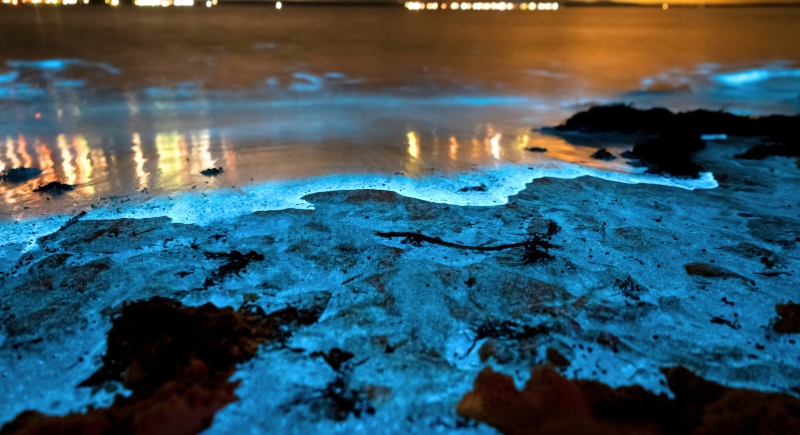
Image via Getty Images/RugliG
From April through October, kayakers in areas such as Castlehaven Bay, Lough Hyne, and Glengarriff Bay in County Cork may witness bioluminescence. This natural phenomenon is caused by plankton that emit light through a chemical reaction. When a paddle moves through the water, it can leave a glowing blue trail. Fish darting beneath a kayak may appear as brief flashes of light.
Bioluminescence is more common later in summer and depends on water temperature and weather conditions. It is difficult to photograph with standard phone cameras and requires long-exposure or specialized low-light equipment to capture clearly. Without that setup, most handheld photos appear dark, even when the glow is visible to the human eye.
Operators such as Atlantic Sea Kayaking and Outdoors Ireland structure their tours around tidal conditions and sheltered locations to maximize safety. Stable double kayaks are commonly used, and trips typically last 2.5-3 hours.
Ireland’s Dark Skies From the Water
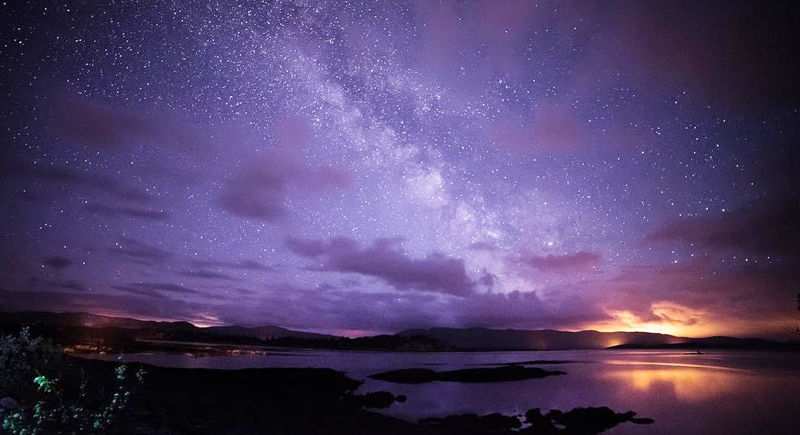
Image via Facebook/Wild Atlantic Way
Ireland is home to three official dark sky reserves: Kerry International Dark Sky Reserve, Mayo International Dark Sky Park, and OM Dark Sky Park and Observatory in County Tyrone. These protected areas have low light pollution, allowing stars to be visible with the naked eye.
Viewing the sky from a kayak creates a wide, unobstructed horizon. On clear nights, Jupiter and Saturn are visible. Satellites move steadily across the sky, and the International Space Station can appear as a bright, fast-moving light. During annual meteor showers such as the Lyrids, kayakers have reported seeing streaks cross overhead while paused on calm water.
Water amplifies the effect. With no buildings or tree cover, constellations reflect across the surface, creating the sense of floating between sky and sea.
Wildlife and Sensory Shift
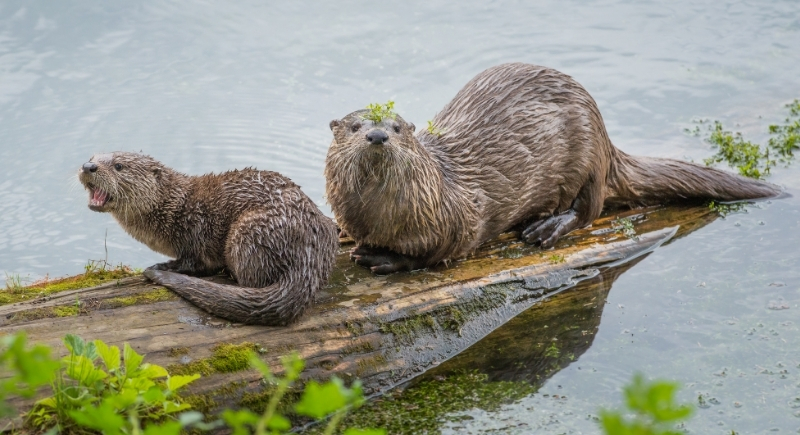
Image via Getty Images/Jillian Cooper
Night changes wildlife behavior. Guides in West Cork regularly report sightings of bats, otters, seals, foxes, owls, and kingfishers during evening paddles. At Lough Hyne, a protected marine reserve in Cork, tidal currents add movement beneath otherwise still water.
With reduced wind and minimal boat traffic, natural noises become more noticeable. Many tours include a short silent pause, which allows participants to close their eyes and focus on the environment. Travelers from urban areas often describe the absence of artificial light and screens as unexpectedly calming.
Structured, Seasonal, and Safe
Night paddling requires professional oversight because darkness increases the risk of disorientation, hidden hazards, and tidal changes. Guided tours include safety briefings, buoyancy aids, navigation protocols, and trained leaders who understand local marine conditions.
Most night kayaking tours operate from April through October. Bioluminescence is not guaranteed, but dark skies and wildlife activity remain consistent features throughout the season. Some routes follow sheltered bays, while others move along gentle rivers where paddlers travel with the flow for added stability.