The Ghost Town That Is Actually a Treasure Trove of Classic Cars
Gold King Mine began in 1890, when the Haynes Copper Company drilled a 1,200-foot shaft into Cleopatra Hill in search of copper. They missed the copper entirely and struck gold instead. A small mining camp called Haynes formed nearby, with a post office operating from 1908 to 1922. When the gold ran out, people left, and the buildings fell into disrepair. You’d think the story ended there, but that was only the beginning.
Machines Took Over The Hillside
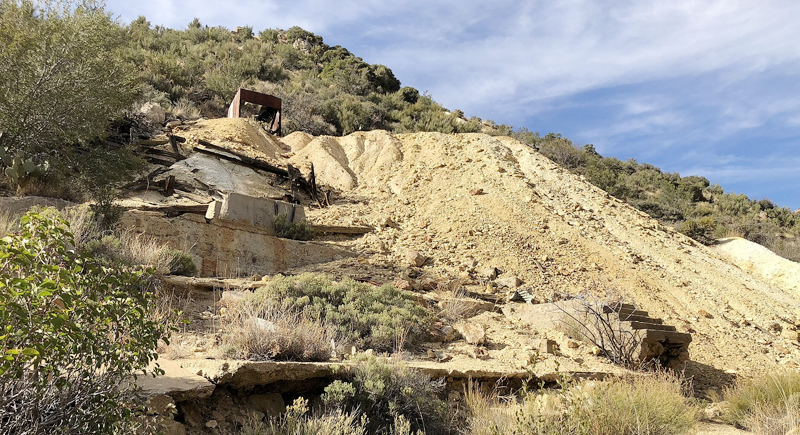
Image via Wikimedia Commons/The Greater Southwestern Exploration Company
In 1981, Don Robertson and his wife, Terry, discovered the abandoned site and saw potential where most people saw scrap. Don was a lifelong mechanic who collected the tools and machines that shaped American industry. With space to work on the hillside above Jerome, his collection expanded. Mining equipment came first, then vehicles, then anything mechanical that still told a story. Today, the property holds more than 180 vehicles when cars, trucks, and motorcycles are counted together. They are parked along sloped pathways, beside buildings, and anywhere gravity and convenience allow.
The Cars People Don’t Expect
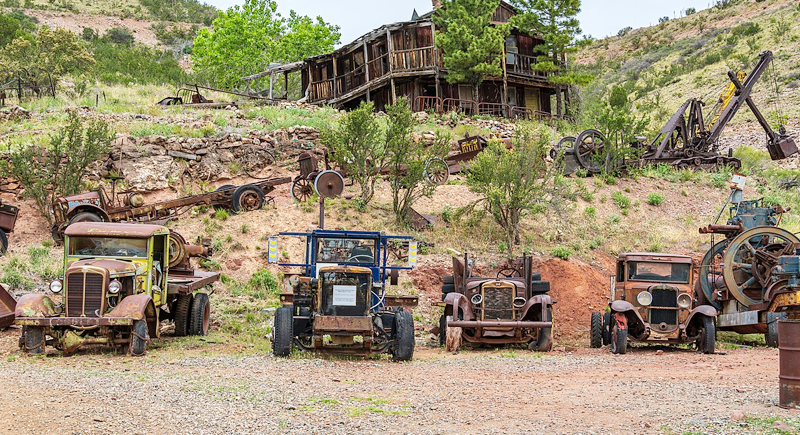
Image via Wikimedia Commons/dconvertini
The lineup spans decades, with vehicles from the 1920s sitting alongside mid-century pickups and sedans, and motorcycles including early Harley-Davidson and Indian models.
Some sources cite closer to 100 vehicles, others more than 180, but the difference comes down to definition, as Gold King Mine counts everything with wheels and an engine. Either way, the density is what’s important. Few places in the country hold this many classic machines in one outdoor space, untouched by restoration trends.
More Than Just Rust And Chrome
The vehicles share space with working machinery. A turn-of-the-century sawmill still cuts lumber for homes in the Verde Valley using a 1914 engine, a blacksmith shop hosts demonstrations several days a week, and a massive Chicago Pneumatic generator from around 1930, nicknamed Big Bertha, can still be fired up by request.
Historic buildings remain as well: a 1909 boarding house, a schoolhouse, an assay office, a laundry, a gas station, and a dentist’s office line the paths. Some structures were built by Haynes itself, while others were relocated to preserve them.
Why It Feels Alive Instead Of Preserved
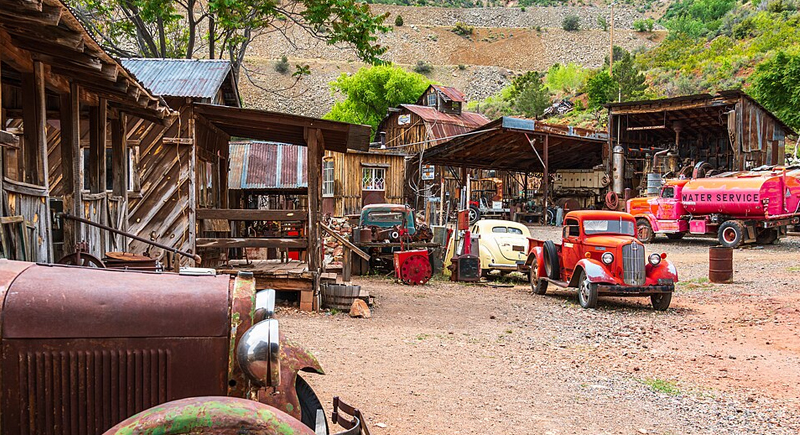
Image via Wikimedia Commons/dconvertini
Gold King Mine operates as an open-air museum without the stiffness of a traditional one. Chickens wander beneath old Packards, goats and donkeys share space with flatbed Fords, and visitors can pan for gold or gems under staff guidance. Many of the machines still run, a detail that traces directly back to Don Robertson’s mechanical skill before he died in 2016. The site remains family-run today, managed by his daughter and son-in-law. They continue adding pieces that reflect American labor, transportation, and industry.