The Coolest Way to See the Northern Lights Is Now a Glass Train
Most Northern Lights trips follow the same formula: you bundle up outside in subzero temperatures and wait, sometimes for hours and sometimes for nothing.
Now, Norway is offering a completely different way to experience the aurora. Instead of standing still in the cold, travelers can watch the sky from inside a moving, glass-wrapped train designed specifically for night-sky viewing.
This is part of a growing shift in how aurora tourism is being designed.
A Train Designed Around the Sky
The defining feature is the viewing design. These trains use large glass panels across the walls and sections of the roof to create an open view of the night sky. Seats are angled upward so passengers can watch overhead comfortably instead of twisting in their seats.
Interior lighting is kept intentionally dim. Bright cabin lights create reflections that can ruin night-sky visibility, so the entire environment is built around keeping the sky as the main focus.
Climate control is another major factor. Temperatures inside remain warm and stable, which allows travelers to focus on the experience rather than managing freezing conditions outside.
These trains are also designed for overnight travel. Some offer upgraded sleeper-style seating similar to airline business class. Others provide compact sleeping compartments with bedding packs, power outlets, USB charging, and reading lights. Some operators even allow pets inside private compartments, though space is limited.
Where These Trains Are Running
Currently, reports point to two major Norwegian rail corridors being connected to this new aurora-focused travel trend. One centers on southern Norway, running along the Bergensbanen line between Oslo and Bergen.
This route covers about 460 kilometers and takes roughly 7 hours and 35 minutes. The line passes through remote mountain areas with minimal light pollution, which improves aurora visibility during strong solar activity.
Another operates farther north along the Ofoten Line near Narvik, well above the Arctic Circle. This route is especially attractive because aurora activity is generally stronger at higher latitudes. Some journeys include stops at extremely dark locations like Katterat, where passengers can step outside, gather around fires, and watch the sky in near-total darkness.
Both rely heavily on renewable electric rail systems.
Timing Matters More Than Technology
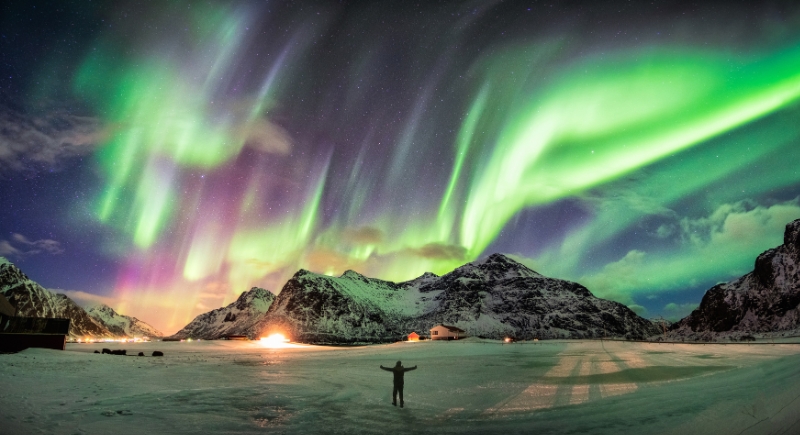
Image via Getty Images/Rustic Wanderlust
No train can guarantee Northern Lights sightings. Aurora visibility depends on solar activity, cloud cover, and atmospheric conditions.
However, timing these trips during polar night months increases the odds dramatically. Most aurora-focused services run between October and March, when nights are longest, and the skies are darkest.
Some trains now include onboard data displays showing real-time solar and geomagnetic activity, which adds context to what passengers see.
Pricing and Accessibility
One of the biggest shifts is cost. Traditional aurora expeditions can cost thousands of dollars.
Glass-train aurora journeys are much more accessible. Current reports suggest prices typically range between about $130 and $150 per journey, depending on route length and cabin type. Some shorter Arctic routes last around 3 hours, while longer overnight rail journeys span most of the night.