The Carnival of Venice Is the Ultimate Masquerade Party You Need to Experience
The Carnival of Venice traces back to at least 1162, when Venetians celebrated a military victory over the Patriarchate of Aquileia. Over time, those celebrations developed into an annual pre-Lent festival tied to the Catholic calendar. By the 1700s, Venice had become Europe’s entertainment capital, drawing nobles, artists, and travelers who arrived specifically for masked celebrations.
Masks carried a social function. They allowed people from different classes to interact in public spaces without status markers defining those encounters. Authorities later restricted mask use outside carnival season because anonymity often encouraged gambling, political plotting, and secret relationships.
The Festival That Disappeared — Then Came Back Bigger
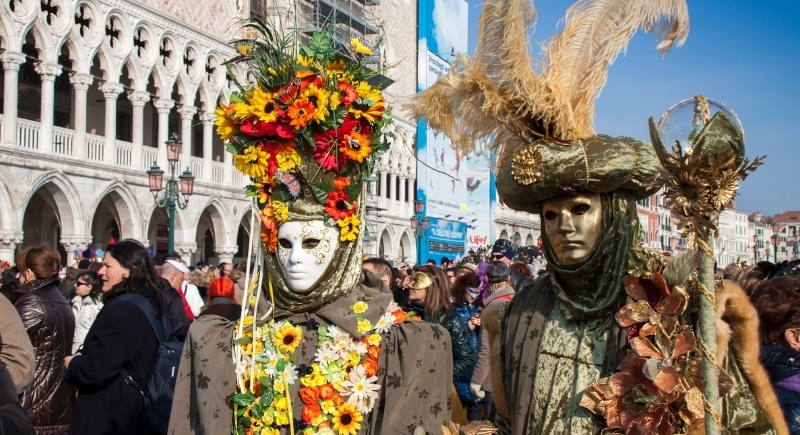
Image via Canva/Ivan Šmuk
Carnival celebrations were banned in 1797 under Austrian rule due to concerns about public disorder and excess. The festival continued through private gatherings before officially returning in 1979 as a cultural and tourism revival project supported by the Italian government.
Today, roughly 3 million visitors attend during peak years, far exceeding Venice’s resident population. The modern festival combines historic symbolism with tourism, performance art, and large public celebrations spread across canals, squares, and historic palaces.
Unlike many global carnivals built around street floats, Venice uses water as its main performance space. Opening celebrations frequently include decorated boats moving through the canals, sometimes led by the Pantegana, a giant paper-mâché rat that traditionally launches festivities.
Crowds line bridges like Rialto and gather along canal edges to watch masked performers, musicians, and costumed rowing crews move through the water. The canal-based structure of the festival reflects how deeply Carnival is connected to Venice’s physical layout.
The Events That Define The Experience
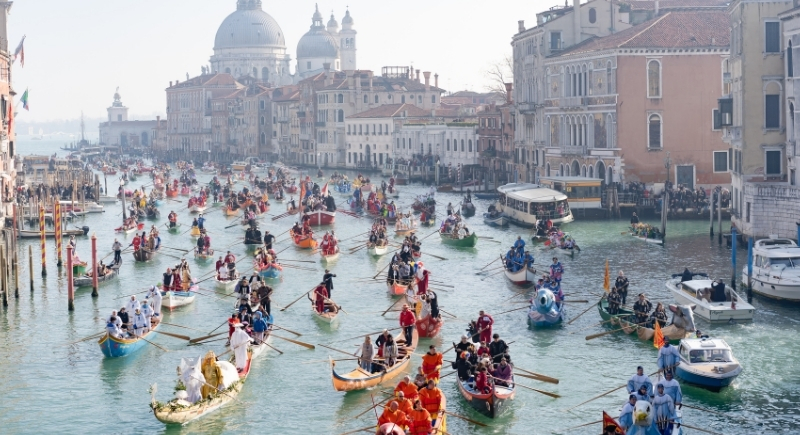
Image via Getty Images/Silvia Bianchini
Several signature events shape the annual calendar.
Flight of the Angel
A performer descends from St Mark’s bell tower into Piazza San Marco to mark the start of the main celebrations.
Festa delle Marie
A historic parade based on a medieval story involving kidnapped Venetian brides who were later rescued by locals.
Masked Palace Balls
Private evening galas inside historic buildings. Ticket prices vary widely depending on exclusivity and venue.
Street Performances And Mask Contests
Free daily entertainment fills major squares and canal walkways.
What The Carnival Looks Like In 2026
The 2026 celebration runs from January 31 through February 17 with a theme centered on mythology and sport, tied to the upcoming Milano-Cortina Winter Olympics.
The early period features lighter crowds and ceremonial events. The main period brings large parades, performances, and public gatherings. You’ll see the largest crowds during the final days for the final mask competitions and closing celebrations before Lent.
Public street events remain free, while palace balls and private galas require tickets and formal costumes.