The Best Dark Sky Sanctuaries for Seeing the Milky Way
Astronomers estimate that only about 500 stars remain visible in many major cities. However, the number immediately changes as we travel far enough from streetlights and highways. In truly dark locations, observers can spot up to 15,000 stars with the naked eye. That difference has led to a growing form of travel built around one goal: seeing the Milky Way as it once appeared to most of humanity.
Organizations such as Dark Sky International have spent decades protecting areas with minimal light pollution. Their network now covers more than 60,000 square miles across 22 countries. Several of these locations deliver the kind of clear, stable skies, and a few stand out as particularly strong places to watch the Milky Way stretch across the sky.
Mont-Mégantic International Dark Sky Reserve, Quebec
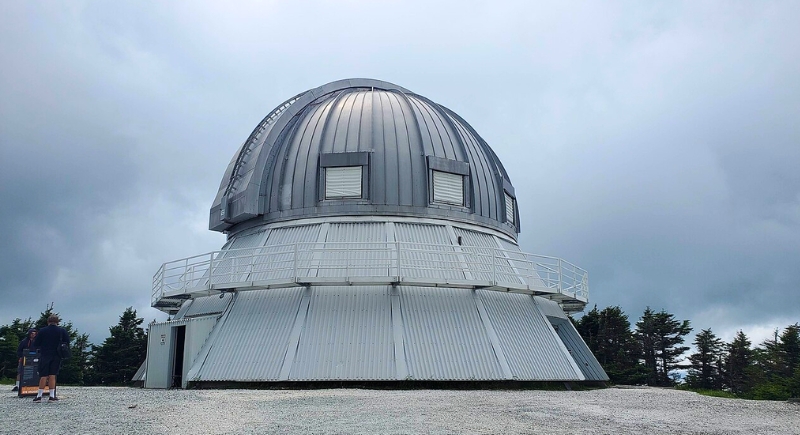
Image via Wikimedia Commons//Cantons-de-l’Est
Mont-Mégantic International Dark Sky Reserve became the world’s first International Dark-Sky Reserve in 2007. The protected area spans more than 2,100 square miles across Quebec’s Eastern Townships and includes Mont-Mégantic National Park along with nearby communities such as Sherbrooke.
An observatory is situated atop the mountain’s 3,600-foot summit, while the ASTROLab visitor center hosts public telescope sessions and astronomy programs. Clear summer nights often reveal the Milky Way along with distant galaxies and nebulae. August draws large crowds during the Perseids meteor shower, when streaks of light cut across the sky at regular intervals.
Arkaroola Wilderness Sanctuary, South Australia
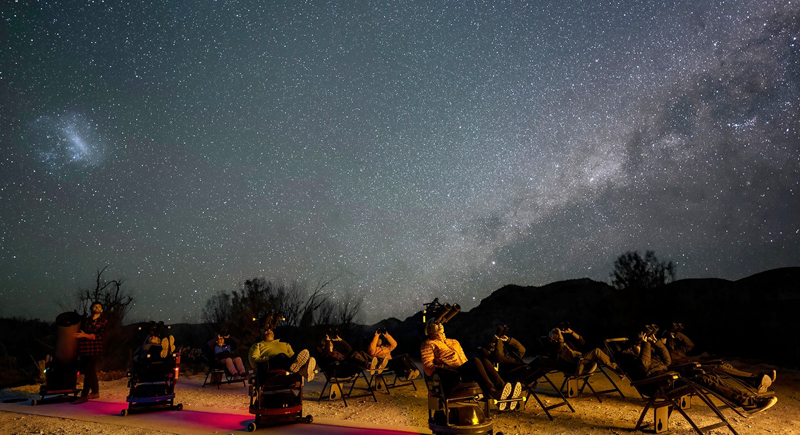
Image via Facebook/Arkaroola Wilderness Sanctuary
Arkaroola Wilderness Sanctuary covers about 240 square miles in South Australia’s Flinders Ranges. The region also holds International Dark Sky Sanctuary status and maintains six observatories dedicated to night-sky viewing.
Resident astronomers guide visitors through highlights of the Southern Hemisphere, including the Southern Cross constellation, the Magellanic Clouds, and the Carina Nebula. A popular overnight activity called the Ridgetop Sleepout places visitors on elevated terrain where the Milky Way appears especially sharp against the dark desert sky.
Pic du Midi International Dark Sky Reserve, France
The Pic du Midi Observatory opened in 1878 and is now at the center of one of Europe’s most impressive astronomy locations. The reserve rises more than 9,4000 feet in the French Pyrenees and became an International Dark Sky Reserve in 2013.
Roughly 1.5 million visitors arrive each year. A cable car carries travelers to the mountaintop observatory, where overnight programs allow guests to observe planets, star clusters, and distant galaxies through professional telescopes.
Gabriela Mistral Dark Sky Sanctuary, Chile
Chile’s Elqui Valley holds some of the clearest skies on Earth. The Gabriela Mistral Dark Sky Sanctuary is about 310 miles north of Santiago and sits at a high altitude with extremely low humidity.
Four major international observatories operate in the region, including a facility run by the Associated Universities for Research in Astronomy. Tour companies guide travelers along the Ruta de las Estrellas, a route dedicated to astronomy tourism. On cloudless nights, the southern portion of the Milky Way appears unusually detailed.
NamibRand Nature Reserve, Namibia
NamibRand Nature Reserve stretches across a remote portion of the Namib Desert about 60 miles from the nearest village. The International Dark-Sky Association granted the reserve Gold Tier status for its extremely dark skies.
Visitors camp among dunes or stay at desert lodges designed to limit artificial lighting. With almost zero nearby development, the Milky Way often appears as a dense band of light across the desert horizon.
Aoraki Mackenzie International Dark Sky Reserve, New Zealand
The Mackenzie Basin on New Zealand’s South Island hosts the world’s largest dark sky reserve. Surrounded by mountains, the region benefits from stable weather and very low light pollution. Night tours at Mt. John Observatory introduce visitors to southern sky features rarely seen elsewhere.
The Magellanic Clouds, two dwarf galaxies orbiting the Milky Way, are clearly visible under favorable conditions.
Niue, South Pacific
Niue, roughly 1,500 miles northeast of New Zealand, holds a rare distinction. The island nation became the first entire country designated as a Dark Sky Place. Minimal development and strict lighting policies preserve exceptional visibility across the island.
Guides often lead small stargazing groups along the coastline, where the Milky Way reflects across the Pacific during calm nights. Cultural tours also highlight Polynesian navigation traditions that relied on star patterns long before modern instruments existed.