Switzerland’s Glaciers Faced an Epic Meltdown These Past Few Years
Switzerland has lost roughly a quarter of its glacier volume over about a decade, and annual losses are approaching historic highs. Scientists tracking Alpine ice say melt speed keeps increasing, even during years that look average on paper. Add rising freezing lines that climbed near 5K meters during heat waves, and researchers started flagging serious red alerts.
The Last Few Years Hit Harder Than Expected
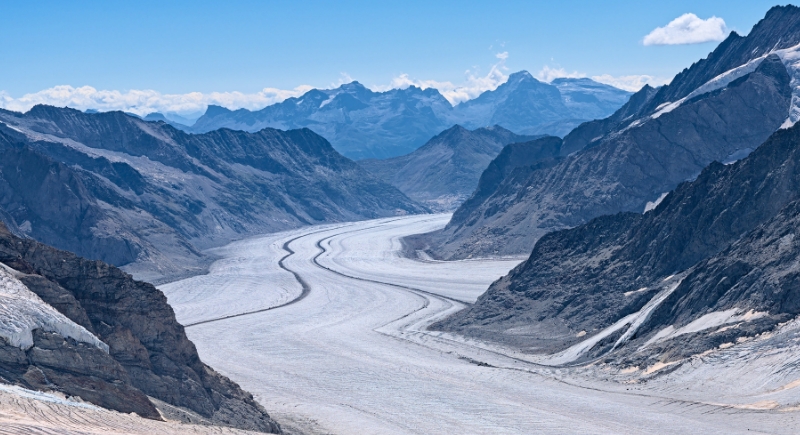
Image via Pexels/Jean-Paul Wettstein
Low winter snowfall set things in motion, and several recent seasons delivered snow totals that ranked near the lowest ever recorded in parts of the Swiss Alps. Then summer heat waves stacked on top. In 2025 alone, glaciers lost about 3% of their total ice mass. Earlier years were even worse, with about 5.9 percent loss in 2022 and roughly 4.4 percent in 2023.
Scientists now describe the current period as the worst decade for Swiss glacier loss ever recorded. The pattern shows acceleration. Ice loss during the 1990s sat near 10 percent per decade, and recent measurements show roughly 24-25 percent loss since around 2015. The jump has changed how researchers discuss the future of glaciers.
The Disappearance Problem Is Already Happening
The glacier story stretches back decades, but recent losses feel different because entire ice bodies are vanishing. More than 1,100 Swiss glaciers have disappeared since the early 1970s, and about 100 vanished just between 2016 and 2022.
Switzerland still tracks roughly 1,400 glaciers today, but many smaller ones sit in danger zones. Ice located below about 3,000 meters of elevation melted faster because warmer air reaches those heights more often now.
The famous Rhone Glacier shows how dramatic the change looks. Measurements show more than 100 meters of vertical ice loss in about two decades.
When Melting Turns Into Real World Danger
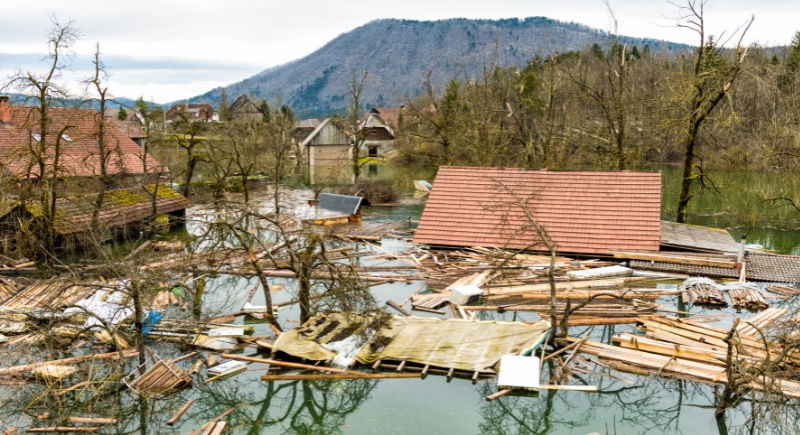
Image via Getty Images/helovi
Ice loss creates more than environmental headlines, and mountain stability becomes a serious issue when glaciers shrink. Ice often supports the surrounding rock and frozen ground. When ice disappears, loose rock and soil can collapse. That risk became real in Switzerland when a glacier-related collapse destroyed much of the village of Blatten. About 300 residents evacuated before the collapse.
Melting also creates growing glacial lakes, which can suddenly burst and trigger floods or landslides. Similar events have already happened globally, including deadly glacier collapses in Italy, Tibet, and Peru. Scientists estimate that thousands of people live in zones exposed to the risk of glacier-related collapse or flooding. Water supply risk also grows because many mountain regions depend on glacier meltwater during the summer months.
The Future Looks Locked In, But Speed Still Matters
Research shows that many glaciers will continue to shrink even if global warming stops rising immediately. One global study estimated that about 40 percent of glaciers worldwide would still disappear under current climate conditions. The Alpine glacier area has already dropped roughly 50 percent since about 1950. Projections suggest many could vanish during this century without strong emissions cuts.
There is still room to slow losses. Scientists estimate that global carbon emissions reaching zero within about 30 years could preserve up to one-third of Swiss glaciers. That would not restore lost ice, but it could protect high-elevation glaciers that remain more stable today. Switzerland also warms about twice as fast as the global average, so the country is a preview of what mountain regions worldwide may face in the future.