Svalbard Is the Only Visa-Free Zone in the World, Regardless of Citizenship
There is one place on Earth where immigration rules function differently from anywhere else. Svalbard, a remote Norwegian archipelago in the High Arctic, allows anyone to live and work there indefinitely without a visa, residence permit, or time restriction, regardless of citizenship. This status is a legally binding reality that has shaped the islands’ operation for more than a century.
The Legal Reason Svalbard Has No Visa System
Image via Getty Images/vchal
Svalbard’s immigration framework comes from the Svalbard Treaty, signed in 1920. The treaty granted Norway sovereignty over the archipelago while requiring equal rights of residence, employment, and commercial activity for citizens of all signatory states. Over time, Norway chose not to distinguish between treaty and non-treaty nationals, extending the same rights universally.
As a result, Svalbard is exempt from Norway’s immigration laws. The Norwegian Immigration Act does not apply in this case. There is no concept of legal residence status, overstaying, or deportation based on nationality. Entry and stay are not regulated by visas or permits.
If you can arrive and sustain yourself, you are allowed to stay.
What Visa-Free Means on the Ground
Svalbard has no border control checkpoints. Passports are checked only for identity, not for permission to stay. There are no entry stamps, maximum stay periods, or registration with immigration authorities.
Most travelers reach the islands via mainland Norway, which is part of the Schengen Area. This creates an important distinction: while Svalbard itself is visa-free, transit through Norway may still require a Schengen visa for certain nationalities.
The visa requirement applies only to the journey, not to residence on the islands. Once in Svalbard, immigration rules no longer apply.
Anyone may work in Svalbard without sponsorship or authorization. Employers do not need to prove labor shortages, and employees do not need work permits. There is no preference for Norwegian citizens, and nationality does not play a role in employment eligibility.
The limiting factor is economic viability. Svalbard has no unemployment benefits, social assistance, or limited public healthcare. Residents are responsible for covering housing, food, healthcare, and transportation independently.
If someone cannot support themselves financially or violates local laws, authorities can require them to leave the archipelago. This system regulates population through self-sufficiency.
Daily Life in Longyearbyen
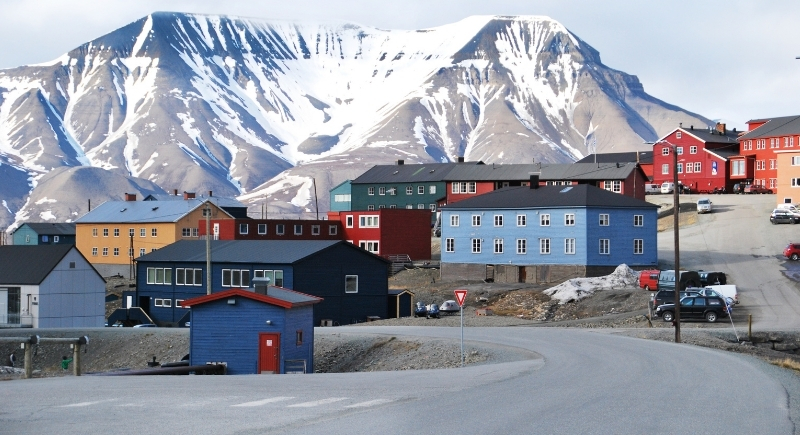
Image via Getty Images/annaswe
Most residents live in Longyearbyen, the main settlement, with a population of approximately 3,000 people. Employment is concentrated in tourism, research, education, mining, logistics, and public services. Housing is scarce, expensive, and often tied directly to one’s job.
Environmental conditions are severe. Winter brings months of complete darkness, while summer brings continuous daylight. Travel outside town limits requires carrying protection due to polar bears. Cats are also banned to protect local wildlife.
Births and deaths typically occur on the mainland, not on the islands. Svalbard is structured around temporary residence, even though the law allows indefinite stay.
No Path to Norwegian Residency or Citizenship
It’s essential to note that living in Svalbard does not contribute to Norwegian residency or citizenship. Time spent there provides no legal advantage for immigration to mainland Norway.
To gain permanent residence or citizenship, foreign nationals must relocate to the mainland and meet the standard Norwegian immigration requirements.
Many countries promote flexible visas or open residency programs, but none eliminate immigration controls entirely. Svalbard remains the only territory where borders are managed through economic and personal responsibility rather than legal permission.