10 U.S. Bridges That Engineers Say Are “Structurally Deficient”
A bridge failure might sound like something from a blockbuster, but real damage usually creeps in slowly. Across the nation, engineers watch thousands of bridges that remain open, yet are far from their best condition. “Structurally deficient” is not a death sentence, but it signals repairs can no longer wait. These 10 bridges handle massive traffic and are a serious concern nationwide today.
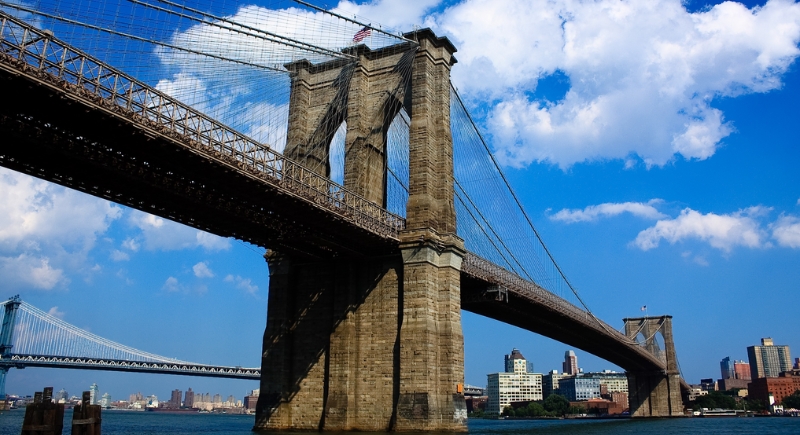
Brooklyn Bridge, New York
Credit: Wikimedia Commons
New York’s iconic suspension bridge has been in service since 1883. These days, it’s dealing with more than just selfie-taking pedestrians. Classified as structurally deficient, the Brooklyn Bridge carries a little over 100,000 vehicles per day, according to New York City traffic data. Routine repairs keep it functional.
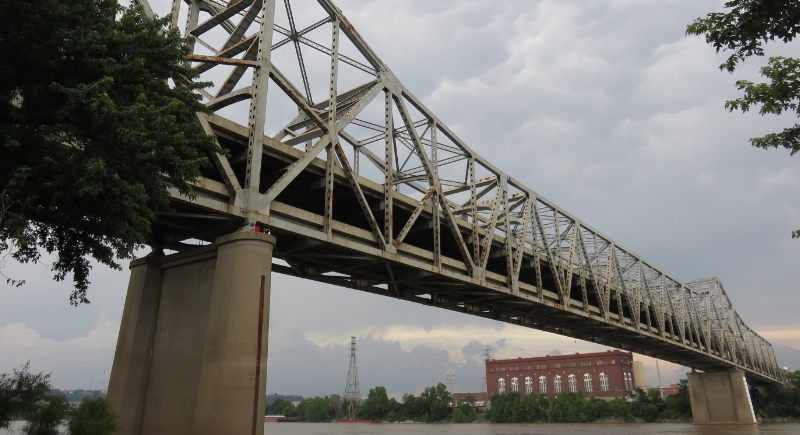
Brent Spence Bridge, Kentucky–Ohio
Credit: Wikimedia Commons
This double-decker bridge handles constant commuter and freight movement. It has been listed as functionally obsolete in the federal bridge inventory since the 1990s, with long-standing plans for major rehabilitation or replacement. Presidents have used it as a backdrop for infrastructure speeches, but major upgrades remain a work in progress.
Memorial Bridge, Washington, D.C.

Credit: Wikimedia Commons
The structure linking the Lincoln Memorial to Arlington National Cemetery isn’t just historically symbolic; it’s also structurally tired. Opened in 1932, it suffered decades of delayed maintenance. A partial overhaul wrapped up in recent years, but the bridge still carries a structurally deficient designation following its long decline.
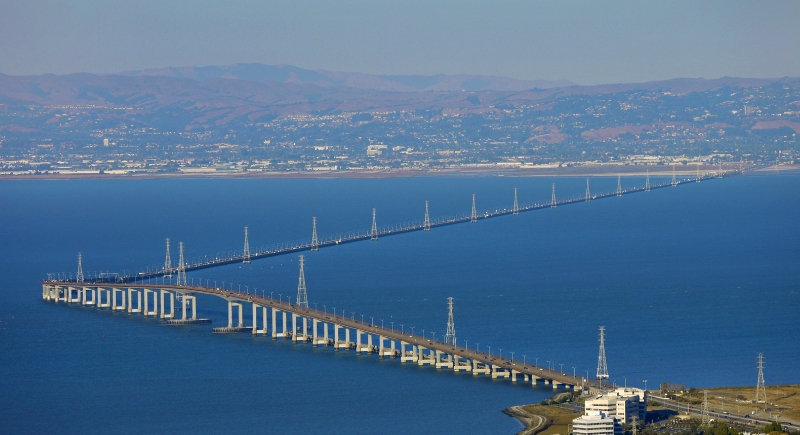
San Mateo–Hayward Bridge, California
Credit: Wikimedia Commons
This massive span across San Francisco Bay supports thousands of vehicles daily, but it’s not aging gracefully. At nearly seven miles long, it’s the longest bridge in California. It appears on national reports listing notable structurally deficient bridges. The bridge underwent major seismic retrofit work in the late 1990s and was later widened in the early 2000s.
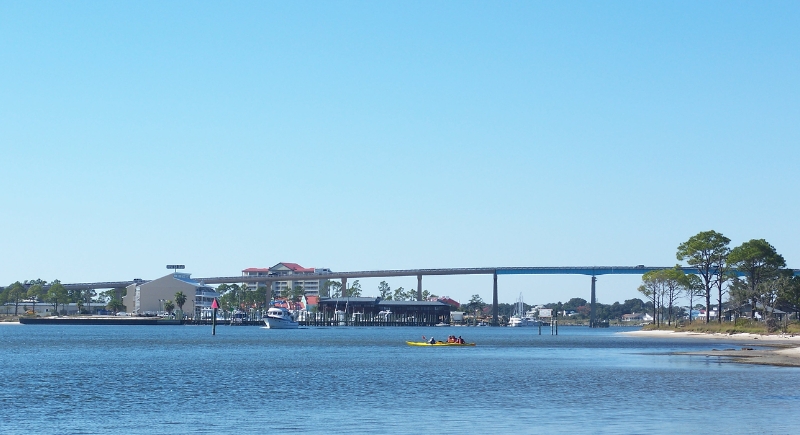
Pensacola Bay Bridge, Florida
Credit: Wikimedia Commons
Locals call it the “Three Mile Bridge,” and it’s seen its share of trouble. It was knocked out of commission in 2020 after a construction barge slammed into it during Hurricane Sally. Even before that, it appeared on national reports of structurally deficient bridges due to its aging structure.
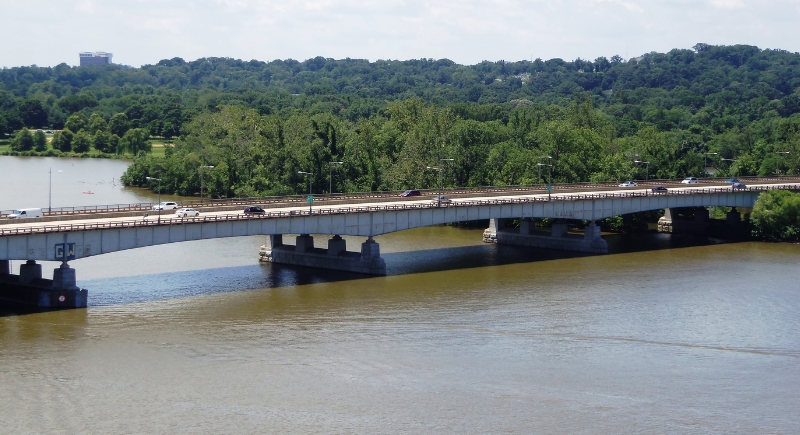
Theodore Roosevelt Bridge, Washington, D.C.
Credit: Wikimedia Commons
Carrying traffic over the Potomac since 1964, this bridge isn’t winning any structural awards. It is officially classified as structurally deficient and functionally obsolete by transportation authorities. Years of patchwork fixes have kept it running, but long-term rehabilitation plans remain on the table.
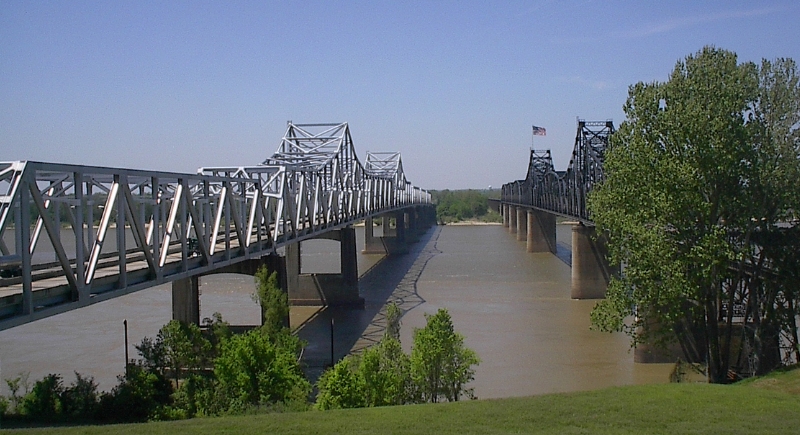
Vicksburg Bridge, Mississippi
Credit: Wikimedia Commons
Spanning the Mississippi River, the Vicksburg Bridge is a highway crossing listed among the nation’s most structurally deficient bridges in national reports. It plays a key role in regional transport, but its condition has placed it on watchlists for future repair and investment.
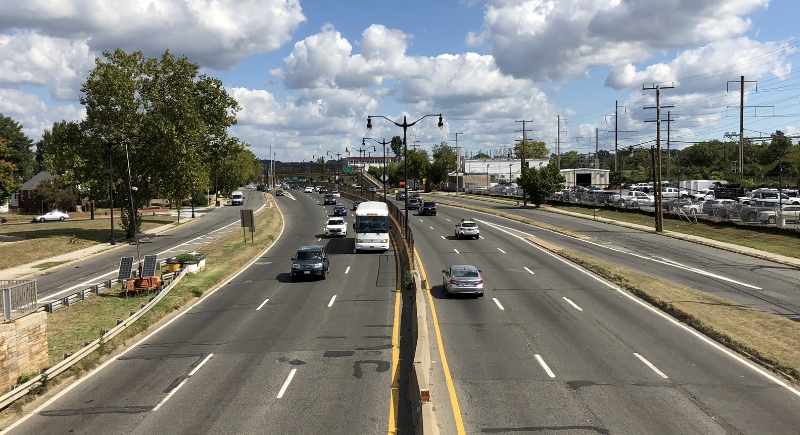
Lane Place Pedestrian Bridge, Washington, D.C.
Credit: Wikimedia Commons
This bridge wasn’t on many radar screens until it collapsed. In 2021, a truck hit its low-clearance span, and multiple people were injured. Inspections prior to the incident found poor structural condition, including corroded steel and cracked concrete. The bridge is now gone, and plans for its replacement are in motion.
Hernando de Soto Bridge, Tennessee–Arkansas

Credit: Getty Images
When inspectors discovered a critical crack in a steel support beam in 2021, they shut down the bridge immediately. The 48-year-old span over the Mississippi River had carried major interstate traffic for decades. Emergency repairs followed, but the incident exposed how narrow the margin for error can be when aging infrastructure is constantly strained.
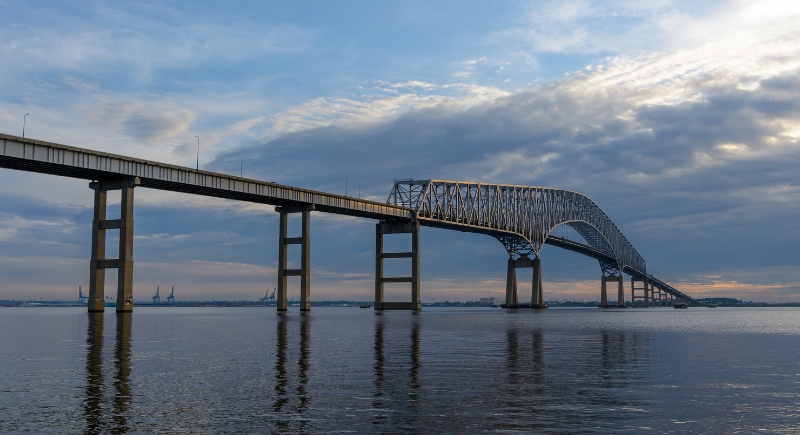
Francis Scott Key Bridge, Maryland
Credit: Wikimedia Commons
Before its collapse in 2024, the Key Bridge had been rated as “fair,” not structurally deficient. A collision with a cargo ship caused the bridge to collapse shortly after impact. It was a fracture-critical bridge, meaning it lacked redundant structural support, which left it vulnerable to a single catastrophic strike.