Step Back in Time on the C&O Canal with a Free 19th Century Boat Tour
Nearly 200 years ago, the C&O Canal helped move coal, lumber, and passengers through parts of Maryland, Washington, D.C., and West Virginia before highways existed. Today, visitors can ride a replica 19th-century canal boat along the same waterway for free and get a feel for what travel looked like back then. The boat moves slowly through the canal while guides explain how people once lived and worked along this route, which makes the experience feel much more real than simply reading about it in a museum.
Construction on the Chesapeake & Ohio Canal began in 1828, when canals were one of the fastest ways to move goods and people across the region. The route eventually stretched more than 184 miles from Washington, D.C., through Maryland along the Potomac River. Although the canal never reached the Ohio River as planned, parts of that history still come alive today through replica canal boat rides on the same waterway.
A Ride Powered by Water and Mules
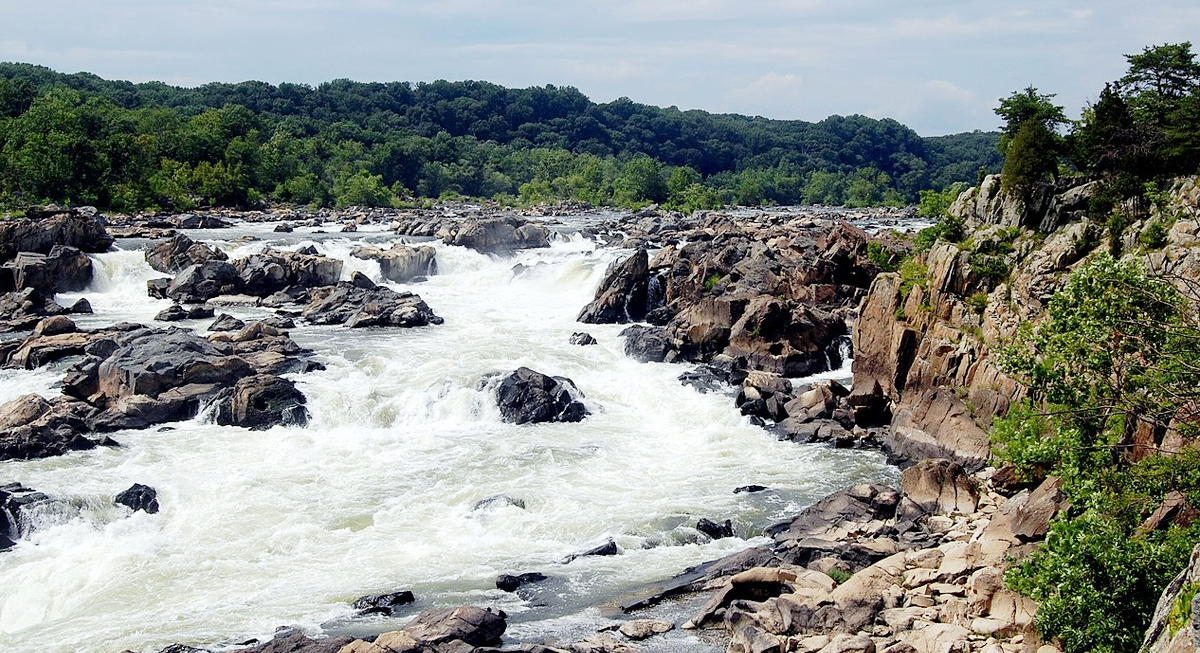
Image via Wikimedia Commons/Joe Calhoun
Visitors at the Chesapeake & Ohio Canal National Historical Park can board replica 19th-century canal boats beginning in mid-May. The free rides take place at two locations in Maryland: the Great Falls Tavern Visitor Center in Potomac and Cushwa Basin in Williamsport.
The Great Falls rides recreate the canal’s passenger boat era with a 30-foot launch-style vessel modeled after smaller boats once used for business and leisure travel. Rangers and volunteers guide passengers through the canal while sharing stories about the families who lived and worked there during the late 1800s and early 1900s.
At Great Falls, visitors ride aboard a 30-foot launch-style leisure boat modeled after the smaller passenger vessels once used for business and recreation along the canal during the late 19th and early 20th centuries. Rangers also demonstrate how lift locks worked using gravity and water pressure to raise boats between canal levels. During the ride, the lock can lift the boat roughly eight feet without modern machinery.
That old engineering system still works today, giving the tour a very different feel from a standard museum visit.
The Canal Lost a Race It Couldn’t Win
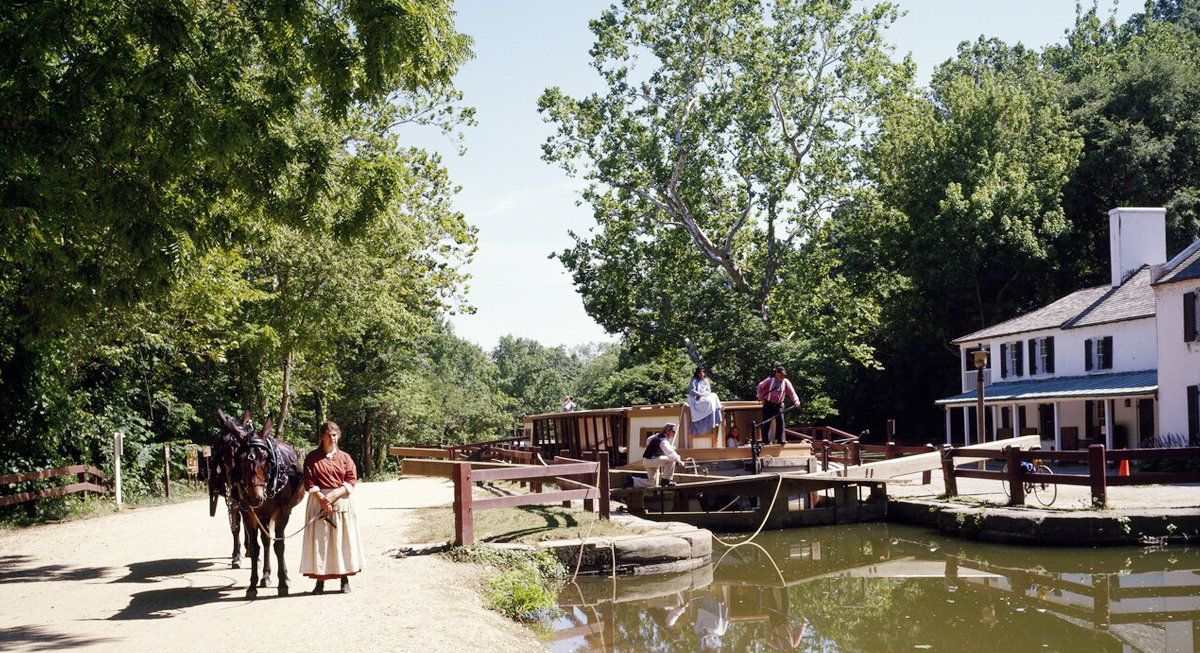
Image via Wikimedia Commons/Carol M. Highsmith
The canal’s history has a strange twist. On the same day construction started on the C&O Canal, workers also broke ground on the Baltimore and Ohio Railroad.
For years, the two transportation systems advanced side by side. One relied on water, mule teams, and patience. The other pushed speed and industrial expansion. By the 1860s and 1870s, railroads had surged ahead with larger rail cars, refrigeration technology, and more reliable shipping schedules.
The canal struggled with flooding and changing river conditions, and its commercial relevance slowly faded. Operations continued until 1924, after which the route became part of the national historical park system.
That history makes the modern boat tours more appealing. Passengers are stepping into a transportation system that briefly shaped the American economy before getting overtaken almost in real time.
What Visitors Need to Know
The Great Falls tours last around 30 minutes and operate Fridays and Saturdays on a first-come, first-served basis. Visitors must check in at the visitor center to pick up tickets, and each ride is limited to nine passengers.
Williamsport offers a slightly different setup. The Cushwa Basin tours run about 40 minutes and focus heavily on one of the canal’s most important surviving structures: the only restored stone masonry aqueduct of its kind in the United States. Those rides also include historical interpretation sessions led by park staff and are limited to 10 people per trip. The tours continue through September, weather permitting.
The canal still moves at the slow pace it did generations ago. The lock system still depends on water flow. Sections of the canal still operate much as they did generations ago, with preserved locks, restored waterways, and ranger-led demonstrations showing how boats once traveled through the canal system.