Startup Opens Reservations for Future Moon Hotel With Deposits Starting at $250,000
A California-based startup says it is now accepting reservations for what it describes as the world’s first hotel on the Moon. The company, GRU Space, is asking prospective guests to place refundable deposits ranging from $250,000 to $1 million to secure a spot years before construction begins.
The project is still in the planning and testing phase, but GRU Space has outlined a clear roadmap, pricing structure, and timeline that place its first lunar hotel mission in the early 2030s. If completed as described, it would mark one of the most ambitious attempts yet to turn space travel into a commercial hospitality business.
What GRU Space Is Planning to Build
GRU Space’s first lunar hotel is designed as an inflatable, pressurized structure that would be built on Earth and transported to the Moon aboard a commercial launch vehicle. According to the company, the initial version of the hotel would accommodate up to four guests at a time for stays averaging five nights.
The structure is planned to operate for roughly 10 years and would include core life-support systems such as oxygen generation, air recycling, water recycling, temperature regulation, and radiation shielding for solar events. An emergency escape system is also part of the design.
Future versions of the hotel are expected to expand capacity to between four and 10 guests and transition toward more permanent construction methods. GRU Space has said that later structures could be built partly from lunar materials, using processed regolith to form bricks or concrete-like components.
Reservation Costs and What the Deposit Covers
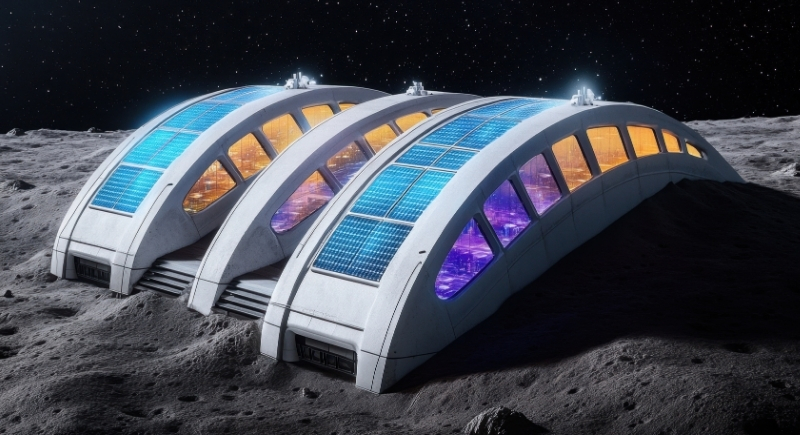
Image via Canva/nundigital
Reservations for the future Moon hotel are already open, even though no physical structure has been deployed. Interested applicants must first pay a non-refundable application fee of about $1,000 and undergo medical, financial, and background screenings.
If approved, guests can place a refundable deposit between $250,000 and $1 million to reserve a future stay. The deposit secures a place in line but does not cover the full cost of the trip. GRU Space estimates that the total cost of a lunar stay, including transportation, training, and mission operations, will exceed $10 million per person.
The company has also indicated that deposits can be placed as long-term reservations, including as gifts intended for future family members, given the long timeline before flights begin.
Timeline for Lunar Missions
GRU Space’s public roadmap outlines a first lunar mission around 2029, which would focus on testing conditions, validating equipment, and beginning early construction experiments. A second mission, targeted for approximately 2032, is when the company hopes to deploy the first operational hotel module.
The hotel would likely be placed near a lunar pit or naturally shielded area to reduce exposure to radiation and extreme temperature swings. Specific landing sites have not yet been publicly confirmed.
Transportation to and from the Moon would be handled by established aerospace providers rather than GRU Space itself. The company has indicated that partners such as SpaceX or Blue Origin could ultimately provide the lunar transport systems, depending on availability and mission readiness.
While the primary focus is habitation, GRU Space has outlined several activities available to hotel guests. These include guided moonwalks, rover driving, and other controlled surface excursions. The company has also mentioned recreational concepts such as low-gravity golf, though details remain limited.
All activities would be subject to strict safety protocols, mission constraints, and environmental conditions. Training before launch would be mandatory, similar to existing private spaceflight programs.
Who Is Behind the Project

Image via Getty Images/EvgeniyShkolenko
GRU Space was founded by Skyler Chan, a UC Berkeley graduate who launched the company in his early 20s. Chan has positioned the hotel concept as part of a broader effort to establish long-term human infrastructure beyond Earth.
The company has received early backing from Y Combinator and maintains advisory relationships with scientists and aerospace professionals. While funding details beyond early-stage support have not been fully disclosed, GRU Space says it is pursuing partnerships across the commercial space sector.