There Are Entire Secret Cities Hidden Right Beneath Your Feet
Beneath many cities around the world exist large underground complexes carved into rock or excavated below street level. These spaces can include hospitals, churches, bars, storage facilities, and government offices. Many were built for protection during war, religious refuge, or urban expansion. A number of these sites are still classified and not publicly acknowledged by governments.
Derinkuyu, Turkey
Credit: Wikimedia Commons
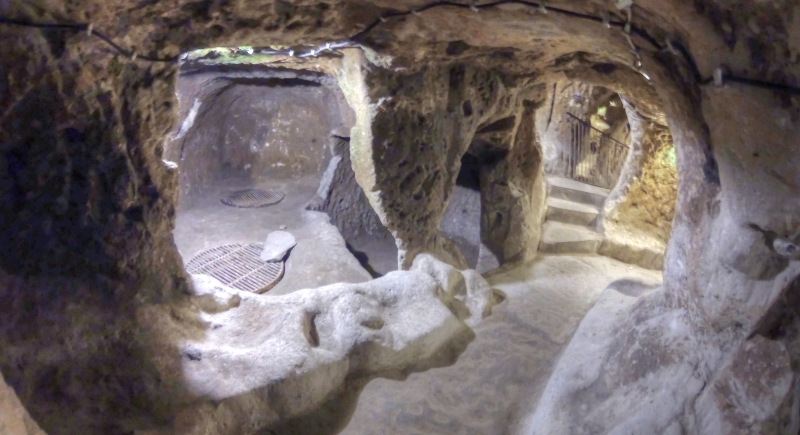
Derinkuyu is located deep beneath the Cappadocia region of Turkey, carved into soft volcanic rock. Archaeologists link its earliest construction to the Phrygians around the 8th century BCE. At full capacity, the underground city could shelter about 20,000 people, including livestock. The complex included stables, wine cellars, schools, and chapels, all connected by tunnels secured with massive rolling stone doors. It came to modern attention in 1963 when a homeowner knocked down a wall and discovered a passage leading into the network.
The Beijing Underground City, China
Credit: Atlas Obscura
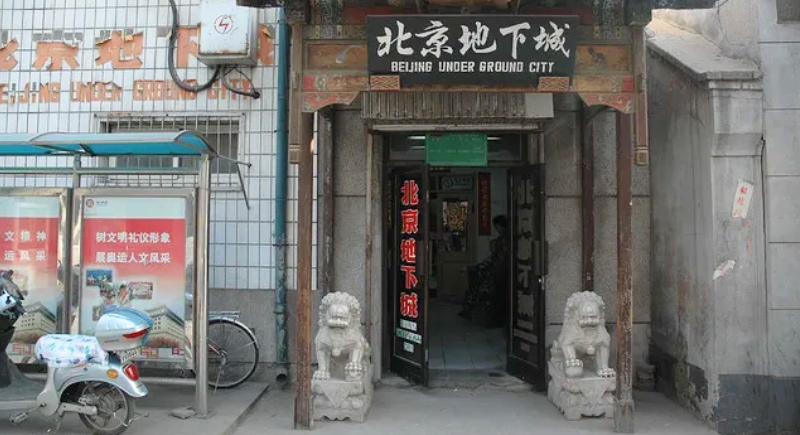
Mao Zedong ordered Beijing’s citizens to start digging in 1969, and they did it by hand. The goal was to create a nuclear fallout shelter beneath the capital. Exactly how large it grew has never been officially confirmed, but the complex reportedly contained hospitals, schools, and various civilian facilities. Most of it has been sealed off for decades, though sections briefly opened to tourists in the 2000s before authorities closed access again.
Burlington Bunker, UK
Credit: Wikipedia
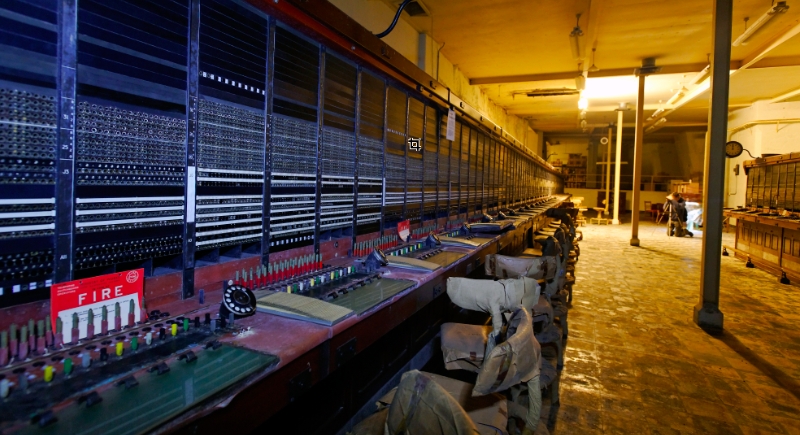
Buried 120 feet below Corsham in Wiltshire, this 35-acre complex was built in the 1950s to keep thousands of government officials alive during a nuclear attack. The Prime Minister had a designated space. So did a BBC broadcasting studio and a pub called “The Anchor.” The complex also had months of food stockpiled. The Burlington Bunker was decommissioned in 2004 and remains a former Cold War government bunker near Corsham in Wiltshire.
Coober Pedy, Australia
Credit: Wikimedia Commons
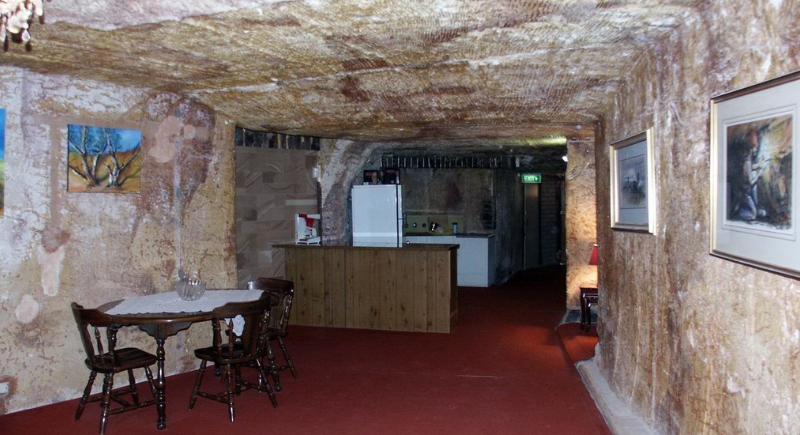
Summer temperatures in this South Australian town regularly reach 104°F, with the record being just under 119°F. To cope, roughly half of Coober Pedy’s 2,500 residents live in homes carved directly into hillsides that hold a steady 75°F year-round. The town has underground churches, hotels, and bars. Interestingly, it was an opal mine that drew people here until the heat forced them underground.
Dixia Cheng, China
Credit: Wikimedia Commons
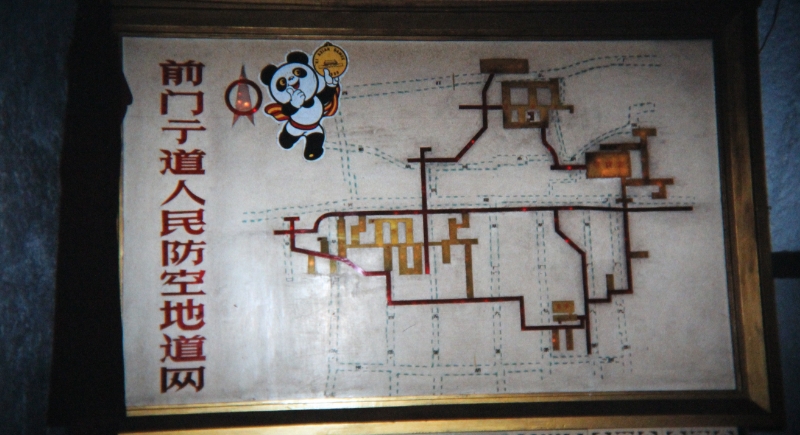
Dixia Cheng, which translates to “Underground City,” is located beneath Beijing. Its construction began in 1969 during the Cold War, when millions of civilians helped dig a vast network of tunnels intended as air-raid shelters. Reports indicate the complex included shops, clinics, and storage areas spread across many miles. The government has never released the full layout. Small sections have been opened to visitors, while the majority remain closed and are not publicly documented.
Wieliczka Salt Mine, Poland
Credit: Wikimedia Commons
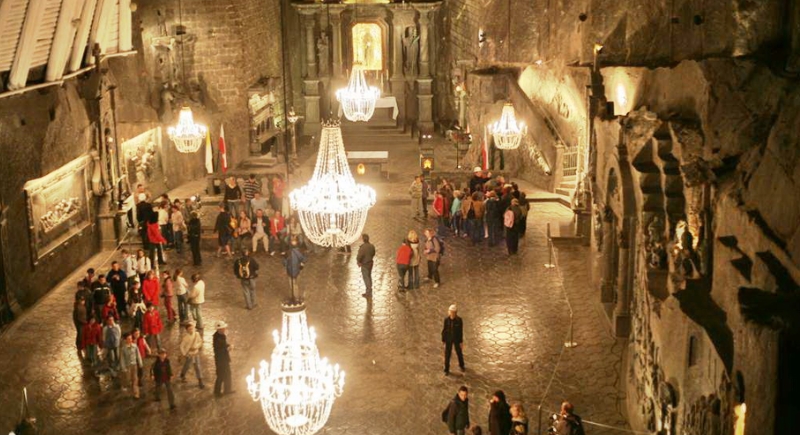
Miners first broke ground here in the 13th century and kept going until 1996. The 700 years of continuous excavation left behind a sprawling underground world of chambers, corridors, and chapels. The largest space, St. Kinga’s Chapel, has a chandelier, floor tiles, altar, and wall carvings all made from salt. UNESCO added the mine to its World Heritage list in 1978, fitting for a place that draws over a million visitors annually.
Edinburgh’s Real Mary King’s Close, Scotland
Credit: Tripadvisor
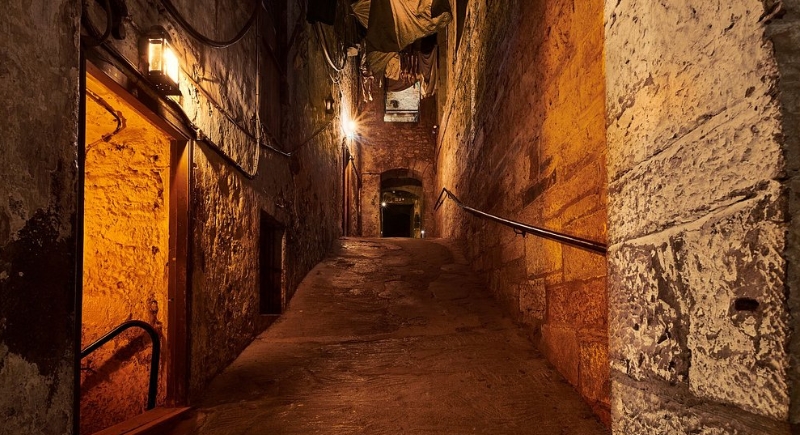
Beneath Edinburgh’s Royal Mile, there’s a preserved section of the city’s earlier street network. In the 18th century, the construction of the Royal Exchange was built directly over existing buildings and alleys, sealing the lower levels underground. The area known as Mary King’s Close still contains narrow stone streets and rooms from that period. Today, it functions as a historic site, with guided tours operating since 2003.
Naours, France
Credit: Wikimedia Commons
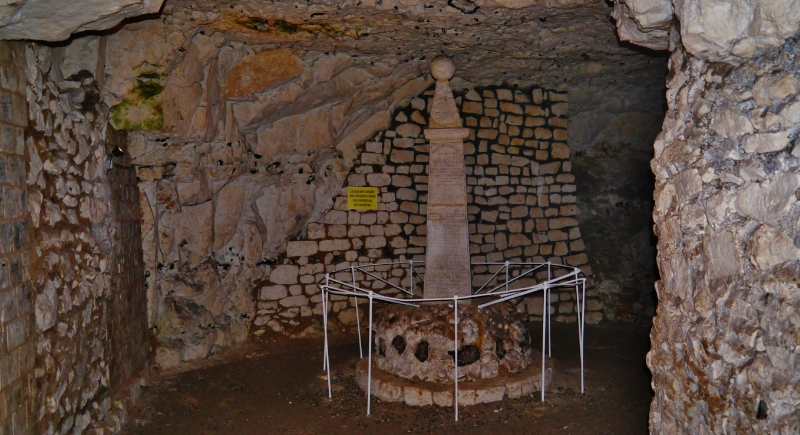
The Muche of Naours is a chalk-carved underground village beneath the Somme region, with origins that may stretch back to Roman quarrying. At its height, the network held around 3,000 people and included chapels, stables, bakeries, and streets with named addresses. Allied soldiers sheltered here during WWI, and Nazi forces used it as a headquarters in WWII. The graffiti from both periods remains visible on the walls.
SubTropolis, Kansas City, USA
Credit: Tripadvisor
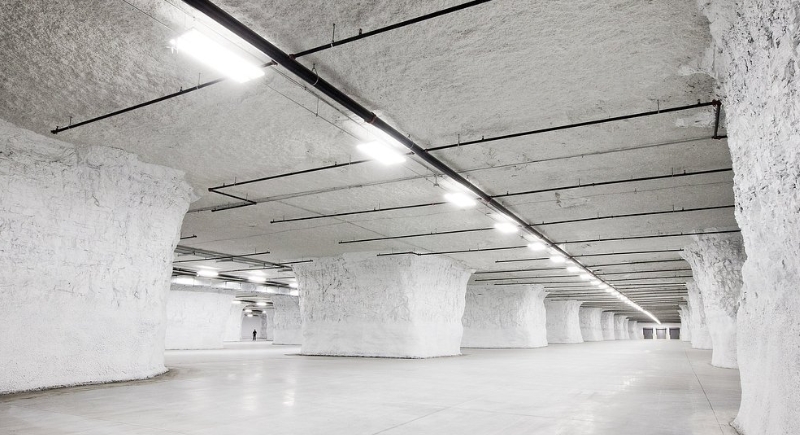
Kansas City, Missouri, is home to one of the world’s largest underground business complexes. SubTropolis occupies around 55 million square feet of space inside a former limestone mine and remains operational. Tenants include the U.S. Postal Service, the U.S. Army, and dozens of private companies storing everything from film reels to pharmaceuticals. The rock ceiling keeps temperatures around 65°F year-round.
Clapham’s Deep-Level Shelters, London, UK
Credit: Wikimedia Commons
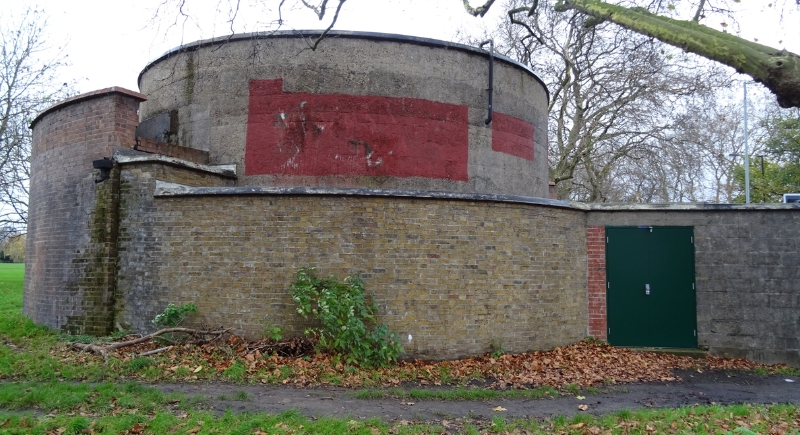
Eight deep-level shelters were dug beneath London tube stations during World War II to protect civilians from German air raids. The tunnels below Clapham later gained attention for a hydroponic farm called Growing Underground, growing salad greens and herbs for London restaurants and supermarkets. The company adopted the brand name “Zero Carbon Farms” in 2022, but continues to operate commercially from the shelter tunnels.