Science Says NYC Is Sinking Under the Weight of Its Own Buildings
New York City has always been a place that builds upward. Growth here has always meant adding more structure, density, and infrastructure to a tight coastal space. Now, researchers say that the massive built footprint is doing something few people ever think about. It is slowly pushing the ground beneath the city downward.
Scientists have found that New York is gradually sinking, and part of that shift comes from the sheer weight of its buildings pressing into the soil below.
The Sheer Weight Sitting on New York’s Ground
Researchers analyzed more than 1 million buildings across the five boroughs. Their estimate put the total building mass at about 1.68 trillion pounds, or roughly 762 billion kilograms. To help visualize that scale, some scientists compare it to the weight of about 1.9 million fully loaded Boeing 747 aircraft.
Using computer simulations combined with satellite and GPS data, researchers calculated how that load affects the land surface. The result shows the city sinking about 1 to 2 millimeters per year on average. Some areas are sinking faster, reaching roughly 4 to 4.5 millimeters annually.
That shift sounds tiny, but it adds up over decades and matters in a coastal city where many neighborhoods are already close to sea level.
Why Some Areas Sink Faster Than Others
The ground beneath New York is a mix of materials. Some buildings sit on strong bedrock. Others stand on softer soils, clay layers, or artificial fill added during earlier development.
Softer soil compresses more easily under pressure. When large structures sit on these layers, the ground can compact over time. Researchers also point to natural factors that contribute to sinking, including land adjustment after the last ice age and groundwater movement.
Lower Manhattan, parts of Brooklyn, and sections of Queens show faster subsidence rates. Scientists have also observed sinking in smaller pockets where the exact cause remains under investigation.
Interestingly, skyscrapers often are not the biggest contributors because many are anchored directly into bedrock. Mid-sized structures built on softer ground can sometimes create more long-term settlement.
The Bigger Risk: Flooding, Not Collapse
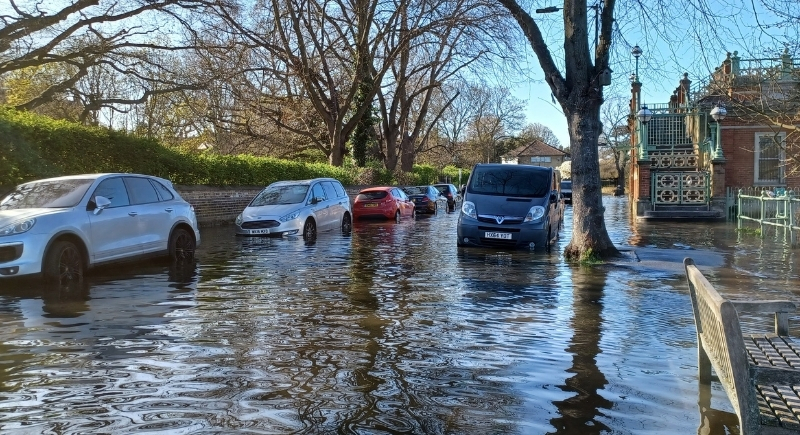
Image via pixabay/Przemoo123
Scientists stress this is a slow process. The bigger concern is how sinking is compounded by rising seas and stronger storms.
Water levels around New York have already risen about 9 inches since 1950. Projections suggest sea levels in the region could rise by about 8 to 30 inches by 2050. When the land drops and water rises at the same time, flood exposure grows faster.
Major storms have already shown what that risk looks like. Hurricane Sandy in 2012 flooded subway systems and knocked out power across large areas. Hurricane Ida in 2021 caused severe flash flooding that turned streets and basements into deadly water traps.
Researchers warn that major flooding events could become up to four times more common by the end of the century if current trends continue.
A Problem Shared by Coastal Cities Worldwide
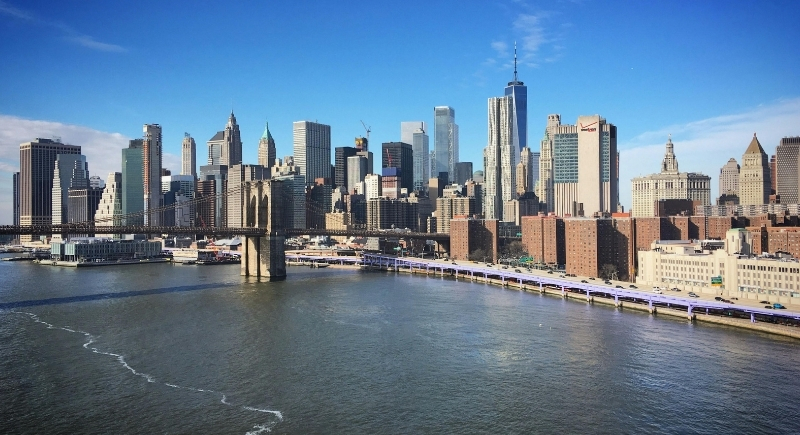
Image via pexels/Sergei Gussev
New York is not alone. Studies show many of the world’s largest coastal cities are also sinking. In some cases, land is dropping faster than sea levels are rising.
Urban growth adds weight. Groundwater extraction can weaken soil structure. Natural geological adjustments also continue thousands of years after the last ice age. When these forces combine with rising oceans, flood risk increases across coastal populations globally.
With more than 8 million residents and massive infrastructure sitting close to sea level, New York offers a real-world case study for how modern cities must plan for long term land movement alongside climate-driven water changes.
What This Means for the Future of Building Cities
Engineers and planners already factor ground stability into major construction projects. Some newer structures use lighter materials or foundation designs that spread weight more efficiently. Researchers say mapping subsidence patterns helps cities decide where to reinforce infrastructure, update flood defenses, or rethink development density.