Route 66 Is Turning 100, and 2026 Is the Best Year to Drive It
Route 66 was officially designated in 1926, linking Chicago, Illinois, to Santa Monica, California, across eight states. Originally built from existing roads, it became the backbone of westward travel, migration, and commerce. By 1938, it was fully paved.
Over time, Route 66 grew beyond transportation. During the Dust Bowl, it carried families west toward opportunity. During World War II, it moved military goods and workers across the country. By the 1950s, it powered the golden age of American road travel, with neon motels, diners, and roadside attractions defining its identity.
Although interstate highways replaced much of it by the 1960s through 1980s, large sections remain drivable today as historic byways. The road was officially decommissioned in 1985, but tourism and preservation efforts revived it as one of the world’s most famous road trip routes.
In 2026, Route 66 reaches its 100th anniversary, and the scale of restoration, investment, and global interest makes this year uniquely important for travelers.
Why The 2026 Centennial Is Such A Big Moment
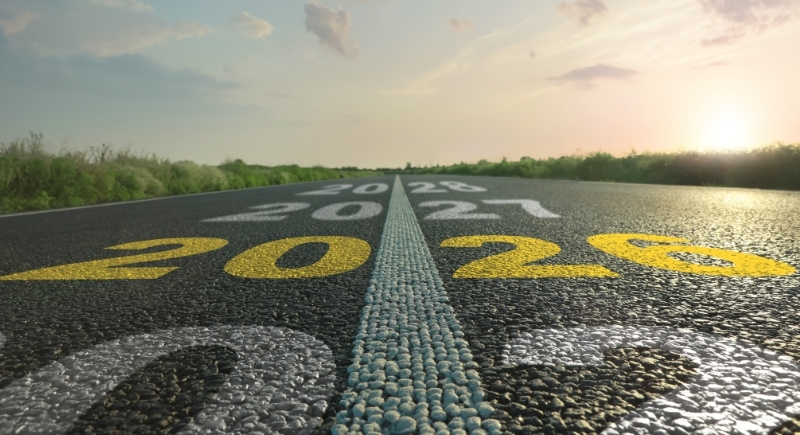
Image via Canva/Africa Images
Across all eight states, the 100-year milestone is being marked with festivals, restoration projects, and large-scale tourism campaigns. This is a year-long nationwide milestone.
Communities are restoring historic signage, reopening vintage motels, renovating bridges, and expanding museums. States are hosting car rallies, festivals, exhibitions, and cultural events that celebrate the road’s influence on American identity.
Tourism boards and local governments have invested heavily in infrastructure and preservation. In places like Oklahoma, hundreds of millions of dollars have been directed toward roads, bridges, visitor centers, and small-town restoration grants. These upgrades improve accessibility while preserving the historic character.
Cultural institutions are also participating. Exhibitions exploring early Route 66 communities, migration stories, and roadside culture are opening this year.
The Road That Shaped American Road Trip Culture
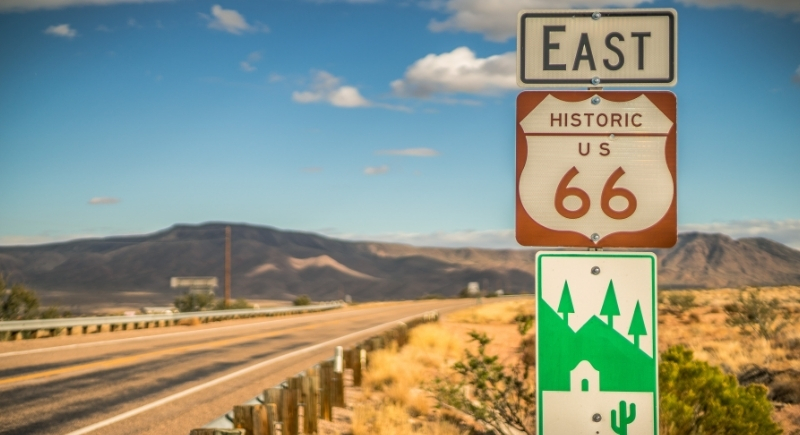
Image via Getty Images/Janis Apels
American road trip culture, as we know it, grew directly from the travel patterns built along this highway. The rise of paid vacation time, mass car ownership, and cross-country tourism during the mid-20th century turned the highway into a cultural icon.
Small businesses grew around travelers. Independent motels, gas stations, diners, and souvenir shops shaped roadside America. These stops created a travel experience built around discovery.
The interstate highway system eventually redirected traffic away from many towns along the corridor. While that shift hurt local economies, it also preserved much of the road’s personality. Today, travelers seek out the slower pace, historic architecture, and local storytelling that define the remaining sections.
International tourism plays a major role in travel today. Visitors from Europe, Asia, and South America regularly drive sections of the highway.
What You Can Experience Along Route 66 Today
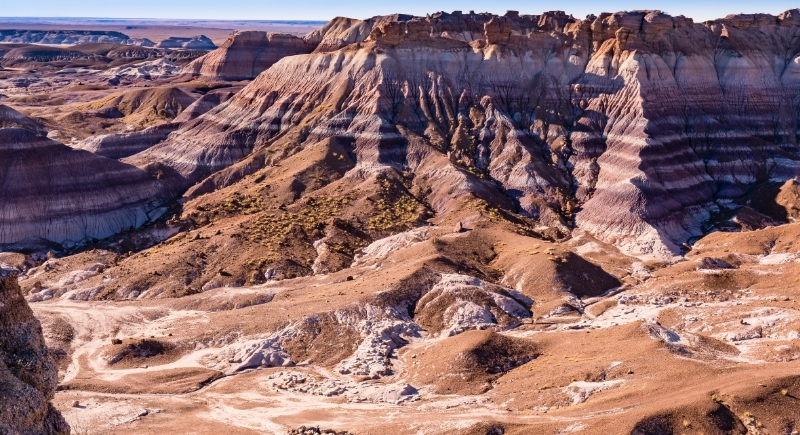
Image via Canva/paulbrady
In a single journey, today’s travelers experience a seamless transition through America’s diverse landscapes and shifting cultural identities.
Early industrial history and classic Midwest towns define the route in Illinois and Missouri. In Oklahoma and Texas, preserved stretches of original pavement pass through communities filled with museums and restored roadside landmarks.
New Mexico adds strong Indigenous and Hispanic cultural influences, plus some of the most photogenic neon motel corridors. Arizona offers dramatic desert landscapes, historic mining towns, and easy access to natural wonders such as Petrified Forest National Park.
You get to transition from desert isolation to the Pacific coastline through the final stretch in California, ending symbolically at the Santa Monica Pier’s “End of the Trail” sign.
Many travelers now drive sections instead of the entire route to allow for deeper exploration of specific regions this centennial year.
Why 2026 Is The Perfect Time To Drive Route 66
Several timing factors make this anniversary year especially appealing for travelers.
Restoration projects completed for the centennial mean many landmarks look closer to their original appearance than they have in decades. New visitor centers, signage upgrades, and museum expansions make navigation and learning easier.
The global spotlight is also driving new energy in tourism. Small towns are opening new restaurants, retro motels, breweries, and locally owned shops.
Event calendars throughout the year make it possible for travelers to plan trips around festivals, car shows, and historical celebrations.