Romania Is Building a $1 Billion Dracula Theme Park
Romania is turning one of its most famous legends into a major tourism project. A $1 billion Dracula-themed entertainment resort is officially moving forward near Bucharest, with plans that place it among the largest destination parks in Europe. After years of stalled ideas and speculation, this project now has confirmed funding, defined plans, and a clear development path.
A Major Development Near Bucharest
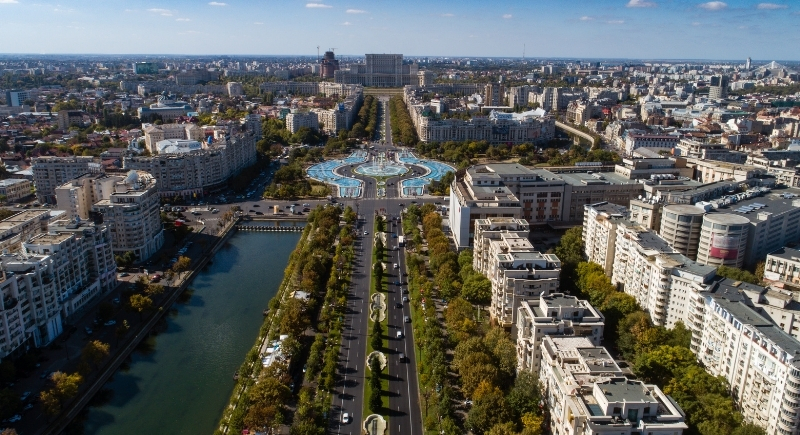
Image via Getty Images/Paul Antonescu
Dracula Land is planned just outside Bucharest, placing it close to Romania’s largest airport, main highways, and existing infrastructure. The location has been chosen to make the park easy to reach for both international and domestic visitors. The overall development spans about 160 hectares, with the theme park itself covering roughly 780,000 square meters.
As of December 2025, reporting confirms the full investment value at $1 billion. Romanian officials have described the project as a long-term tourism anchor designed to elevate the country’s profile as a leisure destination.
This project goes well beyond a traditional theme park. Dracula Land is planned as a resort built for multi-day visits. Three hotels on-site will provide approximately 1,200 rooms in total. Guests will also have access to a large water park, a thermal spa, and extensive dining and shopping areas.
A multipurpose arena with seating for more than 22,000 people is part of the surrounding complex, along with racing and motor park facilities. These additions are intended to keep visitors on-site for several days instead of treating the park as a brief stop.
A Park Structured Around Six Distinct Worlds
The theme park is divided into six lands, each with its own setting and tone. One serves as the main entry area, inspired by historic Bucharest architecture and designed to stay active day and night through shops, restaurants, and entertainment. Another section focuses on family-friendly folklore by drawing on creatures and legends from multiple cultures. A dedicated Transylvania zone draws from Romanian landscapes, villages, and forests.
The visual and narrative center of the park is Dracula’s Castle. It’s built as a towering landmark and anchors several major attractions, walk-through spaces, and a lake setting meant to be visible across the park. Two additional areas are inspired by Victorian London and New Orleans, introducing vampire hunters, werewolves, and darker folklore tied to the wider Dracula universe.
Economic Impact And Opening Target
Dracula Land is being developed by Chris Lange, a former creative director at Europa-Park, one of Europe’s best-known destination parks. His involvement indicates a focus on detailed environments, varied ride systems, and long-term planning.
The project also includes modern production elements such as large-scale projection mapping, drone shows, and AI-supported interactive features. Retail and dining locations are being designed to connect directly to the park’s themes.
Developers and government officials project more than 3 million visitors per year once the resort is fully operational. Employment estimates exceed 5,000 jobs across construction, operations, hospitality, and entertainment roles. Over a ten-year period, the project is expected to generate billions of dollars in economic activity tied to tourism and surrounding development.
Current timelines point to an opening in 2027, assuming construction continues as planned. While project schedules for this size often evolve, reporting from late 2025 suggests steady progress.
Dracula As A Tourism Strategy: A High-Stakes Bet
Image via Canva/pixelshot
A $1 billion theme park represents a significant commitment, particularly in a region that has not traditionally hosted mega-resorts of this scale. Romania has historically been cautious about tying its image too closely to Dracula, even though the character is globally recognized.
This project signals a change in direction. Instead of distancing itself from the legend, the country is using it as an entry point into broader folklore, history, and themed entertainment.