8 Places on Earth Where the Sun Doesn’t Set (Or Rise) for Months at a Time
Most of the planet follows a predictable rhythm of sunrise in the morning and darkness at night. But near the poles, that cycle breaks down.
Since Earth tilts about 23.5 degrees on its axis, regions inside the Arctic and Antarctic Circles experience extreme seasons of light. In summer, the sun can stay above the horizon for weeks or months. In winter, it disappears entirely in what scientists call polar night.
For the people who live there, this strange phenomenon shapes daily routines, architecture, culture, and even sleep patterns. Here are some of the clearest examples of life lived under months of uninterrupted daylight or darkness.
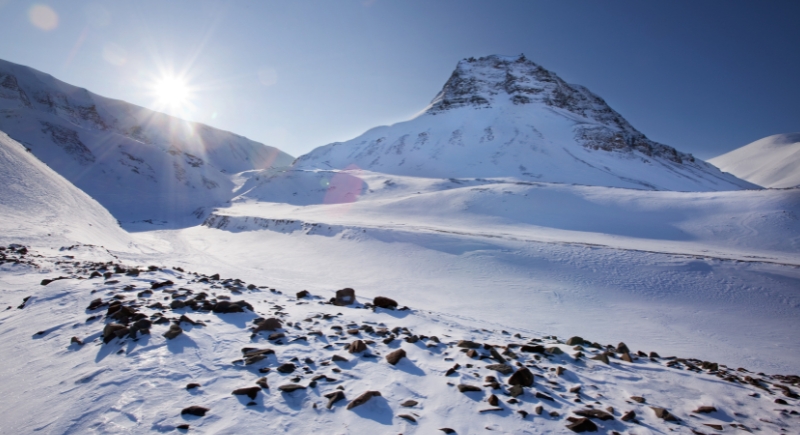
Svalbard, Norway
Credit: Canva
Svalbard is so far north that it feels closer to the North Pole than to mainland Europe. The archipelago is home to just a few thousand residents, but it hosts one of the world’s most important scientific outposts. Researchers here study climate change, polar ecosystems, and atmospheric conditions. The famous Svalbard Global Seed Vault, buried deep inside a mountain, stores backup copies of seeds from around the world in case global crops are ever threatened. When the sun circles overhead for months in summer, field researchers work almost around the clock.
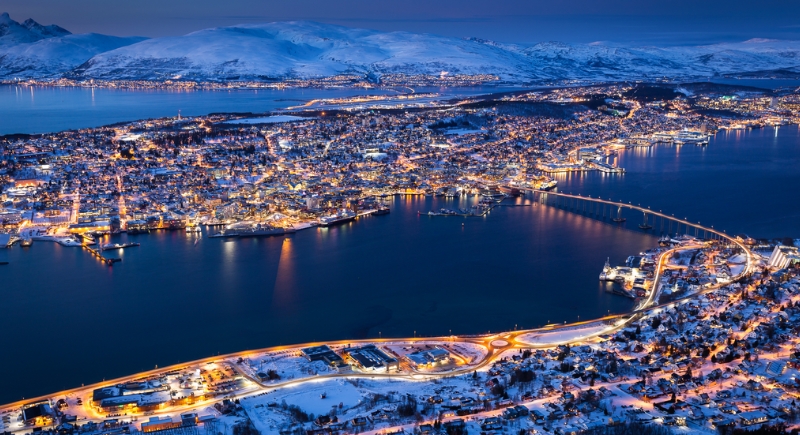
Tromsø, Norway
Credit: Wikimedia Commons
Despite its Arctic location, Tromsø is a lively university city with a surprisingly active cultural scene. It hosts international film festivals, music events, and one of the northernmost universities in the world. The city has also become a global center for aurora borealis tourism. During the long winter darkness, visitors travel here in hopes of seeing the northern lights dance across the sky. Locals have adapted to the extreme seasons by relying heavily on indoor social life in winter and outdoor activities in summer.
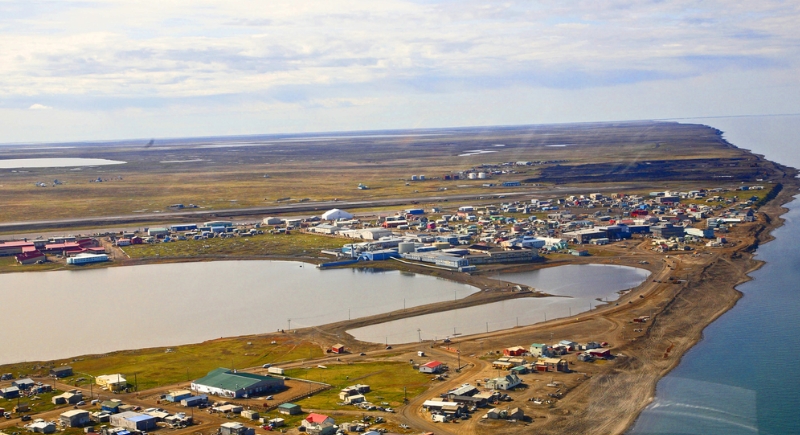
Utqiaġvik, Alaska
Credit: Wikimedia Commons
Life in Utqiaġvik revolves around the traditions of the Iñupiat people, who have lived along Alaska’s northern coast for thousands of years. Hunting, fishing, and whaling remain central to the local culture. Every spring, the town celebrates Nalukataq, a whaling festival that marks the return of sunlight after the dark winter months. One of its most famous traditions involves a blanket toss, where dozens of people launch participants high into the air using a stretched seal skin. Even with modern infrastructure, subsistence living and Indigenous traditions still shape daily life here.
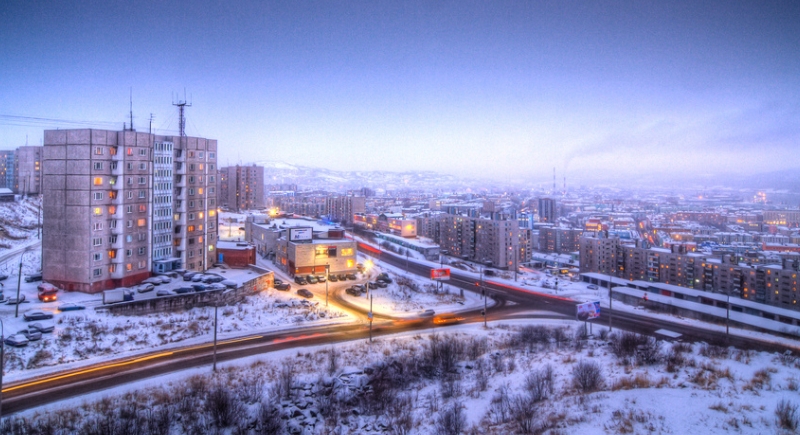
Murmansk, Russia
Credit: Wikimedia Commons
Murmansk is a major industrial port city with more than 250,000 residents. Its ice-free harbor on the Barents Sea allows shipping operations to continue even during harsh winters. The city also serves as a key base for Russia’s nuclear icebreaker fleet, which keeps Arctic shipping routes open. Despite its remote location, Murmansk has theaters, museums, and a busy waterfront that remains active even during the darkest months of the year.
Ilulissat, Greenland
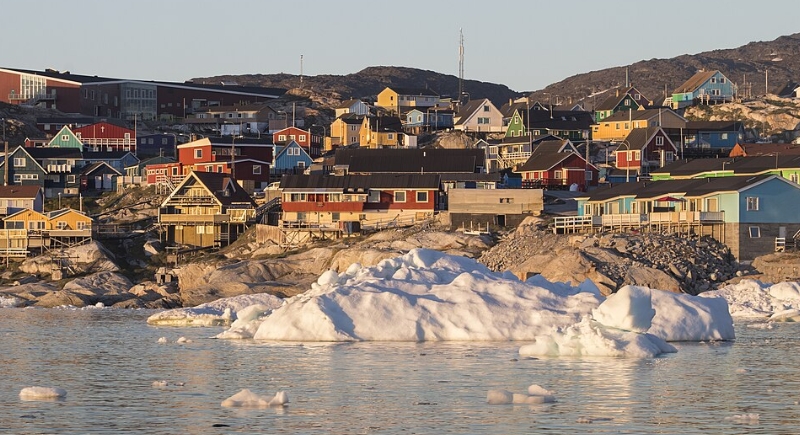
Credit: Wikimedia Commons
Ilulissat overlooks one of the most dramatic natural sights in the Arctic: the Ilulissat Icefjord, a UNESCO World Heritage site filled with enormous drifting icebergs. These icebergs break off from the nearby Jakobshavn Glacier, one of the fastest-moving glaciers in the world. Some of them are higher than buildings as they float slowly out to sea. During the long summer daylight, photographers and scientists gather here to observe how shifting ice and warming temperatures are reshaping Greenland’s coastline.
Arctic Bay, Nunavut
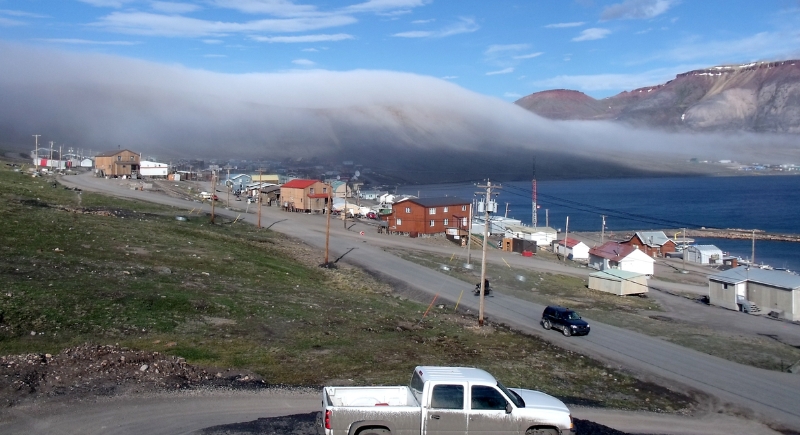
Credit: Wikimedia Commons
Arctic Bay is on the northern edge of Baffin Island, surrounded by cliffs and frozen ocean for much of the year. The small Inuit community maintains a lifestyle closely tied to the surrounding environment. Snowmobiles replace cars for much of the winter, and traditional hunting routes still connect neighboring settlements across the tundra and sea ice. Because of its isolation, Arctic Bay offers a glimpse of how Arctic communities balance modern technology with long-standing cultural traditions.
Rovaniemi, Finland
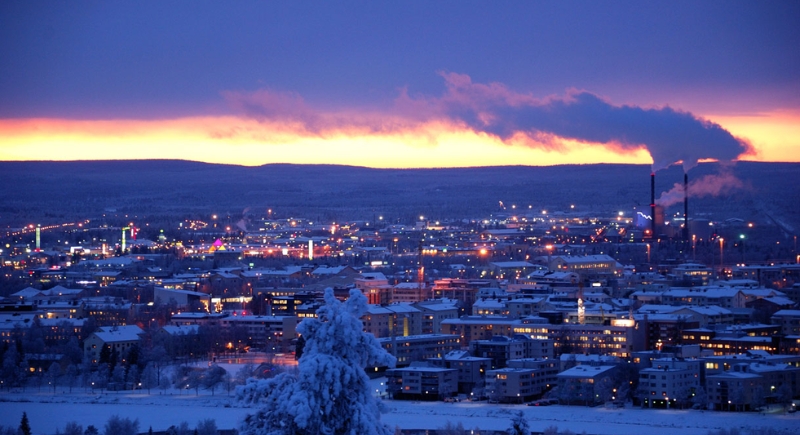
Credit: Wikimedia Commons
Rovaniemi markets itself as the official hometown of Santa Claus and draws visitors from around the world to its Christmas attractions and Arctic-themed tourism. The city also serves as the gateway to Finnish Lapland, where travelers can experience reindeer safaris, dog sledding, and glass igloos designed for watching the northern lights. While tourism plays a major role in the economy, Rovaniemi also functions as an important regional hub for education and business in northern Finland.
The Antarctic Peninsula
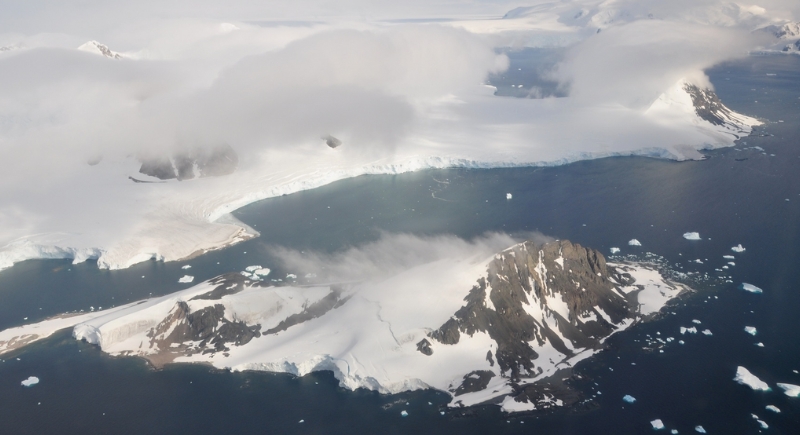
Credit: Wikimedia Commons
Unlike the Arctic locations on this list, Antarctica has no permanent civilian population. Instead, the continent hosts rotating teams of scientists who study everything from glaciology to marine biology. During the months of continuous daylight, research stations operate at full speed. Scientists conduct fieldwork on glaciers, track penguin colonies, and monitor climate conditions in one of the most sensitive ecosystems on Earth. In winter, when darkness dominates the continent, most stations shut down or operate with only a small skeleton crew.