Paris Unfiltered and the Hidden Grandeur of the 17th Arrondissement
When you visit Paris, it’s easy to stay on the same route: the Louvre Museum, the Seine River, and the Champs-Élysées. I you move just a little outside that stretch, things start to feel more grounded. The 17th arrondissement of Paris, near the Arc de Triomphe, feels less like a tourist stop and more like a neighborhood where people actually live, with everyday shops, local streets, and parks that are part of daily life.
Where Paris Slows Down Without Losing Its Edge
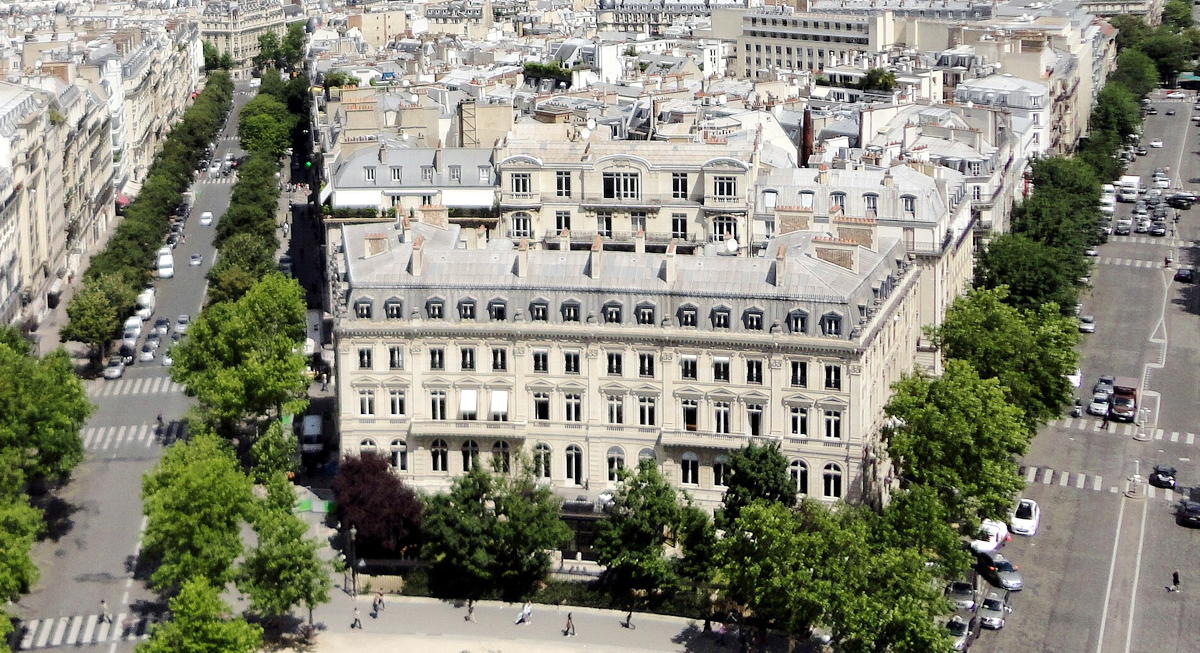
Image via Wikimedia Commons/FASTILY
The 17th is located in the northwest corner of Paris and covers about 5.7 square kilometers. Around 170,000 residents live here, which explains why the area supports dense local infrastructure rather than tourist-focused businesses. It borders high-traffic areas, but its internal streets are not part of major sightseeing routes, so foot traffic drops quickly once you move away from the Arc.
That change is clear on streets like Rue Poncelet. The bakeries and produce shops are built around regular customers who come back throughout the week. Fresh food stores sit close together, making it easy to pick up what you need in shorter, frequent trips instead of doing one big shop.
A District Defined by Its Neighborhoods
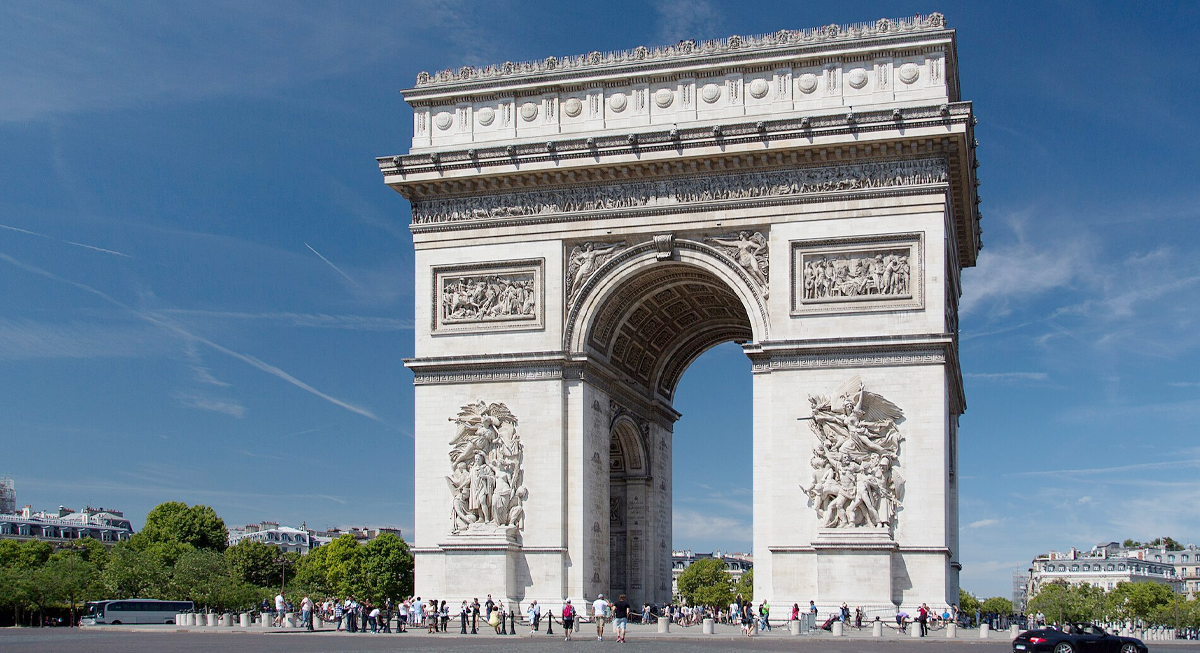
Image via Wikimedia Commons/Norio NAKAYAMA from saitama, japan
The 17th is divided into four main quartiers, and each one operates differently. Ternes sits closest to the Arc de Triomphe and functions as a transition zone between tourist-heavy Paris and the residential core. The streets are wider, and Haussmann-era buildings dominate the area. Property values remain high because of proximity to major avenues and transport connections.Monceau, just to the east, is more residential and closely tied to Parc Monceau. The park dates back to the late 18th century and has long attracted artists, including Claude Monet. Its presence shapes the surrounding streets, which are quieter and less commercial.
Batignolles, further north, has a different profile. It was historically an industrial area, but now attracts younger residents due to smaller apartments and a high concentration of independent shops. Streets like Rue de Lévis function as daily market corridors, with food vendors, cafés, and specialty stores clustered together. This layout supports frequent, small-scale shopping rather than bulk buying.
Épinettes, at the northern edge, sees less foot traffic because it sits farther from major landmarks and tourist routes. The area has fewer large commercial corridors, and residential streets dominate. In places like Cité des Fleurs, a private road lined with individual houses and gardens, the urban density drops slightly. It’s quite unusual for Paris.
Green Spaces That Shape Daily Movement
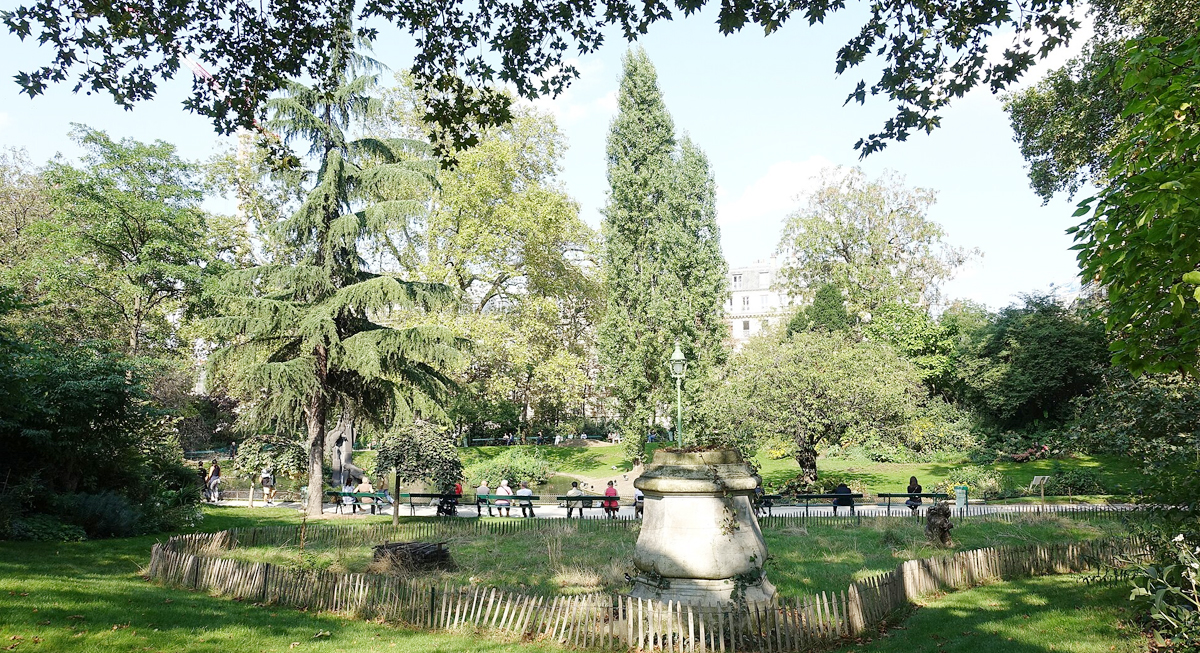
Image via Wikimedia Commons/Guilhem Vellut
There is more usable green space in the 17th than in many central arrondissements, and these parks are integrated into daily routines rather than treated as destinations.
Square des Batignolles, created in 1862, follows an English garden design with curved paths, a stream, and varied elevations. Its layout encourages slower movement, which is why it attracts people for reading or short breaks rather than large gatherings.
Parc Martin Luther King covers about 25 acres and was developed as part of a modern urban project on former railway land. The park includes rainwater collection systems, solar energy features, and low-maintenance plant species. Its scale allows for multiple uses at once, with designated areas for running, open lawns, and playgrounds.
The Promenade Pereire connects several parts of the arrondissement through a linear green corridor. Running along Boulevard Pereire, it softens a major traffic route and creates a continuous pedestrian path that links residential zones to commercial streets.
Markets, Cafés, and How Daily Life Functions
The 17th operates on a local commerce model that prioritizes accessibility over volume. Rue Poncelet is the clearest example, with fishmongers, butchers, bakeries, and produce vendors concentrated in a single stretch. This density allows residents to complete daily shopping within a few blocks.
Nearby streets extend that system. Rue de Lévis combines food retail with cafés and small restaurants, which keeps foot traffic consistent throughout the day rather than concentrated at peak tourist hours. The presence of specialty stores, including fromageries and wine shops, reflects a customer base that shops frequently and values product quality over convenience.
This structure creates steady activity without crowd surges. Instead of spikes tied to tourism, movement is distributed across the day based on routine tasks like grocery shopping, school runs, and work commutes.
Quiet Luxury Without the Show
High-end spaces also exist in the 17th, but they are integrated into residential streets rather than separated into luxury zones. La Fondation, for example, is a five-star hotel located on Rue Legendre, built from a redeveloped mid-century structure that included a former car park.
The project added a 58-room hotel along with a spa, fitness center, and an indoor pool measuring about 82 feet in length. Rooms start at around $386 per night, placing it in the luxury category, but its location in a residential area limits foot traffic and keeps the atmosphere controlled.
This approach extends to restaurants and smaller hotels in the area. Many operate on side streets rather than major avenues, which reduces visibility to tourists while maintaining a consistent local clientele.
Close to the Center, Structurally Separate
Despite its residential focus, the 17th remains well-connected. Metro lines 2, 3, and 13 run through different parts of the arrondissement, linking it directly to central Paris and outer districts.
Driving distances are short under normal conditions. The Louvre sits roughly a 10- to 15-minute drive away, depending on traffic, and Montmartre lies just to the north. This proximity allows residents to access major landmarks quickly without living in high-density tourist zones.
The result is a district that maintains separation through layout and not distance. Major attractions remain nearby, but the street network, land use, and commercial structure keep the 17th functioning as a place designed for residents rather than visitors.