
Festivals turn hometown dishes into scheduled rituals, suitcase-friendly leftovers, and fundraisers you can support from 1,000 miles away.
The calendar is the recipe’s secret ingredient
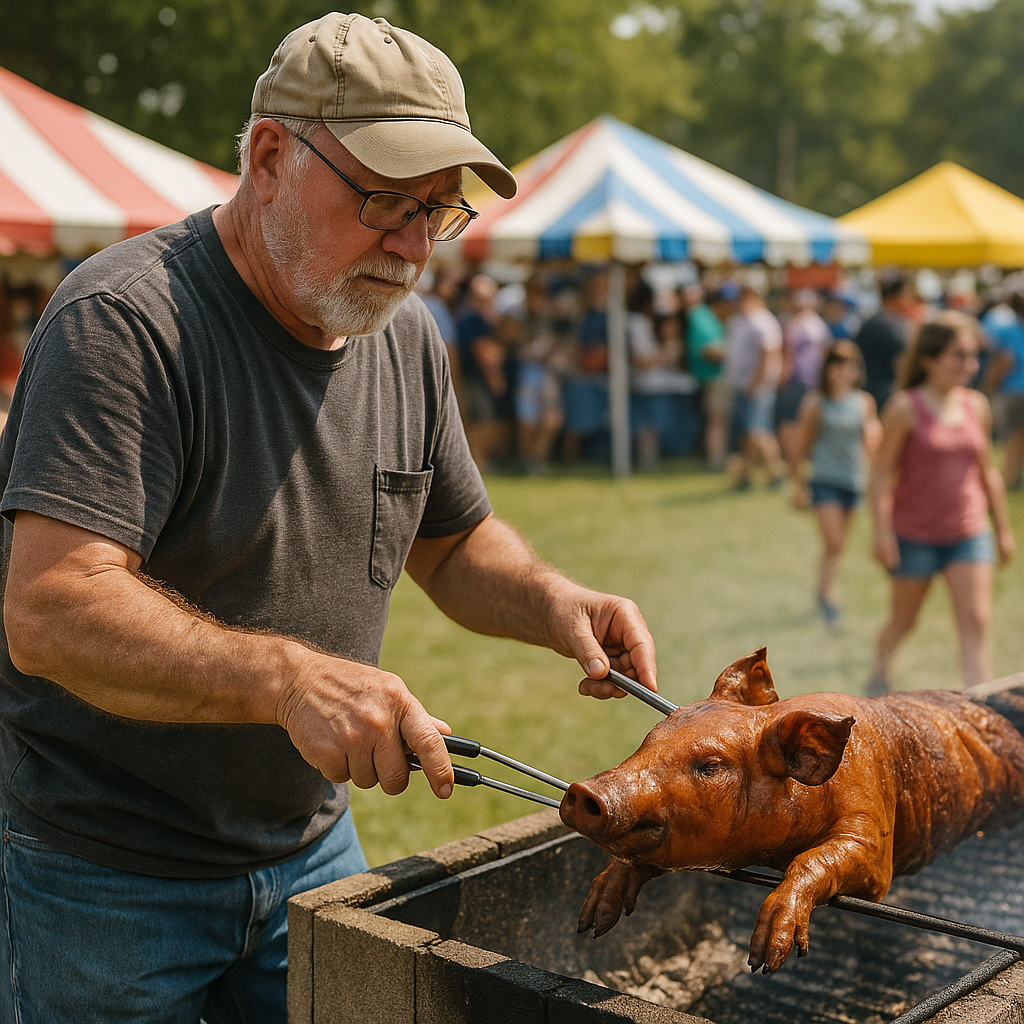
When someone tells me they can’t get their cousin to cook “the old food” anymore, I always ask one question: does it have a day? Not a vague season, not “whenever the tomatoes come in,” but a date that lands on the same weekend every year and forces you to show up. That’s what festivals do. They turn a regional dish into something like a standing appointment, and the appointment survives people moving away because it’s not dependent on one household’s mood or free time.
I’ve watched this play out with the kind of small-town food that’s hard to justify on a random Tuesday: a whole hog on cinder blocks, a fish fry line that starts forming before the oil’s hot, a pot of beans that needs hours and somebody watching it like a hawk. Nobody wants to be the only person doing that work in their backyard. Put it under a festival banner, though, and suddenly it’s shared labor with social payoff. The church ladies have a sign-up sheet. The volunteer fire department has a trailer and someone who knows which regulator fits the propane tank. The high school band is carrying trays because they’re raising money for uniforms. It becomes infrastructure, not a personal project.
And that date becomes a tether for the people who moved away. Even if you can’t make it home, you remember the weekend. You text for photos. You Venmo the raffle. You ask, “How’d the pie booth do?” The dish stays alive because it keeps showing up in public, on schedule, with enough repetition that teenagers learn the taste before they learn the backstory. If you’ve ever had the weird experience of craving something you only eat once a year, you already understand how powerful a calendar can be.
Booth food is a training program, not nostalgia
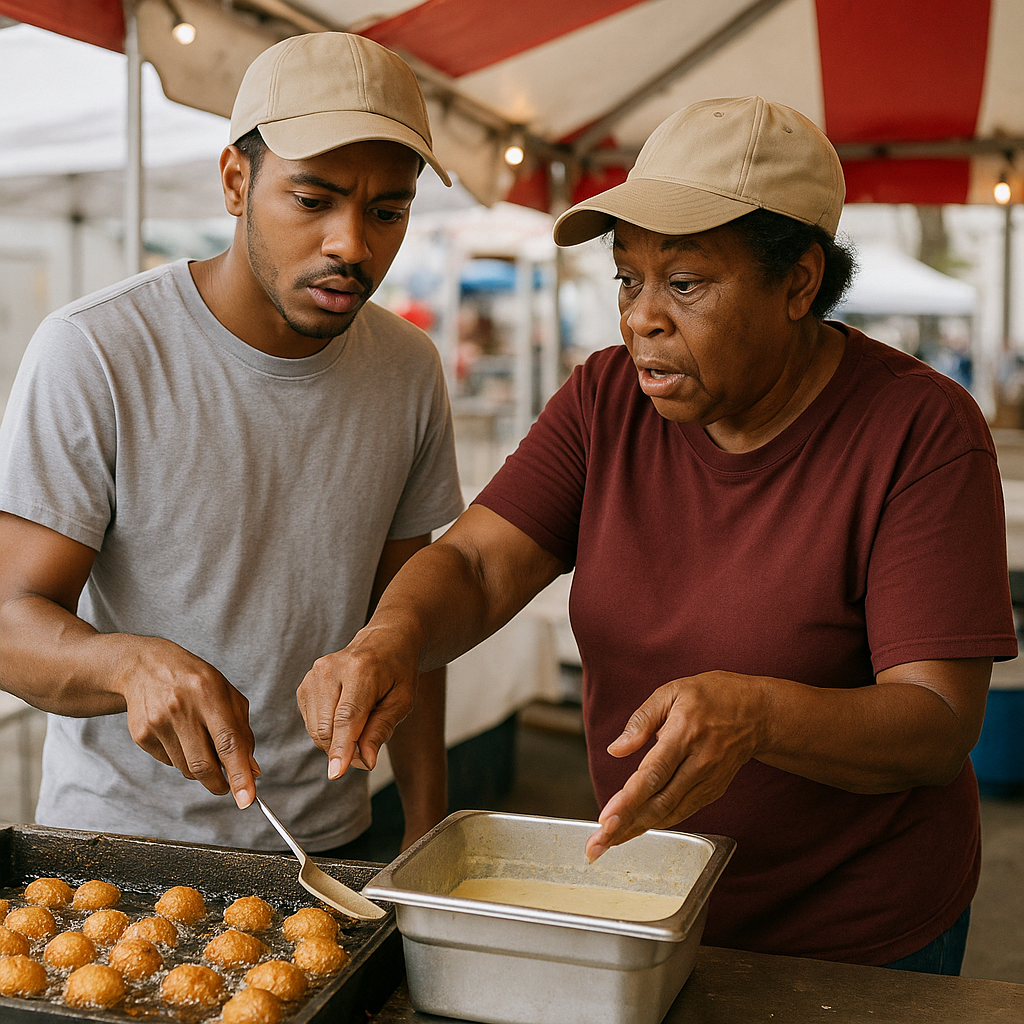
People talk about festival food like it’s all memory and vibes, but the part that keeps traditions from dying is way less poetic: it’s apprenticeship under pressure. A booth doesn’t care if you’re tired, or if you “don’t really cook.” The tickets are sold, the griddle’s hot, and someone has to keep the hushpuppies moving so they don’t turn into little bitter rocks. That environment is where younger folks pick up the exact things that never make it into a tidy recipe.
I’ve done shifts where the “recipe” for the sauce was basically, “Start with two hotel pans, then keep tasting until it hits.” If you’re new, you learn what “hits” means because an auntie or a retired line cook is standing next to you with a plastic spoon and zero patience for guessing. You learn the sound of the fryer when it’s too crowded. You learn that the first batch is never the batch you sell. You learn the order of operations that makes 200 servings possible: slice first, batter second, fry last, and keep one person doing nothing but wiping the counter because flour gets everywhere and suddenly nobody can find the tongs.
That’s why the tradition survives even when younger generations leave. The knowledge isn’t only handed down at a kitchen table. It’s stored in the event itself. The booth layout, the borrowed chafing dishes, the coolers of ice, the person who shows up early with the propane. Even the cash box routine teaches you something: which item sells out first, what people will wait in line for, what gets skipped when the heat hits 95. Those details translate later when someone tries to recreate the dish in a city apartment, or for a friendsgiving, or for a fundraiser in their new zip code. They’re not starting from a blank page. They’ve already worked the stand.
Why fundraisers and mail-order boxes keep hometown flavors in orbit
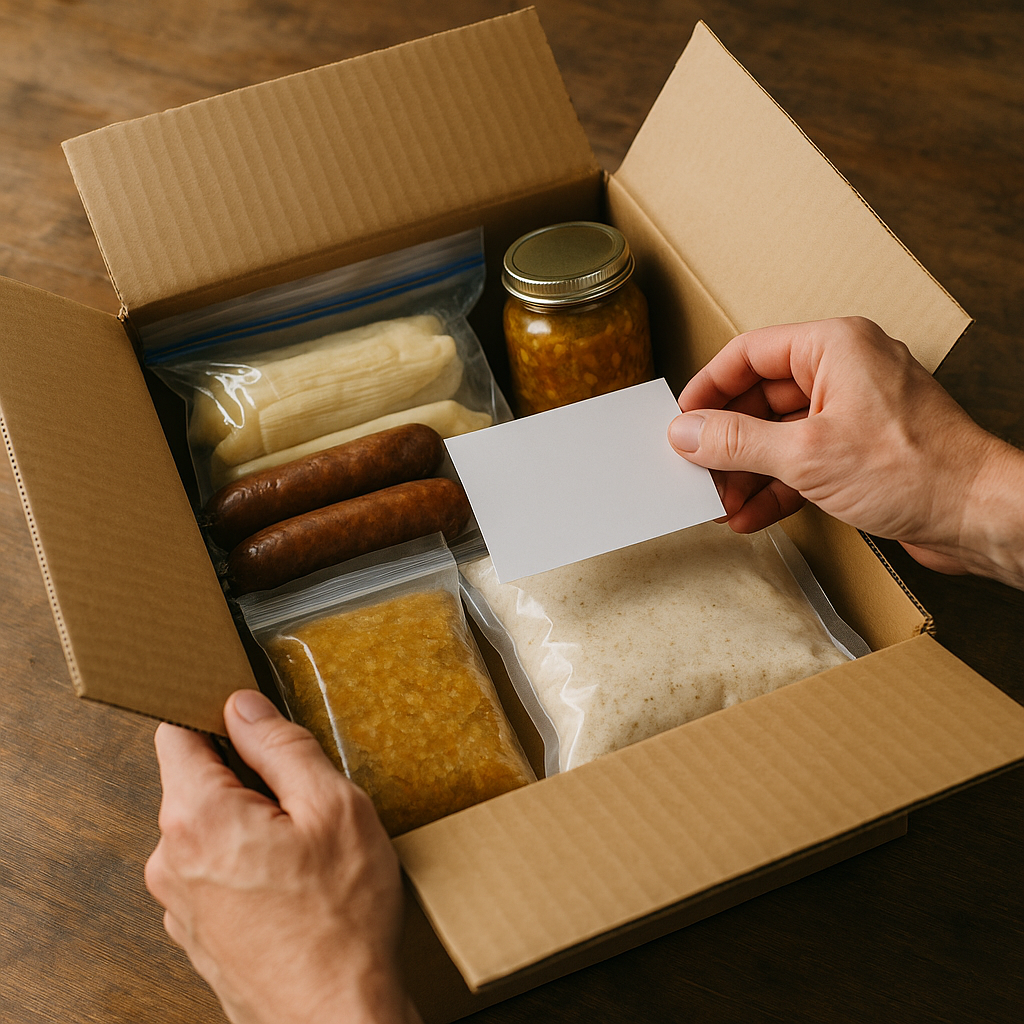
Here’s the modern twist nobody likes to admit out loud: a lot of regional food traditions are being kept alive by logistics. Not just who knows the recipe, but who can ship the sausage, freeze the tamales, or get the spice mix into padded envelopes without it turning into a sad little brick. Festivals are increasingly good at this because they already operate like pop-up businesses. They buy in bulk, they keep records, and they know exactly how many pounds they move in a weekend. That structure makes it easier to sell to the people who moved away without asking them to time a visit perfectly.
I’ve ordered festival-linked food boxes that felt like a care package with a barcode: vacuum-sealed links, a jar of chow-chow, a bag of seasoned flour, and a laminated card that basically says, “Don’t overthink it, fry in batches.” It’s not the same as eating it under a tent with someone’s cousin playing in a cover band. But it keeps the flavor in your mouth, and that matters. If you can still taste it, you can still explain it to a partner who didn’t grow up with it, or to kids who only know the hometown from summer trips and photos.
Fundraisers add a second layer. When the booster club sells smoked meat by the pound or the church ships frozen pies, buying it becomes a way to participate without moving back. You’re not just shopping; you’re supporting the very organizations that keep the equipment, the permits, and the know-how in place for the next year’s event. And the moment a festival has out-of-towners on the order list, it has a reason to document the process better. Someone writes down the rub proportions. Someone labels the coolers. Someone standardizes the slaw so it tastes like last year, not like whoever had the heavy hand that day.
That’s the loop I’ve seen: the festival creates demand, the demand justifies the work, and the work produces a product people can carry back across distance, whether that’s in a suitcase full of foil-wrapped leftovers or a box that shows up on a Wednesday.