9 Waterfalls That Are Actually Man-Made
Not every waterfall formed by chance or erosion. Some were designed intentionally to redirect water, manage landscapes, or solve practical problems. Over time, many of these engineered cascades blended into their surroundings so well that they now read as natural features. Once water begins to flow, the line between design and nature becomes easy to miss.
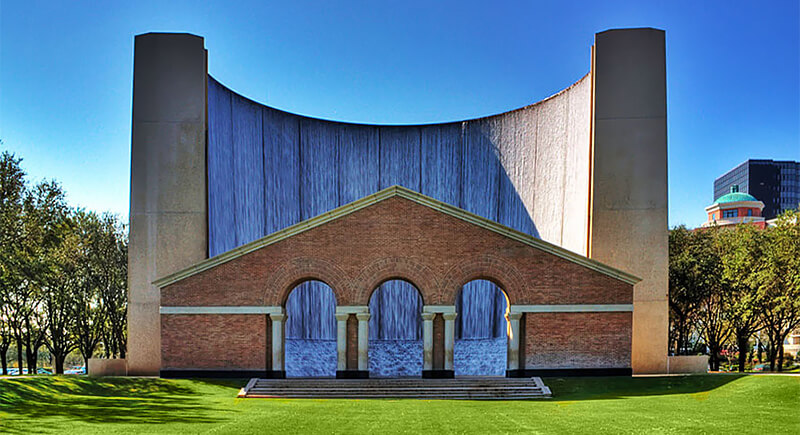
Gerald D. Hines Waterwall Park
Credit: Wikimedia Commons
The first thing people notice here is the noise. Water crashes down a curved granite wall so loudly that it drowns out nearby traffic, even though the entire structure relies on concealed pumps. Rising about 64 feet, the wall turns mist into atmosphere. Standing beneath it doesn’t feel decorative, which explains why people linger longer than planned.
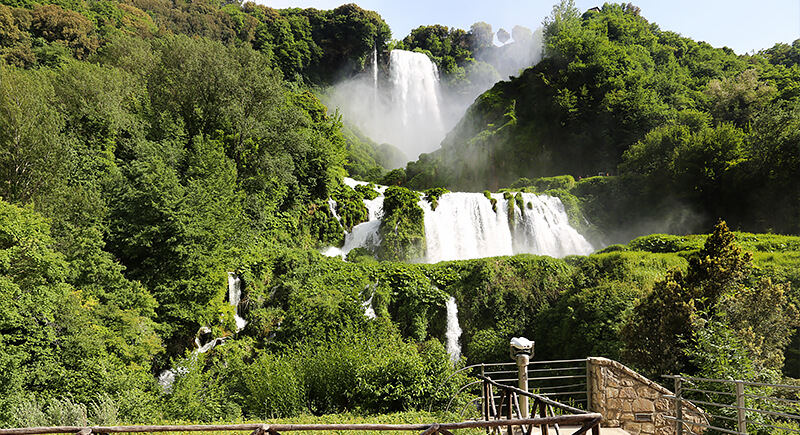
Cascata delle Marmore
Credit: Wikimedia Commons
What appears to be a wild Italian gorge is actually the result of Roman engineering from nearly 2,300 years ago. The Velino River was redirected to drain stagnant wetlands, creating a multi-tiered drop totaling over 500 feet. The flow started running on a schedule. Sirens now warn visitors before each release, and the timed flow turns an ancient drainage system into a shared moment of anticipation.
Liebian International Building Waterfall

Credit: theculturetrip
From the outside, the building gives no hint of what happens when the water turns on. When activated, a recycling system sends water cascading 354 feet down the building’s facade. The feature runs only on special occasions due to energy demands. Each activation turns routine city streets into a moment of confusion, phones raised as people double-check what they’re seeing.
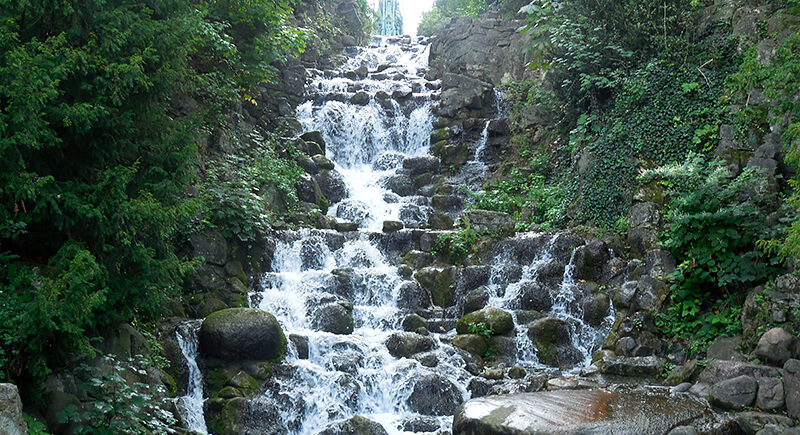
Viktoriapark Waterfall
Credit: Wikimedia Commons
Climbing Berlin’s Viktoriapark reveals a cascade that feels alpine despite sitting in the middle of a city. Designed in the nineteenth century, the stepped channels were intended to evoke the appearance of German mountain streams. Pumps keep the water moving upward before gravity takes over. Reaching the top comes with cooling air, tired legs, and a clear view of the city below.
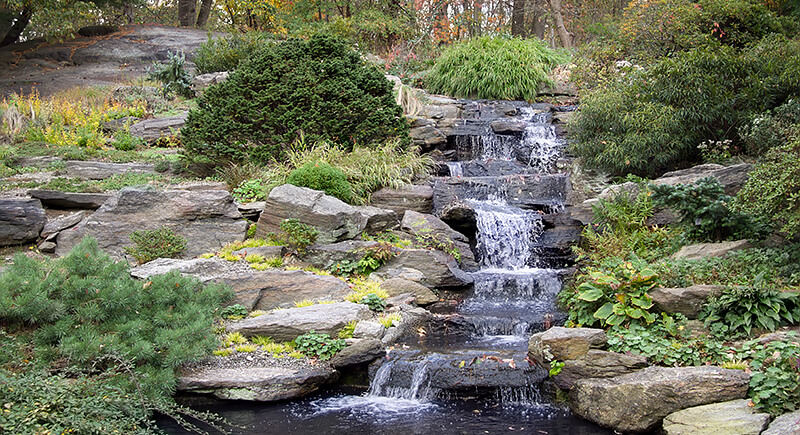
Bronx Botanical Garden Rock Garden Waterfall
Credit: Wikimedia Commons
Within the Rock Garden at the New York Botanical Garden, this modest waterfall rarely announces itself. Built in the 1930s, the 13-foot drop relies on careful stone placement and regulated flow to resemble a natural forest stream. Moss-covered rocks, shade, and curving paths do most of the work, allowing the engineering to fade into the background.
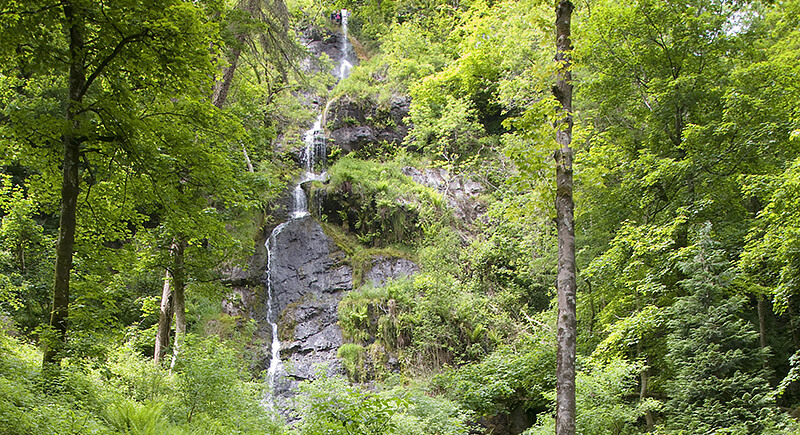
Canonteign Falls
Credit: Wikipedia
Walking toward Canonteign Falls, the experience unfolds gradually rather than all at once, with damp air, scattered sound, and dense trees setting expectations before the drop appears. The waterfall itself dates to 1890, when a diverted stream was engineered after nearby mines closed. At roughly 230 feet, it reshaped the surrounding landscape as much as it reshaped local employment.
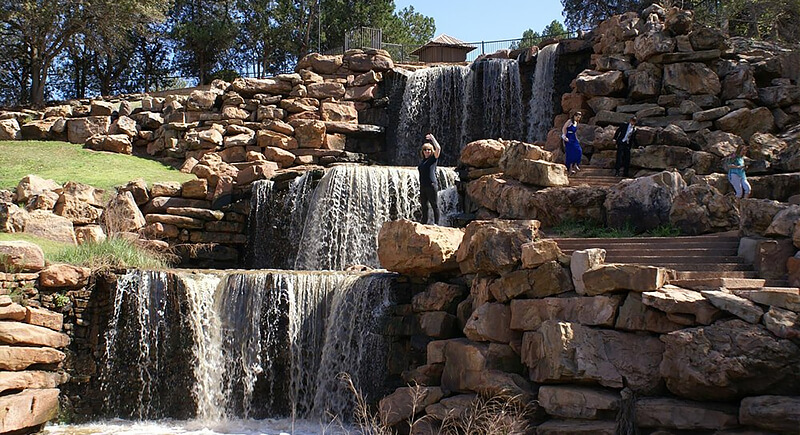
Lucy Park Falls
Credit: Tripadvisor
Wichita Falls did not always have a waterfall to point to. After the original was destroyed by flooding in the nineteenth century, the city went decades without its namesake landmark. Community fundraising eventually led to a rebuilt, three-tiered cascade in 1987. Positioned beside a major highway, the modern rendition, Lucy Park Falls, pulls its weight as a reclaimed symbol.
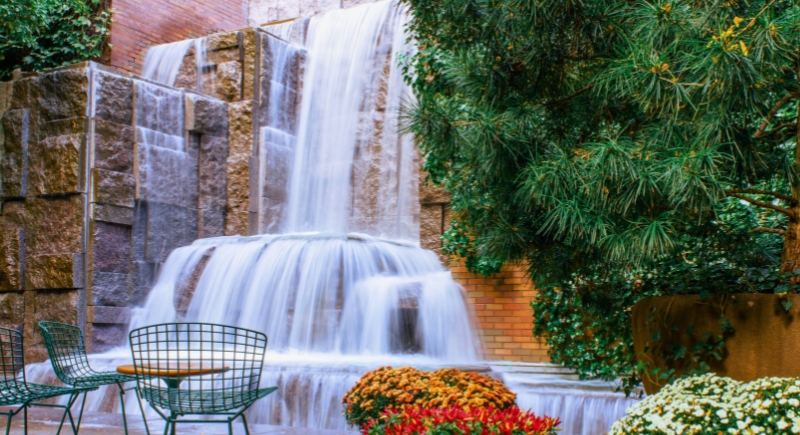
Greenacre Park Waterfall
Credit: Getty Images
Present between office buildings in Midtown, this narrow park was designed around sound rather than sight. The waterfall drops about 25 feet over a textured wall, deliberately loud enough to overpower traffic noise. Built in 1971, people sit longer here, not because it’s pretty, but because it’s quiet in a way the city rarely allows.
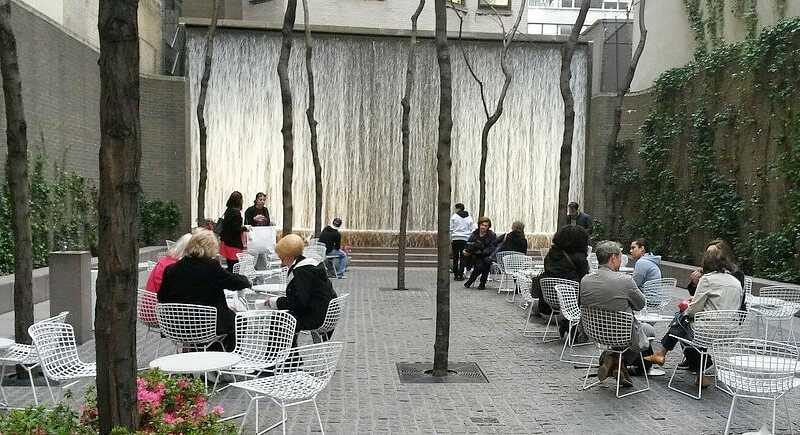
Paley Park Waterfall
Credit: Tripadvisor
Paley Park was designed to make an impact. Just steps from Fifth Avenue, a thick curtain of water drops down a stone wall and fills the space with sound and movement. The waterfall has run since the late 1960s, cutting through traffic noise and summer heat with sheer force. Chairs turn inward, keeping focus on the water and pushing the city to the edges.
Central Park Waterfalls

Credit: Reddit
The waterfalls scattered through Central Park rely on infrastructure that most visitors never notice. Drinking water flows through hidden pipes before spilling over rocks designed to appear natural. Along the Loch near West 100th Street, cascades slow walkers instinctively, without signs or fences. The effect works so well that the engineering disappears, leaving only movement, sound, and pause.